


Column
Dr Khalilur Rahman: The Man of the Hour

An Independent Newsweekly
Column
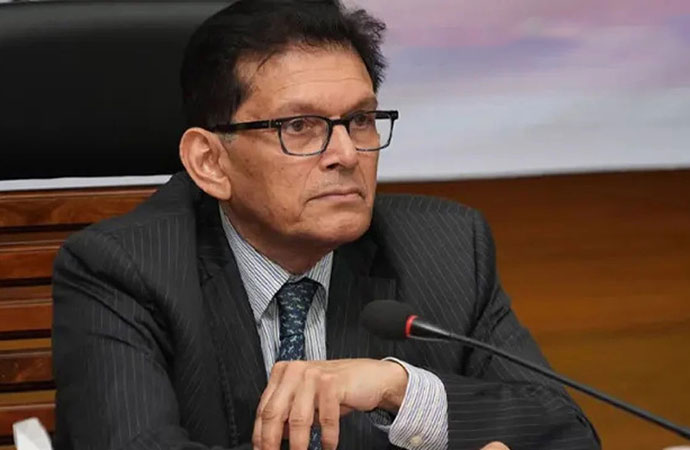
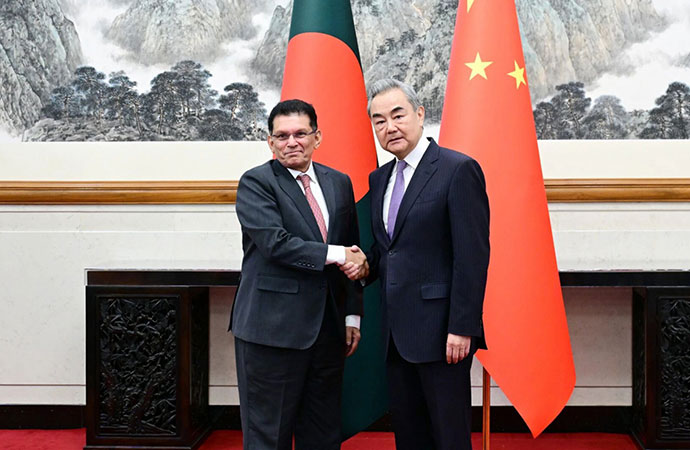
Foreign Minister Dr Khalilur Rahman. Photo: Collected
No matter how you look at it, Foreign Minister Khalilur Rahman's election as president of the UN General Assembly is a matter of pride and prestige for Bangladesh, although not unprecedented. I am of the generation that took great pride in the late, redoubtable Humayun Rasheed Chowdhury's election as UNGA president for the 41st session, in 1986-87, while serving as the country's foreign minister. Forty years later, the current foreign minister has walked exactly in his footsteps. He is very much the man of the hour, and lends considerable gravitas and know-how to the present government's foreign policy operation.
Although there were question marks initially over how Dr Rahman planned to proceed with the dual role incumbent upon him, it was always known that there would be no obligation for him to resign from his important position in the still new government of Bangladesh. Humayun Rasheed for one, served as both foreign minister of Bangladesh and UNGA president concurrently. While canvassing for his UN role, Dr Rahman had indicated, although never too categorically, to be a "full-time UNGA president". He had also mentioned taking a year's holiday from his post as Bangladesh's foreign minister, in the event of his election.
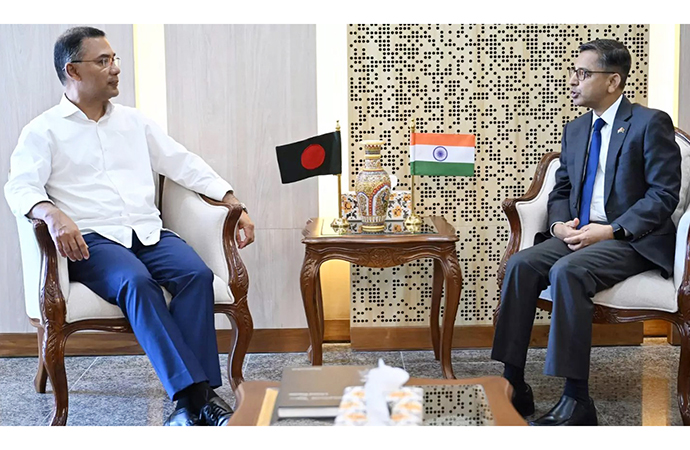
It is no secret of course, that Dr Rahman has been at the centre of Dhaka's strategic shift in terms of its foreign policy direction since the time of the interim government. In particular, he is viewed as the architect of a renewed policy orientation that breaks from the deposed Awami League regime's lock-step manoeuvring with New Delhi. To the extent that a country like Bangladesh would prefer to have another shoulder to lean on as it pares down the ties with its immediate neighbour, Dr Rahman is also seen as the key player in ramping up ties with Washington. We know he was one of the key interlocutors representing Bangladesh, over months of negotiations that eventually resulted in the Agreement on Reciprocal Trade (ART) signed between the two countries in February, more popularly known as the US trade deal.
The ART has its critics, but we have to remember the state of panic that befell the export sector when US President Donald Trump slapped a 37% reciprocal tariff on the import of Bangladeshi goods into the US market. More recently, the deal played a direct role in earning Bangladesh at least a 2.5% reprieve, as the Trump administration unveiled its new scheme for getting around the US Supreme Court decision to strike down its favoured reciprocal tariffs.
While the presidency of the General Assembly is largely ceremonial, it is also prestigious. It is the UN organ where countries large and small can speak, and is the scene of the only annual gathering of world leaders, in September. Recently it has taken the spotlight in reacting to the wars in Ukraine and Gaza because action by the UN Security Council has been blocked by the veto power of Russia on Ukraine and, often, the United States on Gaza. That has increased the demands for a 'full-time president'. But Dr Rahman, in his first remarks to the local press upon his return, indicated a strong inclination towards continuing in both roles concurrently. This was always likely, given all that he has on his plate as foreign minister of Bangladesh - not least in managing the ties with Washington. And it is probably the arrangement that works best for all stakeholders involved.
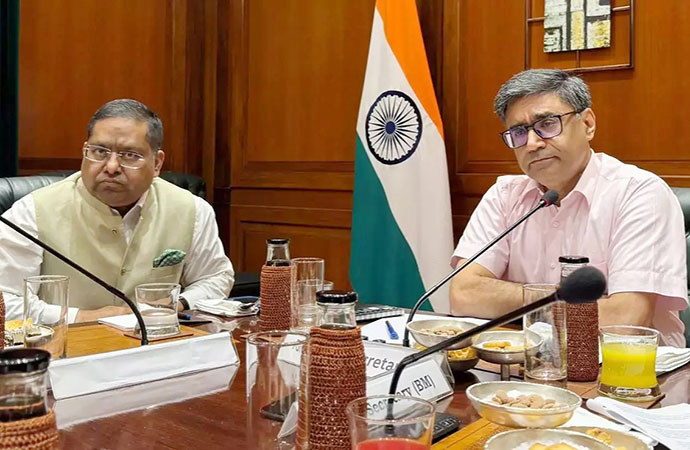
We all got a sampling of that in the course of the last seven days, as within two days of returning home from the triumph at the UN, the foreign minister was off to Russia where he held in-depth discussions with Russian Foreign Minister Sergey Lavrov in Moscow regarding UN cooperation. Dr. Rahman outlined his priorities for the UNGA, focusing on the interests of the Global South and East. According to a handout from the Russian Foreign Ministry, the talks took place "in an atmosphere of trust and mutual understanding," characteristic of the traditionally friendly relations between Russia and Bangladesh.
During the talks, Dr Rahman sought Russia's support for concluding a free trade agreement between Bangladesh and the Eurasian Economic Commission to further boost trade and investment. The two countries also discussed cooperation in multilateral platforms with Bangladesh expressing interest in becoming an official member of BRICS and the Shanghai Cooperation Organisation (SCO).
Cooperation in advanced technologies featured prominently in the discussions. The two sides agreed to work together on the application of artificial intelligence in healthcare and agriculture, while Dr Rahman proposed a visit by a Russian delegation to Bangladesh to explore potential collaboration in the sector.
The foreign minister also met the Director General of Russia's state nuclear energy corporation Rosatom Alexey Likhachev. The meeting reviewed the progress of the Rooppur Nuclear Power Plant project and discussed prospects for further Bangladesh-Russia cooperation in the field of nuclear energy.
Shortly after returning from his assignment in Moscow, Dr Rahman was headlining an investment summit jointly organised by the Ministry of Foreign Affairs and the Bangladesh Investment Development Authority (BIDA), where he pitched Bangladesh as a "stable, predictable and open destination" for international partners despite mounting global economic pressures.
He also said Bangladesh faces the challenge of recalibrating its international economic engagement amid "slowing global trade growth, geopolitical tensions, policy uncertainty, climate risks, rising trade barriers and structural shifts in supply chains," while outlining the BNP government's strategy to deepen economic diplomacy and strengthen investment ties as part of its broader growth agenda.
This signals a new, more dynamic aspect to foreign policy formulation under Dr Rahman, drawing on his years of experience in international trade diplomacy at the United Nations Conference on Trade and Development (UNCTAD), and his training as an economist. Over the years, economic diplomacy is one area in which Bangladesh has struggled to make its mark on the international stage. Even as he juggles his two equally prestigious roles in the days and months ahead, we can look forward to him leaving his mark in both, for he is certainly capable enough to do so.
Enayetullah Khan is an Editor-in-Chief at United News of Bangladesh (UNB) and Dhaka Courier.
A Independent Newsweekly
© Copyright 2026 | Designed by ARK Reepon & Developed by Cosmos Group Software Team




Leave a Comment
Recent Posts
Why not zero tolerance for mea ...
While the nation continues to be swept up by World Cup fever, we must ...
The Long Present: A Dialogue A ...
The exhibition The Long Present, currently on view at Bengal Shilpalay ...
South Asia’s cultural future lies in collaboration: ..
Tribandhon: Three Artistic Voices in Conversation
A B-52 bomber crashed shortly after takeoff at a US ..
Amid intense political controversy, Bangladesh Bank ..