


Column
Who are our ancestors, the ancient Bengalis, Bangladeshis?

An Independent Newsweekly


Column
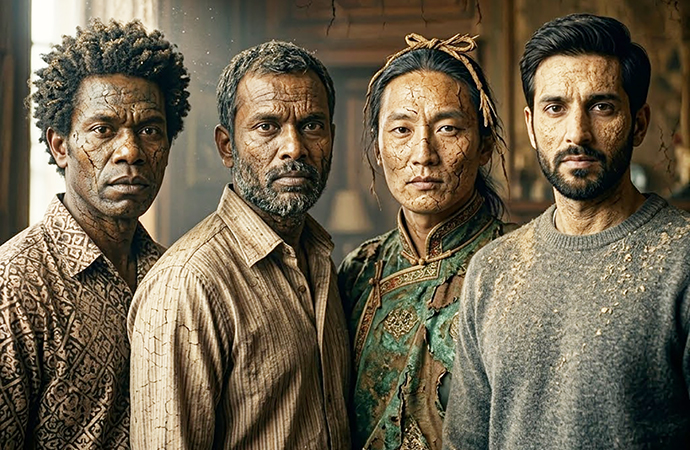
Negritos + Ancient south Indian/Dravidian +East asiatics + Indo aryans = bengali?
At first sight, the question seems unnecessary. Aren't we all Bengalis, those who speak this tongue, that great language of Bengal called Bangla? Language is considered our identity and history is measured from there.
However, history says, people of this region have been here for a very long time, much longer than the Indo-Aryans from whom the language sort of evolved. So Indo-Aryan wasn't the first language of the region. But then was there one region and one people at any time?
So where is history then if not in our culturally claimed Indo-Aryan roots from which Bangla evolved over centuries? If there were earlier people before the Indo-Aryan migration and who were they. How do we know all that?
If we go by DNA data which is how ancient worlds are now studied, it seems the Indo-Aryans pushed the earlier groups from the mainstream and established a socio-economic supremacy. More of that later but then when did migration, settlement and the rest began?
Out of Africa?
Having lived in places where the Bengali diaspora existed, I know that Bengalis are anti Black racists. So, it might not be pleasant for them to learn that everyone including us have come from Africa. So, the original inhabitants of what is now Bengal including both zones, were first populated by groups called Negritos that are directly linked to African tribes settling all over the world for many centuries.
Evidence points to settlement of Austroasiatic/Proto-Australoid people who are also called Nisadas by some as the first settlers in Bengal. Do their direct ancestors still live amongst us? Yes and they are the dark skinned "ethnic" tribes like the Santals plus Kols, Bhils and a few others who first stepped into this soil.
Next came the group known as Ancient Ancestral South Indians (AASI) from the Indus plains and mixed with the local Negritos too. They were from the hunter-gatherer period and later mixed with other groups in Bengal including late arriving Indo Aryans.
In the North Indian zone where the first arrived, a section of them also mixed with the Iranians Farmer groups or Zagros Aryans who came after they did and later the AASI moved to South India where they were a pioneer population and became known as Dravidians. So technically speaking they are similar to Dravidians but not so, rather pre-Dravidian people who later became so.
East Asiatic and Tibeto-Burmans
The arrival of East Asiatic and Tibeto-Burman populations in Bengal was not a single event like all previous migrations but a series of migrations spanning thousands of years, with major movements occurring between 5,000 BCE and the medieval period. In layman's terms, we can safely call them Mongoloid who can be traced to what is next door Myanmar stretching back to the Chinese zone.
So a quick sum up to make some sense.
Early Settlement (Neolithic/Prehistoric Period): The earliest migrations of populations with East Asian ancestry, likely early Austroasiatic and Tibeto-Burman speakers, are linked to the Neolithic period (approximately 5000-10,000 BCE).
Tibeto-Burman Arrival: Tibeto-Burman population groups arrived and settled in the northern and eastern parts of Bengal, particularly during the Buddhist period and in successive waves.
Genetic Evidence of Admixture: Genetic studies indicate that the significant East Asian, Tibeto-Burman, and Southeast Asian admixture in East Bengali populations (approximately 15-25% of the gene pool) largely took place around 1,500 years ago.
Sustained Migration: These groups continued to move into the region through the foothills of the Himalayas and from the Arakan/Burma frontier, forming the ancestry of various tribal communities in present-day Bangladesh and West Bengal.
Indo-Aryans
Archaeological evidence shows human habitation over 20,000 years ago, with organised farming communities appearing around the 2nd millennium BCE. Indo-Aryan influence began later, significantly intensifying around the 5th-6th centuries B.C.
Indo-Aryans entered Bengal around 800 B.C. to the 5th/6th century B.C., migrating eastward from the Gangetic plain and merging with indigenous populations. They introduced Sanskrit-based languages, leading to the development of Bengali, and established Brahmanic culture. This migration was driven by agricultural expansion and, later, the eastward influence of the Mauryan Empire.
Some points about Indo-Aryans in Bengal:
Timeline and Arrival: While they spread across the Gangetic plain earlier, they were established in Bihar, Jharkhand, and Bengal by around 800 B.C. Some sources indicate their influence intensified during the 5th and 6th centuries B.C.
Cultural and Social Impact: The Indo-Aryans brought with them Sanskrit literature, iron implements, and new pottery styles. They established a hierarchical social system, often through the immigration of Brahmans who were granted land.
Integration: The incoming Aryans intermarried with local populations.
Regional Variation: The western part of Bengal was more heavily influenced initially due to its proximity to the Gangetic heartland, while the eastern part remained more closely tied to local traditions.
Linguistic Evolution: The Bengali language is a member of the Indo-European family, originating from the eastern Middle Indo-Aryan language branch (Magadhan Apabhraṃśa also called Magadhi Prakrit).
So who are we? Well we are a mix, a good way to describe us is to say we areca mixed meat and vegetable soup. The Indo-Aryans + Ancient south Indians, Tibeto-Burmans and of course the Negritos population all laid the foundation for the ethnic and cultural composition of modern Bengal and Bangladesh.
4,000 years ago: Evidence of Copper Age settlements and pit dwellings.
2nd Millennium BCE: Rice-cultivating communities established.
1100-530 BCE: Early kingdoms like Vanga, Pundra, and Suhma were established, likely by a mix of these groups before full Aryanisation.
5th-6th Centuries B.C.: Arrival of Indo-Aryans.
A Independent Newsweekly
© Copyright 2026 | Designed by ARK Reepon & Developed by Cosmos Group Software Team






Leave a Comment
Recent Posts
The right time for an apology
The publication of the posthumous memoirs of lawyer Abdur Razzaq, who ...
Human rights experts commissio ...
Human rights experts commissioned by the UN’s top human rights b ...
Teesta erosion leaves several hundred families homel ..
Housing Without Houses: The Hidden Cost of Banglades ..
The Election Commission will review the timeframe
The story behind the Arafat brothers' ‘Kolpona’