


Reportage
Reset to Resume


An Independent Newsweekly
Reportage
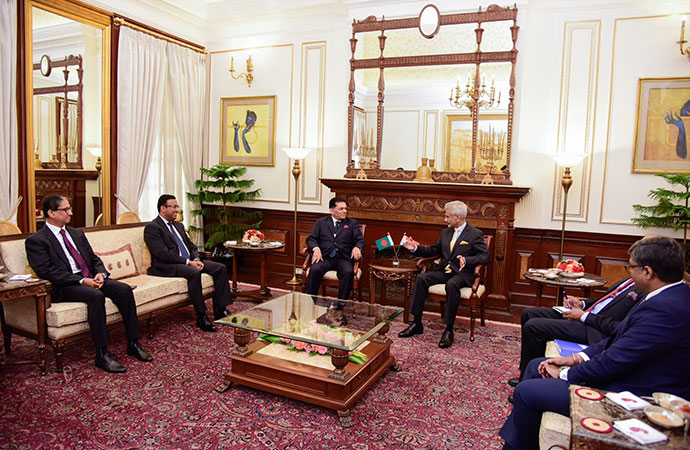
Photo: Collected
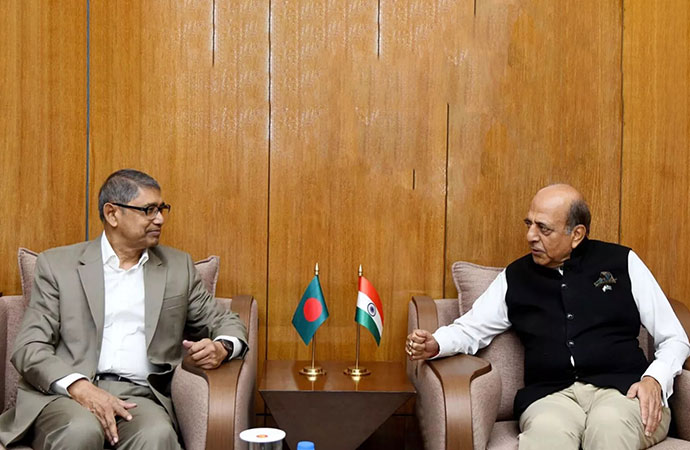
It was the first high-level bilateral engagement between India and Bangladesh in 22 months - since June 2024. The two countries on Wednesday (Apr. 7) vowed to normalise their partnership following almost two years of unprecedented strain in relations, with Indian External Affairs Minister S Jaishankar and his Bangladesh counterpart Khalilur Rahman agreeing to take steps to bolster ties in areas of trade, energy and people-to-people exchanges.
In the meeting with the wily Jaishankar, Khalilur Rahman reiterated Bangladesh's request to extradite former prime minister Sheikh Hasina and her ex-home minister Asaduzzaman Khan Kamal, as they have been convicted by the International Crimes Tribunal in Dhaka, according to a readout issued by Bangladesh. At the same time, it was agreed that the issue relating to Hasina should not impact the overall trajectory of India-Bangladesh relations, according to people familiar with the matter.
Shortly after landing in New Delhi a day earlier, Rahman held wide-ranging talks with India's influential National Security Advisor, Ajit Doval.
It was also the first high-level visit to India by a senior member of the new Bangladesh Nationalist Party government led by Prime Minister Tarique Rahman, that came to power in February following a highly competitive, cutthroat election, that most observers certified as first free and fair election the country had seen in at least 18 years.
Relations with India had been strained since the monumental events of the July Uprising in 2024. Those events had culminated in the overthrow of the most pro-India dispensation in the country's history, with the head of the clan herself decamping to an Indian Air Force safe house on the outskirts of New Delhi. There followed 18 months of an extremely strained bilateral relationship, during which the Indians at one point clearly decided they were not going to engage beyond a point, with what was the interim government in Bangladesh, led by Nobel laureate Dr Muhammad Yunus as chief adviser.
Drifting apart
In the Indian imagination, the ouster of the Awami League was treated right from the start as part of an anti-India wave sweeping through a country of 180 million people. India's historically close relations with Hasina's party had fuelled allegations that New Delhi empowered her government's increasingly autocratic tendencies. To be fair, an anti-India element has always been part of the body politic in Bangladesh, and it was certainly present in the broad, eclectic coalition of forces that in the end brought down the AL in 2024. The Indian media, not exactly known for being the most ethical purveyors of journalism the world has to offer, almost immediately embarked on what seemed like a coordinated campaign to brand the movement that led the Uprising as not only anti-Indian, but also communal, specifically anti-Hindu.
Although the Indian prime minister, Narendra Modi, was the first foreign leader to greet Dr Yunus upon his taking oath as chief adviser to the interim arrangement on August 8, 2024, the messaging from his party, the BJP's senior leaders, and soon enough the government in Delhi itself, began harping on the communal angle, overriding the fact that on many occasions the public's wrath was directed at members or beneficiaries of the Awami League machinery, who just happened to be Hindus.
All this naturally ratcheted up tensions between the two peoples, and eventually it got to a point where the two governments even stopped issuing visas to each other's citizens, except in special circumstances. The fact that Hasina fled to India and has continued to make statements from there added to the bad blood, as did a verdict in the country's International Crimes Tribunal last November, which found her guilty of crimes against humanity and sentenced her to death. Although Bangladesh and India maintain an extradition treaty, Delhi refused to extradite Hasina on the grounds that it has the right to refuse requests if the offence was of a 'political nature'.
Throughout the period, India harped on the need for Bangladesh to hold elections as soon as possible, and so once the Bangladesh Election Commission finally announced the schedule for the country's 13th general election, New Delhi finally had a date to restore normalcy in ties, although its insistence that the election should be 'inclusive' - taken to mean that the AL should be allowed to participate - triggered old wounds within Bangladesh, as successive Indian governments had been happy to remain bystanders while the AL effectively dismantled the country's electoral system. Still, India nurtured hopes that the return to democratic rule in Bangladesh would help reset relations.
In preparation, New Delhi sought to deepen and diversify its political engagement with Bangladeshi political actors, and to dispel allegations surrounding its historic ties with the Awami League. It soon became clear that the Islamists of Jamaat e Islami and the Gen Z segment represented by the newly formed National Citizen party, harboured the lion's share of the hostility towards their bigger neighbour. The BNP, traditionally the only party able to match the AL support base and pedigree in electoral politics, had a history of anti-India politics in the past, but in the new, changed reality, they became viewed as the most palatable option for India to resume engaging with a country with which it shares the world's fifth-longest land border, measuring 4,096.7 kilometers (2,545 miles). It was a case of "Better the Devil you know, than the one you don't."
The Devil you know
It also helped that the BNP were heavy favourites to cruise to victory in the February elections, which they duly did. But India's outreach began months in advance. External Affairs Minister S Jaishankar visited Dhaka to attend the funeral of Khaleda Zia - the BNP's longest-serving chairperson, thrice-former prime minister, and by the time of her death, an icon of the country's struggle for democracy, at just a day's notice on December 30, turning the occasion into an international event as other SAARC countries also sent their representatives. Jaishankar's attendance was perceived by the BNP as a "gesture of goodwill". His delivery of Narendra Modi's personal message of condolence to Tarique, just six days into his return from a 17-year exile, signalled New Delhi's pragmatism at a time when diplomatic relations were otherwise at a historic low.
Following the BNP's election win, India expressed its readiness to support Bangladesh's endeavours to build a democratic, progressive, and inclusive nation. It expressed its commitment to deepening an enduring partnership, inviting Tarique Rahman, now Bangladesh's new prime minister, to visit India along with his family. In keeping with the positive momentum in ties, India sent Lok Sabha Speaker Om Birla and Foreign Secretary Vikram Misri as representatives of the Indian government at the swearing-in ceremony of Tarique Rahman as PM on February 17.
The Bangladesh High Commission, meanwhile, resumed visa services for all categories for Indian citizens. Moreover, the Kolkata-Agartala bus service via Dhaka also resumed after a 17-month hiatus, and the Indian High Commission in Dhaka announced full scholarship opportunities for Bangladeshi students under the Indian Council for Cultural Relations programme for the present academic year. All of these were seen as positive steps towards people-to-people connectivity.
Nearly a year after taking up his assignment, Bangladesh High Commissioner to India Riaz Hamidullah was finally granted a meeting with the Indian External Affairs Minister on March 20. Not long after, in his first courtesy meeting with Indian high commissioner Pranay Verma, Bangladesh Foreign Minister Khalilur Rahman expressed the need for a balanced partnership for the welfare of both countries based on mutual interest. Both agreed to maintain regular and constructive communication to strengthen bilateral relations. It was in this meeting that Verma conveyed the Indian external affairs minister's invitation to Rahman to visit Delhi.
Now for the thaw
The two countries' officials had been exchanging comments in keeping with the spirit of mutual understanding. On March 25, Genocide Day in Bangladesh marking the anniversary of the infamous Operation Searchlight of 1971 by the Pakistan military, Prime Minister Tarique Rahman had paid tribute to the victims of the Pakistani military's atrocities. "They indiscriminately opened fire on teachers, intellectuals and innocent civilians at various places, including Dhaka University, Pilkhana and Rajarbagh Police Lines, killing many people," the Bangladesh PM wrote.
Following his remarks, the Indian Ministry of External Affairs on March 27 said that Operation Searchlight and the resultant violence in its aftermath in 1971, led to the "murder of millions of innocent Bangladeshi people and mass sexual crimes against women".
"These atrocities shook the conscience of the world. Pakistan, however, remains in denial to this very day of its crimes. We support Bangladesh in its desire for justice," MEA official spokesperson Randhir Jaiswal said, adding that "India supports Bangladesh's desire for justice."
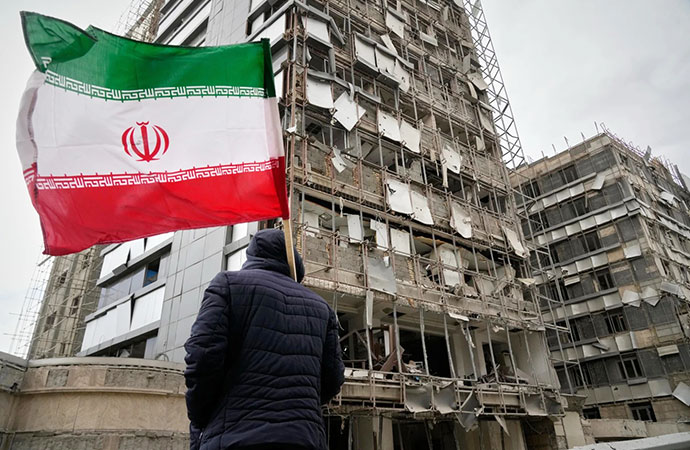
But the biggest filip to ties arguably came in the backdrop of the US-Israel war against Iran. Around ten days after the start of the US-Israeli aggression, India sent a major consignment of diesel to Bangladesh, as the government in Dhaka struggled to deal with a critical shortfall in petroleum and other fuels. It was the second consignment this year under a 15‑year bilateral agreement.
BPC regularly imports refined petroleum from Numaligarh Refinery Limited through the pipeline, which has operated since 2023. Under the agreement, Bangladesh is entitled to import 250,000 tonnes annually in the first three years, rising to 400,000 tonnes by the 11th year. Imports stood at 70,055 tonnes in 2024 and rose to 122,000 tonnes in 2025, about 3 percent of total diesel imports, according to BPC data.
Although the fuel was part of bilateral trade between the two nations, the timing was important, and the government in Dhaka acted swiftly and resolutely to secure the supplies - ignoring some taunts from the opposition that tried to portray the BNP as merely a substitute for the Awami League, as a tool to perpetuate India's regional hegemony.
But that of course runs counter to the BNP-led government's frequently articulated foreign policy posture- one that is framed on the basis of "Bangladesh First" - a principled, balanced diplomacy without overdependence on any one nation. Khalilur Rahman had earlier conveyed this to the Indian envoy in Dhaka. He did it again in Delhi, this time for Jaishankar himself.
"Rahman stated that the recently elected BNP Government under the leadership of Prime Minister Tarique Rahman would pursue its foreign policy in accordance with the principle of 'Bangladesh First' and on the basis of mutual trust and respect and reciprocal benefit," the Bangladeshi readout of the Khalilur Rahman-S Jaishankar meeting said.
It said the foreign minister thanked the Indian government for apprehending the suspected killers of student leader Shaheed Osman Hadi.
"Both sides agreed that the arrested individuals will be returned to Bangladesh in accordance with the procedures laid out in the extradition treaty between the two countries," it said.
A readout from the Indian Ministry of External Affairs was silent on the issues of Hasina and Hadi. Hasina and Kamal have been living in India after they fled Bangladesh following the collapse of the Awami League Government in August 2024 in the face of a massive student-led agitation.
Hadi, one of the most beloved figures behind the Uprising, was shot by gunmen in Dhaka last December and was subsequently taken for treatment to Singapore, where he died. The attack on Hadi had triggered huge protests in Bangladesh, with many elements trying to link India to his killing.
"We discussed strengthening our bilateral relationship in its various facets. Also exchanged views on regional and global developments. Agreed to remain in close touch," Jaishankar said in a social media post after meeting Rahman.
In its readout, the Indian MEA said Jaishankar reiterated "India's desire to engage constructively with the new Government and further strengthen bilateral ties."
"The two sides agreed to explore proposals for deepening the partnership through the relevant bilateral mechanisms. Follow-on official meetings are expected to take place at an early date. Further, both sides exchanged views on regional and global issues of mutual interest," it said.
In the discussions, Jaishankar assured the Bangladeshi delegation that issuance of visas to Bangladeshis, particularly medical and business visas, would be eased in the coming weeks. It is learnt that both sides also decided to focus on boosting trade and energy ties.
The Bangladesh foreign minister also met India's Oil and Natural Gas Minister Hardeep Puri.
"Rahman expressed thanks to Minister Hardeep Puri for the recent supply of diesel to Bangladesh by India and requested to increase the volume of supply of diesel and fertiliser," the Bangladeshi readout said. "Minister Puri indicated that the Government of India will consider the request readily and favourably," it said.
Following the meeting, Bangladesh began importing an additional 8,000 metric tons of diesel from India through the Bangladesh-India Friendship Pipeline to Padma Oil PLC's Parbatipur depot. As Dhaka Courier went to press, some 5,500 metric tons had already arrived, confirmed Kazi Md. Robiul Alam, Manager (Operations) of Meghna Petroleum Limited.
He said, "To ensure the country's energy security, the government regularly imports diesel from India through the pipeline. As part of this initiative, pumping from Assam's Numaligarh Refinery began at midnight on April 7. So far, 5,500 metric tons have been delivered, and pumping is on."
Robiul Alam added that the pipeline is expected to supply the full 8,000 metric tons, with the operation likely to be completed by April 11. Refined diesel has been imported through this pipeline from Numaligarh Refinery since 2021. Despite all the tensions and strains in the Bangladesh-India relationship that were exposed during and after the July Uprising, the pipeline looks set to keep pumping for many years still. And in neighbourly relations, that is for the best.
A Independent Newsweekly
© Copyright 2026 | Designed by ARK Reepon & Developed by Cosmos Group Software Team




Leave a Comment
Recent Posts
A Battle for the Soul of The N ...
Two disturbing incidents came to light this week, even as they went un ...
Dhaka seeks concrete measures ...
State Minister for Foreign Affairs Humaiun Kobir on Thursday urged Sou ...
Bangladesh Embassy in Ireland begins operations
Dinesh Trivedi stresses proper preparations before T ..
The Hope Deficit: Why Bangladesh’s Revolution Must M ..
Iqbal Bahar Chy: Finding freedom in the unplanned