


Featured 1
Energy Security At Stake


An Independent Newsweekly


Featured 1
www.magnific.com
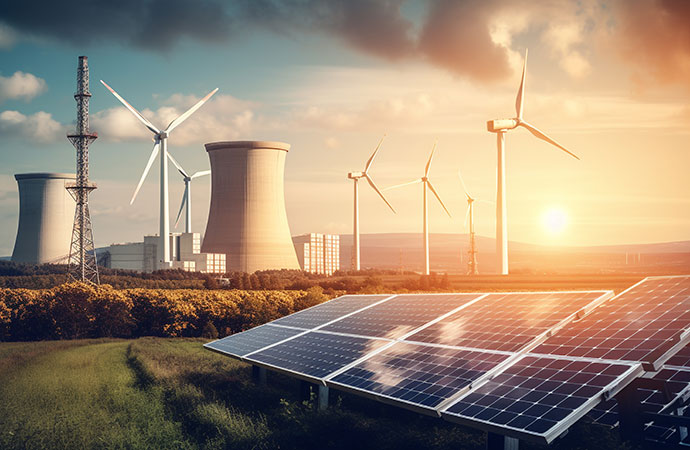
For the last ten days, Bangladesh has been grappling with a severe gas crisis as one of the two FSRUs (Floating Storage and Regasification Unit) through which imported LNG was being regasified and added to the national grid became in operational following a fire on July 21. According to sources at the Energy and Mineral Resources Division, Excelerate Energy, the contractor for this particular FSRU, has requested until August 10 to fully restore operations at its damaged LNG terminal. The freak accident knocked out nearly 20% of the country's daily gas supply, which fell from 2700mmcfd to 2150mmcfd in a matter of days (against a demand of 3800mmcfd).
Petrobangla officials have told the media that several replacement parts have already been imported from abroad and delivered to the terminal. Alongside the foreign technical team, engineers from a local shipbuilding company have joined the repair work.
The government has repeatedly expressed regret over the situation in recent days. Petrobangla and Titas Gas, the gas distribution company serving Dhaka, have also apologised to customers through public statements, while Titas has issued several notices saying all categories of consumers in its service area would continue to experience severe low gas pressure until the situation improves.
Amid the severe gas shortage, Petrobangla has recently sought policy approval from the Ministry of Power, Energy and Mineral Resources to propose higher gas prices for the power generation and CNG sectors. The government has also sought Malaysia's assistance in addressing the gas crisis. Discussions are underway on importing LNG in ISO tank containers (specialised containers), that could then be delivered to individual industries, fertiliser plants or power plants. The LNG could then be regasified through small-scale regasification units installed at the facilities.
While this could offer a faster alternative for industries that have been waiting for gas connections or are struggling to receive adequate supplies through the national grid, this is an expensive and time-consuming option, offering little prospect of immediate relief. The reality is that the gas shortage is unlikely to ease until the damaged LNG terminal is fully operational again.
In the midst of the crisis, the government has also moved to "fast-track" the installation of a new FSRU at Kutubjom in Maheshkhali, Cox's Bazar. A proposal submitted by Chinese company China National Energy Engineering and Construction Co Ltd (CNEE) under a government-to-government (G2G) arrangement received the approval of the cabinet's top policymaking body. But "fast-track" does not mean immediate or even short-term relief. FSRUs are complicated to build and bring on-board. It also ties us to a future of import-dependency in the energy sector, which will act as the biggest drag on our foreign exchange reserves, as we have seen since 2022.
The volatility in the international energy market that resumed that year with the start of the Russia-Ukraine war shows no sign of going away, if the latest developments in West Asia, or the Middle East, are anything to go by. It is a situation that calls for much broader thinking and ideating on the part of government officials, in order to secure the country's energy future. In particular, they must resist the easy draw of going with the flow of import dependency that the last fallen government instituted. The new, post-Uprising government must realise that is not what the people voted them in for.
A Independent Newsweekly
© Copyright 2026 | Designed by ARK Reepon & Developed by Cosmos Group Software Team




Leave a Comment
Recent Posts
A Battle for the Soul of The N ...
Two disturbing incidents came to light this week, even as they went un ...
Dhaka seeks concrete measures ...
State Minister for Foreign Affairs Humaiun Kobir on Thursday urged Sou ...
Bangladesh Embassy in Ireland begins operations
Dinesh Trivedi stresses proper preparations before T ..
The Hope Deficit: Why Bangladesh’s Revolution Must M ..
Iqbal Bahar Chy: Finding freedom in the unplanned