


Column
The Geopolitics of the Arctic: Why Climate Futures Matter?

An Independent Newsweekly
Column

The Arctic, long considered a remote and largely inaccessible frontier, has emerged in the twenty-first century as one of the most consequential geopolitical arenas on the planet. As climate change accelerates the melting of polar ice, what was once a frozen barrier is rapidly transforming into a contested space of extraordinary strategic, economic, and ecological significance. The paper offers a nuanced examination of this transformation through the lens of "climate futures" thinking. The central thesis is critical: humans create geopolitics, not the other way around. Geopolitics can only exert momentary influence on human behaviour, whereas human choices, driven by imagination and deliberate intention, shape the long-term trajectory of global affairs. Understanding climate futures is therefore not merely an academic exercise but an urgent civilisational imperative.
Climate Dystopia: The Environmental Crisis in Context
Before examining the Arctic specifically, one must situate the discussion within a broader portrait of planetary ecological distress. The Earth is currently experiencing simultaneous, interconnected crises: soil degradation, freshwater depletion, marine ecological collapse, habitat destruction, accelerating species extinction, and widespread pesticide contamination affecting soil, food, water, and human bodies. This is not a peripheral or temporary disruption - it is a systemic unravelling of the natural systems upon which all life depends.
The Arctic dimension of this crisis is particularly alarming. Arctic ice is melting at an unprecedented rate, and climate models now project that the Arctic Ocean could experience its first completely ice-free summer between 2040 and 2050. The consequences of this development are simultaneously ecological and geopolitical. Ecologically, the Arctic plays a foundational role in regulating global climate systems. A single drop of Arctic seawater contains millions of microorganisms, including phytoplankton responsible for producing at least half of the Earth's oxygen. The loss of Arctic ice, therefore, threatens not only a regional ecosystem but the very respiratory systems of the planet. Yet paradoxically, this same melting is generating intense interest among powerful nations, corporations, and military establishments eager to exploit newly accessible resources and routes. The crisis itself is becoming a source of competition.
One cannot help but invoke J. Robert Oppenheimer's haunting reflection upon witnessing the first atomic bomb detonation in 1945 - "Now I am become Death, the destroyer of worlds" - as the symbolic entry point into what scientists call the Anthropocene: the geological epoch defined by humanity's capacity to reshape planetary systems irreversibly. The Arctic meltdown is a defining feature of this age.
The Arctic Race: Geopolitical Compulsions
The opening of the Arctic has triggered what can be best described as a geopolitical race involving multiple state and non-state actors. The economic stakes are staggering. The Northern Sea Route (NSR), which runs along Russia's Arctic coastline, is approximately 40 per cent shorter than the traditional Suez Canal route - reducing distances from approximately 21,000 kilometres to 13,000 kilometres and cutting voyage times from 35-40 days to 18-22 days. For the global shipping industry, this translates into savings of between $300,000 and $600,000 per voyage, making the route extraordinarily attractive for international commerce. Additional routes - the Trans-Polar Route and the Northwest Passage - offer further alternatives that could fundamentally restructure global trade geography.
Beyond shipping, the Arctic contains a trillion-dollar potential in natural resources. Oil, natural gas, rare earth minerals, copper, iron ore, diamonds, gold, zinc, and cobalt are all present in significant quantities. Many of these critical minerals are essential components of the technologies required for the global energy transition - solar panels, wind turbines, and electric vehicle batteries. The cruel irony is inescapable: the very minerals needed to address climate change are being unlocked by climate change itself.
The competing actors in this Arctic race include Canada, China, the European Union, India, Russia, and the United States. Russia, which possesses the longest Arctic coastline and has maintained a consistent strategic interest in the region, has invested heavily in military infrastructure. Research also shows that the Arctic now includes Russian installations, including the Wrangel Island air base, the Kotelny Island missile base, the Alexandra Land naval base, the Novaya Zemlya air base, and the Severomorsk Northern Fleet headquarters. NATO and American forces are positioned in countervailing configurations, ensuring that the Arctic is increasingly a theatre of both military and economic competition. Approximately one million tourists also visit the Arctic annually, adding a commercial dimension that further complicates the geopolitical picture.
The Historical Roots of Conflict-Based Geopolitics
To understand why nations respond to the Arctic's transformation as they do, one must trace the intellectual genealogy of traditional geopolitical thinking. Nineteenth- and twentieth-century theorists, including Johan Rudolf Kjellen, Karl Haushofer, Alfred Thayer Mahan, Friedrich Ratzel, and Halford John Mackinder, collectively constructed a worldview premised on territorial competition, resource acquisition, and zero-sum power contests. Mackinder's famous formula encapsulates this logic: "Whoever rules Eastern Europe will rule the Heartland, whoever rules the Heartland will rule the World Island, and whoever rules the World Island will rule the world." This framework, rooted in the concept of Lebensraum or "living space," provided intellectual justification for Western colonisation and centuries of imperial competition.
The tragedy is that this conflict-based geopolitical paradigm remains deeply embedded in contemporary international relations. The Arctic race is, in many respects, a twenty-first-century replay of nineteenth-century imperial logic - new geography, new resources, familiar patterns of extraction and competition.
The Madeira Syndrome: Capitalism and Ecological Crisis
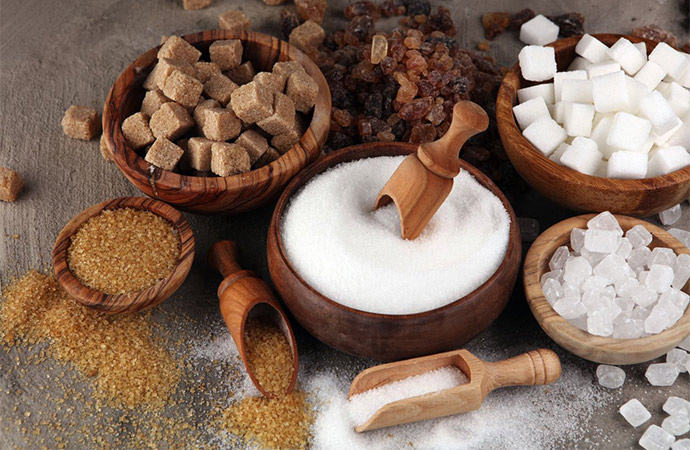
A particularly illuminating contention arises from George Monbiot's analysis of what has come to be known as the "Madeira Syndrome" - a pattern characterised by the boom-bust-quit cycle of capitalist resource extraction. The island of Madeira, colonised in the 1420s, serves as the historical archetype. Portuguese colonisers cleared the forests, enabling highly productive agriculture. Sugar production reached its peak in 1506. By 1525, however, production had declined by 80 per cent as soil exhaustion rendered the land unproductive. The colonisers abandoned Madeira and moved on - to São Tomé, then to Brazil, then to the Caribbean - repeating the cycle across geographies and centuries.
This pattern is not an aberration but a feature of capitalist accumulation. Ecological crises are built into the logic of endless growth. Resources are seized, exhausted, and abandoned, with the costs externalised onto local populations and ecosystems, while profits are privatised. Applied to the Arctic, this analysis raises a deeply troubling question: are the nations and corporations now racing to exploit Arctic resources engaged in anything fundamentally different from what the colonisers of Madeira did six centuries ago?
Reimagining Geopolitics: From Conflict to Cooperation
One must reimagine both development and geopolitics from the ground up. The idea is to move beyond conflict-based frameworks toward cooperative models characterised by a multiverse approach - acknowledging multiple coexisting realities and perspectives - combined with multifocal attention that operates across near, intermediate, and distant ranges, and multilayer engagement that accounts for complex interactions across different organisational and functional scales.
This reimagination requires, first, a fundamental rethinking of development itself. One must make growth human-centred rather than capital-centred, decolonising the mind from inherited Western frameworks, embracing indigenous knowledge systems, investing in degrowth innovation, glocalizing knowledge production, and socialising both profits and losses. These are not utopian abstractions but practical orientations grounded in the recognition that the current development paradigm is ecologically catastrophic.
The Arctic's indigenous peoples - the Yupik, Chukchi, Evenk, Aleut, Inuit, Nenets, and others - offer precisely the alternative knowledge systems. These communities have "lived peacefully for ages" in the Arctic, developing sophisticated understandings of ecological relationships that industrial civilisation has consistently disregarded. Any serious reimagining of Arctic governance must centre the voices, rights, and knowledge of Arctic peoples and draw lessons from their cooperative ways of life.
At the same time, one must situate such reimagining within a rapidly shifting global economic landscape. By 2026, in purchasing power parity terms, China's economy stands at $43.5 trillion, India's at $19.1 trillion, and the United States at $31.8 trillion. Asia accounts for 49 per cent of global PPP GDP. This multipolar emergence creates both new complications and new possibilities - a more fluid, networked world in which no single power can dominate and where cooperation becomes both more necessary and more achievable.
The Power of Imagination
The most philosophically resonant thread is the emphasis on imagination as a political and civilisational capacity. Ibn Arabi, the twelfth-century Sufi philosopher, declared: "He who does not know the status of imagination has no knowledge whatsoever." Albert Einstein echoed this insight seven centuries later: "Imagination is more important than knowledge." Mainstreaming climate futures thinking means leveraging precisely this human capacity - the ability to envision worlds that do not yet exist and to work toward their realisation.
Two possible Arctic futures can be envisioned. The first involves refreezing the Arctic through technological and environmental restoration - a project that is more theoretical than practical. The second envisions multi-policing the Arctic for humanity through international governance frameworks that protect the region for all peoples, respect indigenous rights, and prevent unilateral exploitation. Both scenarios require imagination - the courage to think beyond the inherited logic of competition and extraction toward something genuinely new.
Conclusion
The Arctic is not simply a geographical space. It is a mirror in which humanity can see, with unusual clarity, the consequences of its choices. The accelerating meltdown of Arctic ice reflects the failure of an extractive, growth-obsessed development paradigm. The geopolitical race to exploit newly accessible resources reflects the persistence of conflict-based thinking rooted in nineteenth-century imperial logic. But the Arctic also represents an opportunity - a test case for whether humanity can choose differently. The contention is grounded in imaginative capacity, historical analysis, ecological awareness, and genuine intellectual courage and offers a roadmap for a different choice. Time, one must note, is not linear but circular: the past, present, and future are in constant dialogue. It is not too late to learn from one and reimagine the other. Indeed, it would be wise for the Ministry of Foreign Affairs of the Government of Bangladesh to establish an "Arctic Cell" so that research can begin to inform the design of a sound Arctic policy, indeed, not only to benefit Bangladesh's trade but also to contribute to a peaceful world.
Professor Imtiaz Ahmed, Executive Director Centre for Alternatives Dhaka-1000. Email: imtiazalter@gmail.com
A Independent Newsweekly
© Copyright 2026 | Designed by ARK Reepon & Developed by Cosmos Group Software Team



Leave a Comment
Recent Posts
The government passes the test ...
One of the cornerstones of the political earthquake Bangladesh witness ...
The government hiked the price ...
The government hiked the price of a 12kg cylinder of liquefied petrole ...
Police in France stand accused of using excessive fo ..
The India-Pakistan Cold War
A week on from DNCC’s eviction drive, Mirpur-10 rema ..
Equal Service, Unequal Pensions: Time for a Fairer S ..