


Society
Discussion on a novel about Abul Hussain and others of Shikha


An Independent Newsweekly


Society
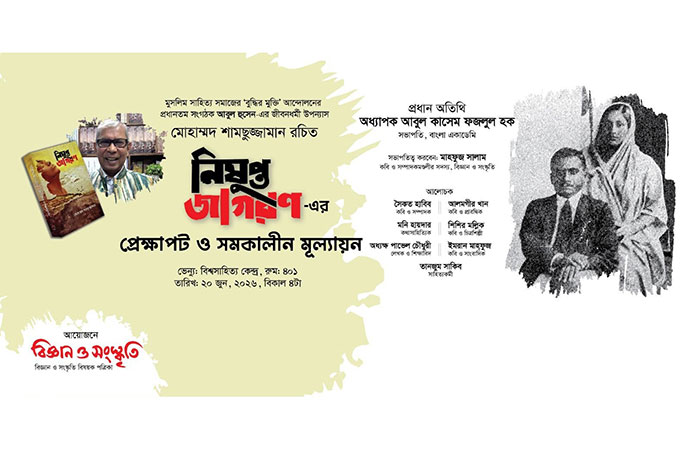
On 20 June 2026, Biggan O Sangskriti, organised a discussion programme on a new Bengali novel, Nishupto Jagoron (Between slumber and waking up), by Mohammad Shamsuzzaman, was held at Bishwo Shahitto Kendro. The novel is based on the life of Abul Hussain, the key figure behind the Muslim Sahitya Samaj, which made a campaign of uplifting the Bengali Mussalmans by fighting against the socio-cultural chains that have kept them down for centuries. This is a sort of renaissance for the Muslims in Bangladesh initiated by Anwarul Qadir, Abul Hussain, Kazi Abdul Wadud, Qazi Motahar Hussain, Abdul Qadir and their close friends in the 1920s. Shikha, a periodical as their literary organ published from 1927 to 1931, has made an indelible footmark on the history of the intellectual advancement of Bengali Mussalmans. Though the literary society contained the word Muslim at the front of this name, it had both Muslim and Hindu writers as participants in its literary practises and activities.
Shikha circle's role and influence in the subsequent development of the Muslim people in Bangladesh has been deep and long lasting. Mohammad Shamsuzzaman, a poet and story writer since his young days, has taken it upon himself to portray the life of Abul Hussain and his comrades focusing their great struggle against the existing deep rooted belief system as a barrier to progress. This struggle put them face to face with the feudal power ruling the then society. Some including Abul Hussain put their lives at risk in their mission of reforming the society. This historical tale is narrated in details in this novel. Abul Hussain's portrayal is done with a commitment to truthfulness and some vital characters including his wife Mouluda have blossomed to a good extent. The then society wallowing in the darkness of poverty, ignorance and religious fears has very distinctly come up in Shamsuzzaman's writing.
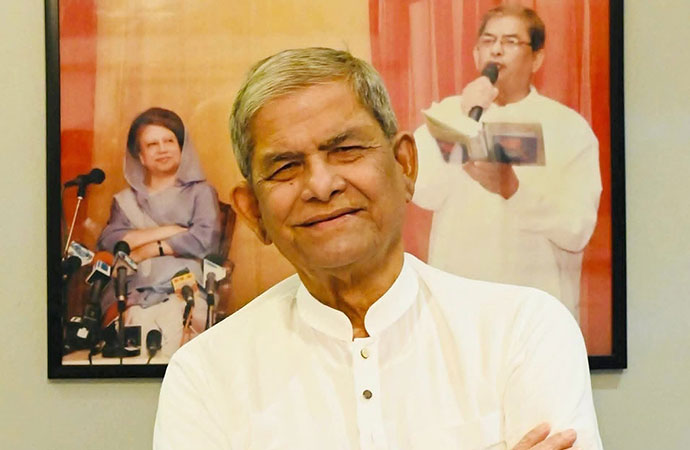
At the discussion programme on this book, Professor Abul Kashem Fazlul Haq was the Chief Guest. In his speech on the book, he said, "The state has to be built for serving everyone's interests irrespective of any consideration of gender, wealth, belief, skin colour, etc. Society consists of both rich and poor people, but the gap between the two should be brought down and minimised as much as possible. There are injustice, unfairness, deprivation, etc. prevailing in a society. But the practise of justice, fairness and fulfilling everyone's needs must continue everywhere all the time. This is what Abul Hussain and his friends put their efforts into doing."
At the beginning of the programme, Nazneen Shathi, Executive Editor of Biggan O Sangskriti, put forward to the audience the activities and commitment of the organisation and explained the reason of holding the discussion programme on the book.
The poet Anarjo Nayeem read out short biographies of the novelist Shamsuzzaman and Abul Hussain. Saikat Habib, a poet and essayist, Moni Haider, a story writer, Pavel Choudhury, a teacher and writer, Emran Mahfuz, a poet and journalist, Shishir Mallick, a writer and artist, Alamgir Khan, Editor of Biggan O Sangskriti, and Tanjum Sakib, a young literary activist, discussed the novel from various point of views and highlighted the key aspects of it.
The author Mohammad Shamsuzzaman thanked discussants for their sincere and in-depth discussions bringing out the upsides and some downsides of the novel. He told of the years he toiled exhaustingly for compiling the facts and fictionalising many of the dialogues for this novel.
Mahfuz Salam, a member of the editorial board of Biggan O Sangskriti, said, "Biggan O Sangskriti is always committed to spreading scientific views and removing darkness from the mindscape of our people."
Reaj Mahmud moderated the discussion. The hours long programme on this novel of more than 500 pages was made successful and engrossing by the presence of writers, cultural activists, social workers and many enthusiastic people in Dhaka.
A Independent Newsweekly
© Copyright 2026 | Designed by ARK Reepon & Developed by Cosmos Group Software Team





Leave a Comment
Recent Posts
The right time for an apology
The publication of the posthumous memoirs of lawyer Abdur Razzaq, who ...
Human rights experts commissio ...
Human rights experts commissioned by the UN’s top human rights b ...
Teesta erosion leaves several hundred families homel ..
Housing Without Houses: The Hidden Cost of Banglades ..
The Election Commission will review the timeframe
The story behind the Arafat brothers' ‘Kolpona’