


Column
Selling junk and making some extra money in time of need


An Independent Newsweekly


Column
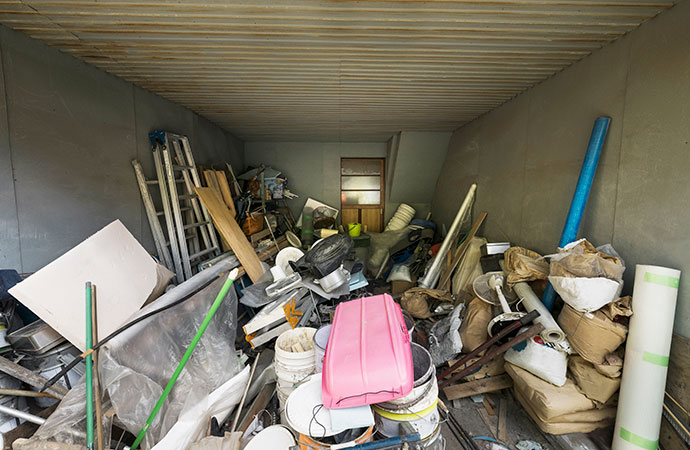
Photo: www.magnific.com
Junk and garbage selling is nothing new in this world. It is a time-honoured practise that not only helps the seller financially for filling the gaps of small needs, but also keeps the abode clean and tidy. In our society, selling outdated or discarded items is seen as a normal practise that most of the social groups, starting from the bottom of the ladder and climbing upward well to the top, actively participate. For tightly budgeted middle-class families, this also comes as a blessing that can patch-up the shortcomings of purses at the end of the month. Many in my generation might remember the regular visits of street vendors at our doorsteps, not with the purpose of selling any commodity item but for purchasing old newspapers. Our mothers would have been happy to discard the stock in exchange of small amount that would add to the tightly calculated household expenditure.
Most of us had been familiar with this household norm of getting rid of accumulated junk items, of which old newspapers were most common. But what we generally overlook is; this practise of getting rid of items no longer considered essential is also being followed by states on a regular basis and items under state ownership that quickly become junk are military hardwire. Stronger a country's militarily might be, quicker the pace of junk being accumulated in its arsenal. The reason is not difficult to understand as not a single of powerful countries in our world is willing to be overtaken by rivals, and hence there is an endless desire for upgrading the stockpiles of deadly weapons. This, on the other hand, accumulates the stockpile of unused arms and ammunitions on a regular basis.
The big question that arises in this context is, what to do with all those discarded military hardwires, for which unlike those taken care of by our mothers, there is no easy way for getting rid of? However, we also know for sure that no big problem in our world remains unsolved for very long and we always find an acceptable solution. And here emerges the idea of military assistance, a type of foreign aid that rich countries offer to their poorer friends and partners. A huge amount of military hardwire that become outdated and obsolete on a regular basis find their way to poorer friendly states in the form of a much needed and timely help for keeping their armed forces strong enough to thwart any real or presumed attempt of an outside power to subjugate or intimidate them. The game is also known as strategic support or security assistance that for larger items like combat aircrafts, jet fighters as well as frigates and battleships are not given free of charge. Overtly, it might be seen as a noble way of helping poorer colleagues, though a closer scrutiny might reveal the hidden reality of the existence of an indirect path of getting rid of many of military hardwires becoming junk within a short period. Getting rid of that stockpile would not have been otherwise easy, as negative impact on surrounding environment would alert watchdog groups focusing on the damaging acts of states and thus might invite some form of civic protest. So, let the initiative take the shape of a generous act of benevolence, an act that most of the advanced nations are actively practising these days.
Japan being a part of the advanced world did not follow the same practise until very recently as an existing prohibition on export of lethal weapons did not allow the country to do so. However, a decision taken by the Japanese government last April revised the self-imposed limits on defence equipment exports and enabled the country to sell weapons overseas. This eventually opened the door for channeling discarded military hardwire to friendly countries willing to accept the 'gift' for boosting their military power. A number of initiatives taken by the Japanese government in recent months might provide more convincing concrete evidence.
Japanese defence minister Shinjiro Koizumi met his Philippine counterpart Gilberto Teodoro at the sideline of Shangri-La Dialogue held in Singapore at the end of May and discussed about sending "retiring" Japanese destroyers and other arms to the Philippines. Keeping the word retiring under inverted coma is the author's prerogative, and not how the Japanese government sees it. We might presume that for military hardwires, particularly those of battleships or combat aircrafts, the word turning junk might sound insulting and hence this new adjective. But whatever term we might use to define such larger military hardwire, we cannot deny the fact that for the country looking for a way-out of getting rid of such accumulating junk, they have become obsolete and the state is in need of upgrading its arsenal for which, in addition to extra budgetary allocations, space and new facilitations are also to be secured. All such drawbacks can be partially addressed by selling the retiring weaponries to friendly countries willing to buy what they might see at a knockdown price.
Japan and Indonesia also agreed recently to begin working- level talks on the possible export of Japan's Asagiri-class destroyers. Tokyo also hinted that New Zealand too is showing growing interest for Japanese warships. From the official Japanese viewpoint, the position is justified as Tokyo has been seeking to deepen defence equipment cooperation with security partners in the Indo-Pacific region. Japan is closely observing China's rapid military build-up and as a counter measure Tokyo is seeking to expand military cooperation in the region. Selling the so-called "retired" military hardwire to partner countries will not only pave the way for Japan to acquire new upgraded versions of modern weaponry, but also might bring some extra money needed for that. And all these are justified under the pretext of bolstering deterrence amid the military buildup of China.
It might sound interesting to note that the Asagiri class destroyers entered service in 1988 and after a long spell of almost four decades, the vessels that can carry a patrol helicopter and are equipped with the anti-submarine missiles, are not becoming junk, but about to "retire" from Japan's arsenal of modern weaponry.
(Tokyo, June 28, 2026)
A Independent Newsweekly
© Copyright 2026 | Designed by ARK Reepon & Developed by Cosmos Group Software Team






Leave a Comment
Recent Posts
An unaccountable process leave ...
The latest price hike of all four major petroleum products by Tk 20 pe ...
The French Connection in South ...
France Ambassador to Bangladesh Jean-Marc Séré-Charlet h ...
Ties with China enter new phase
Happy 61st birthday, Singapore!
In defiant speech, Pezeshkian calls out Trump and sa ..
The banality of evil