


Reportage
Roadmap to Trade, Growth and Economic Diplomacy


An Independent Newsweekly
Reportage
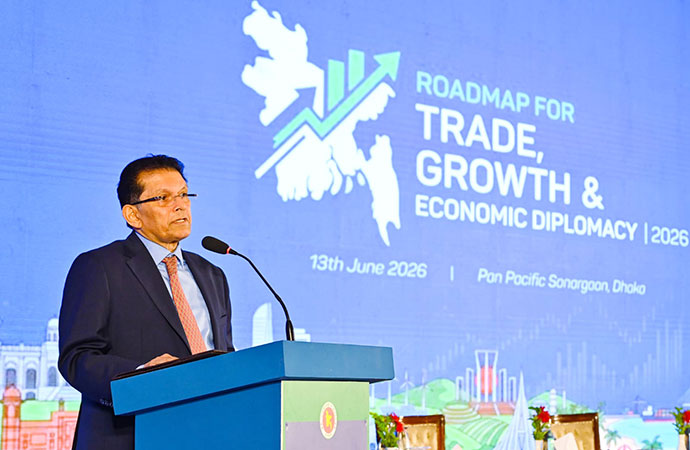
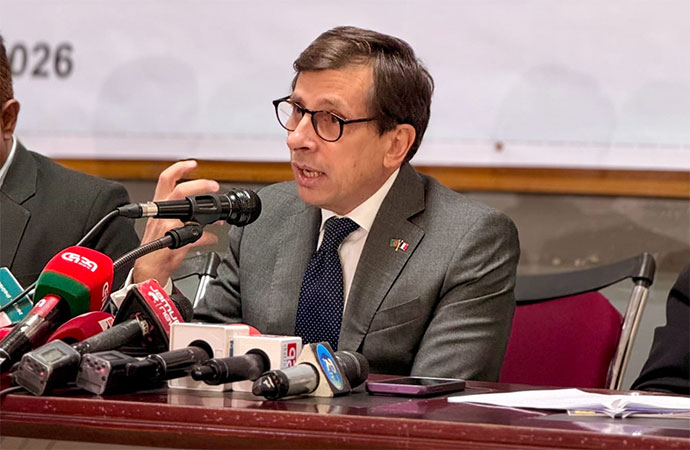
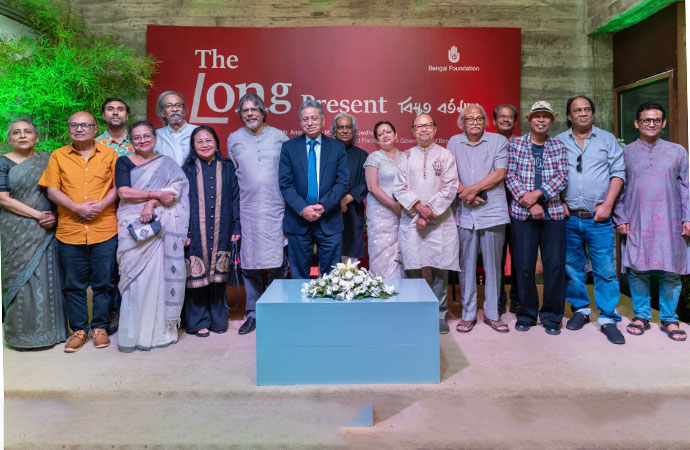
Foreign Minister Khalilur Rahman at a conference titled “Roadmap for Trade, Growth and Economic Diplomacy 2026 - Navigating Risks: Leveraging Resilience” on 13 June 2026. Photo: Courtesy
We want to make Bangladesh the most competitive investment destination in South Asia
As our new government, headed by Prime Minister Tarique Rahman following a landslide victory in the recent general elections, begins its work, we have before us the challenge of redesigning our international economic engagements against the backdrop of slowing global economic and trade growth, geopolitical tensions, trade policy uncertainties, climate vulnerabilities, rising trade barriers, and structural shifts in supply chains.
Moreover, the ongoing energy crisis has added a new layer of complications. We are not immune to these developments, which have crucial implications for our approaches to overall policymaking, in general, and economic diplomacy, in particular.
This is the very reason why the Ministry of Foreign Affairs and the Bangladesh Investment Development Authority (BIDA) decided to organize the event "Roadmap for Trade, Growth and Economic Diplomacy 2026: Navigating Risks, Leveraging Resilience," which brings together our partners and stakeholders for open and purposeful deliberations with a view to helping informed policymaking.
The challenges we face are critical. The growth prospects in our major markets remain in positive territory but at a moderate level. This is likely to translate into sluggish consumer demand, which will affect our exports to these markets. We will need to compete ever more fiercely in order to maintain and expand our export position.
Secondly, financial markets and institutions are increasingly affecting the production of goods and services and trade thereof. Trade flows have become increasingly susceptible to movements in interest rates or changes in investor sentiment.
Countries like Bangladesh find it harder to raise capital, pay significantly higher borrowing costs, and remain acutely vulnerable to swings in market sentiment. While advanced economies are able to borrow at roughly 1-4%, the rates for emerging developing countries typically range from 6-12% or even higher. Thus, our access to affordable and secure financing remains significantly restricted.
Like many other developing countries, Bangladesh remains acutely susceptible to factors such as currency volatility, shifts in risk-taking appetite, and financial volatility.
Thirdly, climate vulnerability has introduced another difficulty in access to finance. According to UNCTAD, which recently carried out an Investment Policy Review of Bangladesh, some climate-vulnerable countries are paying an extra 20 billion dollars annually in interest due to their climate risk. External debt and the climate crisis are becoming intertwined.
Fourthly, the ongoing energy crisis has already caused us to spend more on imported fuel. Increased fuel prices directly affect our cost of production and competitiveness. By taking away critical funding that would have gone to development activities, we are likely to witness second-round effects of the crisis in the form of reduced funding for development in the years to come.
The International Energy Association opined that the scope of the current energy crisis could be larger than that of the twin oil shocks of the 1970s, which were a major cause of the 1980s becoming a lost decade of development for many developing countries. At that time, we were largely able to dodge the bullet because our visionary President quickly shifted focus to agricultural modernization, market liberalization, and laying the foundation of our ready-made garments sector.
Finally, Trade Tech, which is the intersection of trade, investment, and technology, is fast redefining the global economy and trade by making cross-border transactions quicker and more efficient through the increasing use of innovations like AI, the Internet of Things, blockchain, and 5G. This poses both a challenge and an opportunity, depending on how quickly and effectively countries can take advantage of the fast-moving Trade Tech landscape.
Today, faced with the energy crisis and developments in international trade, finance, and technology, our Prime Minister also has a clear vision to transform these challenges into new opportunities with three key goals: stabilize, reform, and elevate. We need to convert his vision into concrete action when it comes to our work on economic and trade diplomacy.
To begin with, we fully recognize that economic resilience cannot be built on shaky ground. Therefore, our immediate priority is to restore full confidence and trust. We want to assure our citizens, our local business community, and, most importantly, our international partners that Bangladesh is stable, predictable, and open for business.
Our foreign policy will remain anchored in the foundational principle of friendship. To the esteemed ambassadors and high commissioners in this room: Bangladesh values your partnership deeply. We view our bilateral and multilateral relationships through the lens of mutual growth and shared prosperity. We are committed to being a reliable, neutral, and constructive actor on the global stage.
We will actively engage with your governments to modernize our trade agreements, pursue reciprocal market access, and ensure that our foreign policy serves as a bridge for economic integration. Our embassies and high commissions worldwide are being re-engineered to act as proactive facilitators of trade and investment. We are here to listen to your feedback, address your concerns, and safeguard your nations' economic interests in Bangladesh.
For the business community, my message to you is simple and clear: you are the driving force of our economic progress, and this government stands fully ready to power your growth. Let me reassure you today that our government is fully committed to implementing deep, structural reforms to improve the ease of doing business. We do not see the local business community merely as taxpayers, but as our primary strategic partners. We are deeply committed to replacing systemic bottlenecks with policy predictability, transparency, and a level playing field for every entrepreneur-from our resilient SME sectors to our major industrial conglomerates. We are working around the clock to open new markets and secure supply chains. In our first 100 days, we have seen an exceptionally positive response from all quarters.
Challenges also bring opportunities. Political transitions can bring questions, but they also bring the clarity of purpose needed for genuine transformation. Our government possesses the political will, the strategic vision, and the unwavering commitment to make Bangladesh the most competitive investment destination in South Asia.
We view every foreign ambassador here not just as a diplomat, but as a crucial partner in our development. We view every business leader here not just as an investor, but as a stakeholder in our national success.
Measure us by our actions, hold us to our commitments, and walk with us as we rebuild trust and unlock the true, vibrant potential of Bangladesh.
Dr. Khalilur Rahman serves as the Foreign Minister of Bangladesh and has been elected President of the 81st Session of the United Nations General Assembly.
A Independent Newsweekly
© Copyright 2026 | Designed by ARK Reepon & Developed by Cosmos Group Software Team





Leave a Comment
Recent Posts
An unaccountable process leave ...
The latest price hike of all four major petroleum products by Tk 20 pe ...
The French Connection in South ...
France Ambassador to Bangladesh Jean-Marc Séré-Charlet h ...
Ties with China enter new phase
Happy 61st birthday, Singapore!
In defiant speech, Pezeshkian calls out Trump and sa ..
The banality of evil