


Featured 2
Protecting CSEC Victims is as essential as Protecting Street Children


An Independent Newsweekly

Featured 2
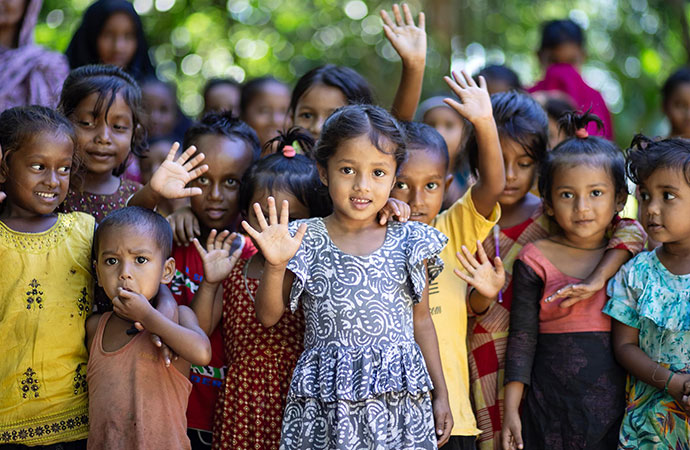
Photo: UNICEF
The Government of Bangladesh has recently taken a commendable initiative for the protection and overall development of street children. A project titled "Rehabilitation of Street Children and Children at Risk with Residential Facilities" will directly ensure the protection of the lives of a total of 500,000 children, including 24,850 children directly from 2026 to 2031.
This initiative will fulfil the dreams of street children and keep them out from getting involved in crimes. No girl child from the street will be brought into prostitution. However, data from different sources refer that thousands of children are being commercially sexually exploited in Bangladesh. Initiative for the protection of victims of Commercial Sexual Exploitation of Children (CSEC) is a must.
What is Commercial Sexual Exploitation of Children (CSEC)?
The definitions of various international organisations refer that sexual exploitation of any child under the age of eighteen in exchange for money, goods, services, or any other form of payment or benefit, where that payment is provided either to the child or to another third party, individual, or group, is called CSEC. Such exploitation also covers- inducing or forcing a child to engage in sexual activities, using a child in prostitution, and using a child in the production or dissemination of pornographic performances or materials, both online and offline.
Article 34 of the United Nations Convention on the Rights of the Child refers that, "States Parties undertake to protect the child from all forms of sexual exploitation and sexual abuse." Regarding this protection of the child, three issues are mentioned: (a) protection of the child from being induced or coerced to engage in any unlawful sexual activity; (b) protection of the child from the exploitative use in prostitution or other unlawful sexual practises; and (c) protection of the child from the exploitative use in pornographic performances and pornographic materials.
The International Labour Organisation (ILO), says CSEC means: "The sexual exploitation, for sexual purposes, of any child or adolescent under the age of 18 by an adult, where money or any other form of remuneration (goods, services, or benefits) is given in exchange for that exploitation to the child or adolescent or to one or more third parties."
The ILO also considers CSEC to be a heinous violation of human rights. The ILO says "a form of economic exploitation similar to slavery and forced labour." The Stockholm Declaration was adopted at the World Congress against CSEC held in 1996. That declaration also compares CSEC to coercion and violence against children, forced labour, and modern-day slavery.
Global Scenario of CSEC
Accurate and up-to-date figures on CSEC victims worldwide are not available because this crime is committed in extreme secrecy, and in most cases, data on CSEC are not published in reports. According to the ILO's 2024 report "Profits and Poverty: The Economics of Forced Labour," in 2021, on any given day, an estimated 6.3 million (63 lakh) people worldwide were in situations of forced commercial sexual exploitation. Among those subjected to this exploitation, nearly four out of every five (78%) were women and girls. And among the total victims, one out of every four (27%) was a child (boys and girls).
CSEC in Bangladesh
The United States Department of State publishes the Trafficking in Persons (TIP) Report every year on human trafficking worldwide. According to the TIP reports for three consecutive years-2023, 2024, and 2025-"Child sex trafficking remains widespread in Bangladesh; it is estimated that approximately 30,000 girls are victims of sexual exploitation." The number of children who are victims of sexual exploitation is coming out to be almost the same in different surveys.
In 2026, the Freedom Fund and the Population Council published a study titled "Through Her Eyes." The study findings say that around 5,000 girls are victims of CSE on the streets of Dhaka District alone, and approximately 700 girls are victims of CSE in the brothels of Dhaka Division. Among street-based (floating) sex workers, 22.2%, and among brothel-based sex workers, 21.9%, are aged 17 years or below. The study further says that among female sex workers in and around Dhaka, one out of every five (approximately 22%) became victims of sexual exploitation during their childhood.
Dr. Halida Hanum Akhtar, Founder of the Institute of Reproductive Health Research of Bangladesh, said at a roundtable meeting titled "What Needs to Be Done to Improve the Quality of Life of Sex Workers" in 2025: "There are approximately 200,000 sex workers in Bangladesh. Among them, around 29,000 are minors. They are not under any kind of protection and are a vulnerable population group."
According to a study by NGO named Aparajeyo Bangladesh, about 45% of sex workers in this country enter this profession during childhood. 18.5% enter from the age of 11-14, and 26.5% enter from the ages of 15-17. According to their data, 38% of women enter this profession at the age of 18-21, and 10% at the age of 22-25. This scenario clearly indicates a direct violation of the existing laws of the country. It is becoming evident that children are being secretly used in the sex trade.
Children Are Being Trapped and Victimised
According to the Bangladesh Bureau of Statistics (BBS) 'ICT Access and Use Survey 2025-26', 58.6% of people aged five years and above used the Internet from January to March 2026. The BBS Population and Housing Census 2022 report says that 30.68% of children aged five years and above use the Internet. According to the survey, the rate of Internet use is increasing. Here, Internet use has been counted starting from the age of five.
The increased presence of children in the digital world created an opportunity for criminal networks to use children and trap them in deception. Children have curious minds. Their choices are diverse. Their dreams and desires are also colourful. And through algorithms, those colourful desires are easily reaching the hands of fraudsters.
The dreams and wishes of children that their families fail to fulfil are being falsely promised by criminal networks. Taking them on trips, earning like adults, meeting their favourite person, receiving a large amount of money, earning online, receiving huge amounts of without labour, going abroad, looking for work from one city to another-information about all these desires is reaching the hands of criminal networks.
By showing easy ways of fulfilling these desires, deceptions take place online. Online introduction with children, then digital deception promising to fulfil children's dreams start taking place. Once a child steps into it, the child faces terrible danger.
In some cases, relatives and loved ones are also found sending their girl child into earning money from selling sex. The issue of poverty arises here. Curiosity to fulfil ordinary wishes, the ease of doing so through digital platforms, and poverty are repeatedly coming forward as the main reasons. Social and moral degradation is also among the major causes.
Digital Trap for Children
Family income is limited. There are many areas of expenditure. The head of the family lives under various daily pressures, including unemployment, poverty, and maintaining the family. The pressure is even greater for family heads living in the slums of the country's metropolitan cities. People come to the city from different regions. In front of them are many elements of luxury. But they do not have the ability to touch them. Yet, as soon as they step out of the slum, they are surrounded by colourful attractions.
On one side are desires. On the other side is the inability to fulfil those desires. Between these two, the poor people of the city spend their days under various pressures, especially slum dwellers. The pressure of the family's poverty falls upon the bodies and minds of children. And taking advantage of that very problem, digital deception continues. Domestic and foreign criminal networks deceive them and bring them into a colourful but dark world.
This year's theme for the United Nations World Day Against Trafficking in Persons is "Trapped Behind the Scam" or "The Trap Behind the Scam." The theme aims to highlight the humanitarian crisis and cyber slavery hidden behind online fraud. This timely theme is appropriate. And alongside adults, children are also falling into the trap of digital deception.
Global Initiatives for Children Safety
At present, Australia, Indonesia, and Malaysia have prohibited the use of social media for children under the age of 16, and Brazil for children under the age of 14. In addition, around 36 countries, including the United Kingdom, France, Denmark, Norway, Greece, Spain, and the United Arab Emirates, are in the process of restricting children's use of social media.
In Bangladesh, no such restrictions on children's use of social media have yet been announced at the government level. Parents impose certain restrictions on children in this regard by following some rules at home. Parents also apply some strategies to keep children away from online platforms. But I do not know whether guardians have any practical way to prevent it. To ensure children's safety online and to protect children from the trap of digital deception, now is the time to make decisions.
Recent Judgements against CSEC
Different countries are acting against CSEC globally. The recent Jeffrey Epstein scandal has been discussed across the world. It is one of the most widely discussed criminal and judicial cases in the United States, centring on allegations of the sexual exploitation of underage girls, sex trafficking, and the involvement of influential individuals in these activities.
In March 2026, a court in the U.S. state of New Mexico ordered Meta to pay US$375 million over allegations of misleading users about the safety of its various platforms for children. The ruling stated that Meta-owned Facebook, Instagram, and WhatsApp platforms had exposed children to risks. Meta created opportunities for children to encounter sexual content and sexual predators.
Strict legal measures against fraud and human trafficking, regular child rescue operations, exemplary punishment for child abusers and perpetrators of CSEC are now the demand of the time. Fraudulent networks and human traffickers are doing business by exploiting children.
Creating Deterrence is a Must to Stop Crime Like CSEC
The Criminal Investigation Department (CID) of Bangladesh Police has rescued several children in recent operations in Dhaka. It has also arrested members of human trafficking networks. However, the offenders are being arrested, but they are also being released on bail.
Here is the problem that arises. The fear that an offender should have after committing a crime, or before becoming involved in a crime, is not there. Incidents of exemplary punishment in cases of CSEC are rarely seen. This is where change is needed. No matter how powerful the offender is, only strict and exemplary punishment can play an effective role in preventing the repetition of the crime. Otherwise, heinous crimes such as CSEC will continue to occur.
Recently a nationwide demand for justice arose after child abuse incidents, and from the highest level of the Government committed to ensure justice, thus the trials were completed quickly. Not only speedy trials for widely discussed child abuse cases, but speedy trial procedures and exemplary punishment in all cases of CSEC also needed to be resolved on priority.
Roton Malo, Works at an international development organisation and is a freelance journalist.
A Independent Newsweekly
© Copyright 2026 | Designed by ARK Reepon & Developed by Cosmos Group Software Team





Leave a Comment
Recent Posts
A Battle for the Soul of The N ...
Two disturbing incidents came to light this week, even as they went un ...
Dhaka seeks concrete measures ...
State Minister for Foreign Affairs Humaiun Kobir on Thursday urged Sou ...
Bangladesh Embassy in Ireland begins operations
Dinesh Trivedi stresses proper preparations before T ..
The Hope Deficit: Why Bangladesh’s Revolution Must M ..
Iqbal Bahar Chy: Finding freedom in the unplanned