


Featured 2
Disabled Children in Bangladesh: A Closer Look


An Independent Newsweekly

Featured 2
AI Generated Image
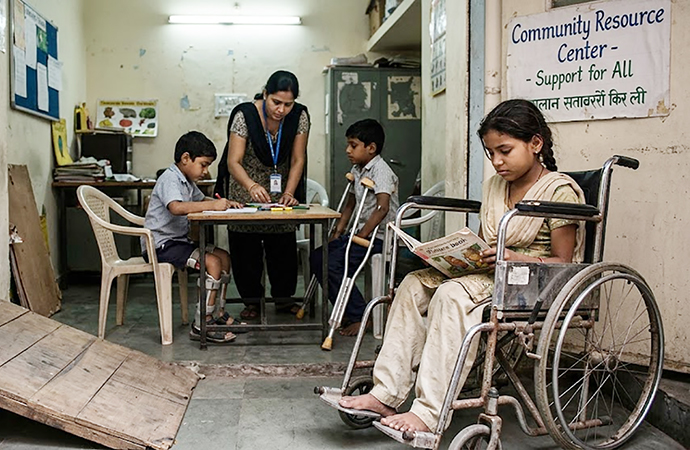
Children with disability or disabled children in Bangladesh comprise an overlooked issue in the country. Understanding the class differences in tackling disability in a child or an adult, families often hide their disabled children out of shame or social ostracisation in the community. The kinds of disabilities that exist in the country, such as physical, intellectual or developmental disabilities of which examples could be autism, cerebral palsy or Down Syndrome-to name a few-ensure that not only is medical help not accessed for the child but that the child becomes a financial burden on the family, often having to resort to begging to help provide for the family.
This creates a data glut on disabled children in the country, for reliable data is then difficult to attain not only from hidden or missing children, but children not in education, employment or training. Disability itself is seen as fatalistic, in the sense that it is seen at times as a "punishment from God" and therefore, another reason for parents to keep their disabled children in seclusion. This however might be different for disabled children who come from higher socio-economic backgrounds; disabled children in well-to do families might have access to education and employment provided to them by their parents, thus creating socio-economic freedom and independence no matter what the age of the child.
When it comes to gender, girl children who are disabled often face rates of violence, neglect, isolation and abuse higher than boy children who are disabled. Girl children would therefore see reduced attendance in schools and would probably be overlooked for marriage than non-disabled girl children once they come of age, making them even more dependent on their families. Poverty rates therefore, are high amongst women with disabilities, irrespective of age. A lack of desire to provide for dowry and/or any form of education, employment and training doom the girl child to subservience for life.
On a national scale-on paper at best-Bangladesh has ratified the United Nations Convention On The Rights of Persons with Disabilities or CRPD, signing it in May 2007 and then validating the convention later on of that year. The landmark Rights and Protection of Persons with Disabilities Act in 2013 ensure that discrimination from unemployment does not happen at levels of earning and also, the Special Education Policy, which protects against discrimination from enrollment in schools at the mainstream level. However, for disabled children, enrolment at schools remain at a distinctive low, preventing disabled children from pursuing education and a bright future. Schools themselves do not have the resources to handle disabled children's needs, with no provisions made of ramps, accessible elevators or bathrooms with teachers lacking training in providing for and teaching disabled children. As stated before, disabled children have the lowest enrolment rates amongst all children registered at school, especially non-disabled children. With amenities and school services prepped for children who are non-disabled, disabled children also have a difficult time navigating bullying, violence and discrimination at schools. This makes for a greater effort to ensure that policy frameworks encourage change for disabled children as quickly as possible, for then more time should not be lost in providing improving settings for disabled children to study in.
In terms of providing for therapy and specialised services for disabled children-and adults-major cities like Dhaka provide for such services through organisations like CRP or Centre for Rehabilitation of the Paralysed and through other international organisations present within the city. Rural areas face a scarcity of specialists and therapists for disabled children and adults. This poses a problem when referring patients to specialists who then have to make arduous travel plans to Dhaka to avail specialised services for disabled patients.
When thinking about providing for disabled peoples financially, Bangladesh has made strides in terms of annual/monthly Disability Allowances (cash transfers), stipends and need-based educational support for students from primary to post-graduate levels. Despite the above being a short sketch in terms of disabled peoples' services and despite improvement in terms of providing for disabled peoples, corruption, bureaucratic hassles, lack of awareness and physical inaccessibility to administration offices ensures that less people are served by the government in terms of disability allowances.
What is striking to see in the field of disability work is that much has not been accomplished in terms of closing the gap between disability services and disabled peoples. While much has been done to improve disabled peoples' situation in the country, more could be done to improve gender barriers in terms of seeking and receiving aid. Specific target schemes like providing for girl children who are disabled and reducing their barriers to receiving an education like some of their luckier boy mates. Keeping all this in mind, let us hope that disabled children do better in the long run as government, private and public initiatives pursue long term goals.
The author Nadia Chowdhury is a specialist on Critical Disability issues.
A Independent Newsweekly
© Copyright 2026 | Designed by ARK Reepon & Developed by Cosmos Group Software Team




Leave a Comment
Recent Posts
A Battle for the Soul of The N ...
Two disturbing incidents came to light this week, even as they went un ...
Dhaka seeks concrete measures ...
State Minister for Foreign Affairs Humaiun Kobir on Thursday urged Sou ...
Bangladesh Embassy in Ireland begins operations
Dinesh Trivedi stresses proper preparations before T ..
The Hope Deficit: Why Bangladesh’s Revolution Must M ..
Iqbal Bahar Chy: Finding freedom in the unplanned