


Featured 1
Our Night of Infamy: 10 years on


An Independent Newsweekly






Featured 1
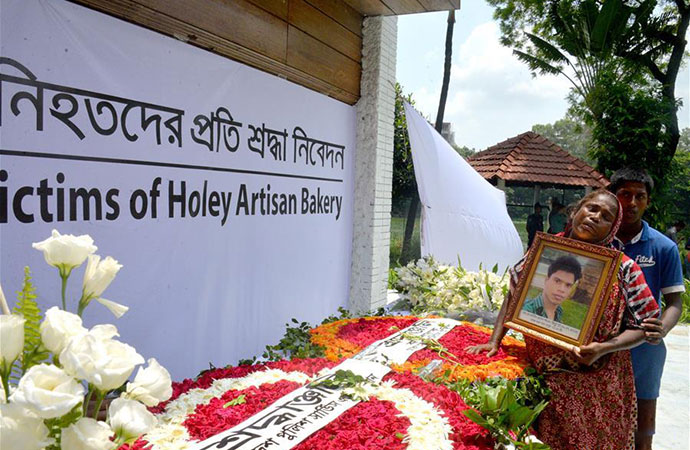
Photo: Collected
As the nation commemorated the 10th anniversary of the ISIS-inspired terrorist attack on the Holey Artisan Bakery outlet in upmarket Gulshan this week, we were reminded once again how despite the passage of time, the terror of that night, the grief of the families who lost loved ones, and the brutal killings planned to inflict maximum foreign casualties, still weigh on the nation's conscience.
The total number of victims from Bangladesh's worst night of terror, sometimes called "Bangladesh's 9/11," stood at 24, and they included nine Italians, seven Japanese, one Indian and three Bangladeshis. Added to them were two police officers who were killed by the terrorists, and two more Bangladeshis who were killed in 'friendly fire'. Their memories must always be honoured in the best way possible. Following a special operation by the Army's specialised commando team, five terrorists were also killed.
Today, on the site of the restaurant's former location, a multi-story residential building overlooks the lake. There is very little to suggest that it was once the site of a tragedy that shocked the world.
Yet, for many Bangladeshis, especially for the families of the victims, the memory remains vivid: a still open wound and a permanent warning against complacency when it comes to fighting terrorism. The brutality of the attack and the profile of the perpetrators, young men from educated and relatively well-off families, shattered preconceptions about Islamic extremism and radicalism in Bangladesh.
Subsequent investigations revealed careful planning. The attackers had inspected several locations in the diplomatic zone before choosing the Holey Artisan, a venue considered favourable for its high-profile clientele. In the years following the attack, law enforcement launched a vast crackdown against militant networks. According to authorities, key cells were dismantled, and the frequency of large-scale attacks decreased significantly over time.
This hardline approach was eventually seen by many to have digressed into political repression and persecution of opposition party activists. The perceived police brutality against pious segments of the population eventually turned the tide, and in July 2024, it was the police that was caught on the backfoot, as their actions came under increased scrutiny.
According to security sources, more than 300 alleged militants, or possible terrorists remain at large, while several convicted extremists reportedly escaped prison during the 2024 unrest, raising renewed concerns.
Now the question is whether these people actually still represent the kind of dangerous and reckless mindset that the Jihadists represent, given the rapid decline in the fortunes of ISIS and the like, and the War on Terror today seems to have been pushed to the background not just in Bangladesh, but globally. Yet even as we do recognise these changed realities on the ground, we must always remain vigilant and above all guard against complacency. For you never know when the next terrorist might be walking in the door, just as they did on that fateful night ten years ago. By the time you see them, it may already be too late.
A Independent Newsweekly
© Copyright 2026 | Designed by ARK Reepon & Developed by Cosmos Group Software Team






Leave a Comment
Recent Posts
An unaccountable process leave ...
The latest price hike of all four major petroleum products by Tk 20 pe ...
The French Connection in South ...
France Ambassador to Bangladesh Jean-Marc Séré-Charlet h ...
Ties with China enter new phase
Happy 61st birthday, Singapore!
In defiant speech, Pezeshkian calls out Trump and sa ..
The banality of evil