


Reportage
Not quite the graduate, yet


An Independent Newsweekly
Reportage
One of the first real announcements with regards to economic policy that we heard from the present BNP government of Bangladesh, following its landslide victory in February's general election, was its intention to seek a deferment in the country's graduation from the list or club of 'Least Developed Countries'. In fact the formal request from the government was registered with the United Nations Committee for Development Policy (CDP) on February 18 - just six days after the election, and the day after the new government led by Prime Minister Tarique Rahman was sworn in. Specifically, the GOB requested the CDP to extend the preparatory period for its graduation from the LDC category by three years, until November 24, 2029.
Last year, the business community strongly advocated for the deferral, stating deep concerns about the country's preparedness for a post-LDC reality. Although the interim government initially appeared to favour a deferment, it later decided not to pursue it. Last November, Bangladesh submitted its 2025 annual report to the CDP, confirming that it continued to meet all three LDC graduation criteria and remained on track for graduation in November 2026 despite economic shocks, while progressing with its Smooth Transition Strategy.
The three criteria are per capita gross national income (GNI), human asset index (HAI), and economic vulnerability index (EVI). To delay graduation now, the government will have to convince the CDP that the country's socio-economic situation has deteriorated beyond its capacity to absorb post-graduation shocks.
In its latest letter, the government argued that concurrent global and domestic shocks such as the pandemic, geopolitical conflicts, financial instability, and political upheaval have disrupted preparation, strained macroeconomic stability, and constrained reform efforts. Increasing trade uncertainties and the risk of losing preferential access might weaken its competitiveness. Therefore, a delay would support reform consolidation and economic stabilisation.
The UN's LDC classification carries significant practical benefits, including preferential market access, special and differential treatment under World Trade Organization (WTO) rules, concessional financing, and targeted technical assistance. Clear quantitative criteria determine graduation from this status, which requires a country to meet at least two of the three criteria in two consecutive triennial reviews. Alternatively, a country may qualify for graduation if its GNI per capita reaches at least three times the prescribed threshold, even if it does not satisfy the other two criteria.
The CDP, under the UN Economic and Social Council (ECOSOC), reviews each country's performance every three years and recommends graduation once the criteria are met. ECOSOC then endorses this recommendation, and the UN General Assembly (UNGA) formalises the decision, typically providing a three-year preparatory period for the country to adapt to losing LDC-specific support.
Deferrals of LDC graduation are rare, but not unprecedented. The Solomon Islands secured a three-year postponement in 2023 after catastrophic natural disasters and civil unrest severely weakened its development prospects. Similarly, Angola secured a delay when global oil price shocks pushed its economic indicators below the required thresholds; its strong diplomatic backing helped secure UN approval. In the Pacific, countries such as Vanuatu and Kiribati have experienced repeated postponements due to persistent environmental vulnerabilities, remaining on the LDC list long after initial eligibility for graduation. The Maldives's smooth transition period was extended in 2005 following the Indian Ocean tsunami, and the country ultimately graduated from LDC status in 2011.
Closer to home, Myanmar's graduation was deferred following political instability after the 2021 military coup, while Nepal received a postponement after the devastating 2015 earthquake disrupted its socioeconomic progress. Bangladesh and Nepal were initially scheduled to graduate in 2024, but the UNGA extended the timeline due to the Covid pandemic.
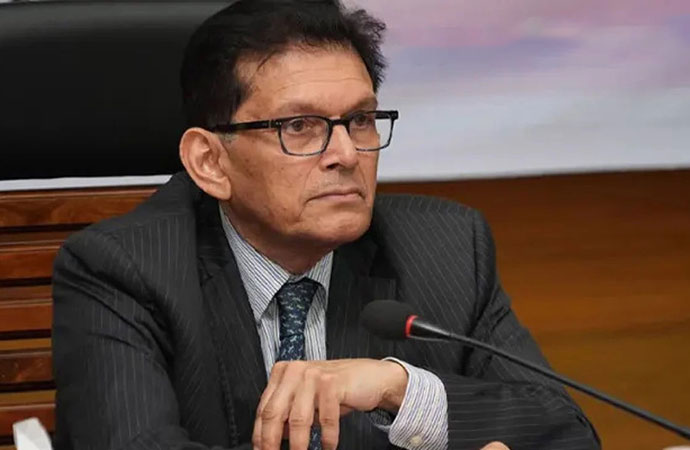
The CDP has expressed a positive position regarding Bangladesh's request to extend its preparatory period for graduation from the least developed country (LDC) category until November 24 in 2029, according to a statement from the Economic Relations Division (ERD). CDP Chair José Antonio Ocampo informed the government, based on the Committee's assessment, that it would be appropriate for the United Nations General Assembly (UNGA) to approve an extension of Bangladesh's preparatory period for LDC graduation. However, he emphasised that Bangladesh would need to make significant progress in implementing key domestic reforms to address its existing structural vulnerabilities during this extended period.
The newly elected BNP-led government requested the UN CDP to defer Bangladesh's LDC graduation by three years to 2029, citing that the extension is vital for macroeconomic stabilisation and the implementation of the Smooth Transition Strategy (STS). The government said that the preparatory period was severely disrupted by overlapping shocks, including the lingering effects of the pandemic, the Russia-Ukraine war, and instability in the Middle East.
Domestically, the letter cited financial sector irregularities, the July 2024 uprising, and the Rohingya crisis. These factors have slowed GDP growth, elevated inflation, and pressured foreign exchange reserves.
Additionally, governance challenges in the banking and capital markets have hindered poverty reduction.
On April 6, the prime minister wrote to the UN secretary-general seeking his personal support on the matter. In its assessment, the CDP noted that Bangladesh has exceeded the graduation thresholds by a significant margin under all three LDC graduation criteria and faces a very low risk of falling below these thresholds in the near to medium term.
Precedent indicates that postponement is mainly justified by severe economic, political, or environmental crises, rather than policy preferences alone.
According to economist Dr Fahmida Khatun, executive director at the Centre for Policy Dialogue (CPD), institutional and regulatory reforms are crucial for fostering sustainable and competitive growth. Robust institutions will underpin Bangladesh's resilience after graduation. Strengthening trade negotiation skills to negotiate free trade agreements (FTAs) and preferential treaties with major markets is needed. Regulatory systems covering standards, quality, and intellectual property should meet international standards. Agencies handling trade and investment must develop analytical capabilities to predict market changes and adapt strategically to global challenges.
Second, fiscal and governance reforms should be implemented to sustainably manage increasing fiscal pressures. As concessional financing diminishes after graduation, boosting domestic resource mobilisation will become essential. Tax reforms should expand the tax base, cut exemptions, and enhance compliance. Tariff reform needs to strike a balance between keeping prices competitive and meeting revenue objectives. Ensuring transparent governance, fighting corruption, streamlining public procurement, and reforming the judicial system are vital for boosting investor confidence. Effective debt management and maintaining sufficient foreign exchange reserves will also support resilience against external shocks.
Third, Bangladesh needs to expand beyond ready-made garments to maintain sustained growth and long-term economic resilience. Investing in sectors like light engineering, agro-processing, pharmaceuticals, and IT services is crucial. Skills development and technical training should match the needs of emerging industries. Encouraging innovation via research collaborations, technology adoption, and public-private partnerships will elevate the economy along the value chain and boost global competitiveness.
Fourth, strengthening social protection systems and consolidating human capital improvements are crucial. A transition from LDC might raise economic risks for some groups, so robust social safety nets, retraining initiatives, and employment support can act as safeguards. Ongoing investment in health and education, as well as inclusive policies, can sustain human capital achievements and ensure sustainable development rather than increased inequality.
A support network for the vulnerable
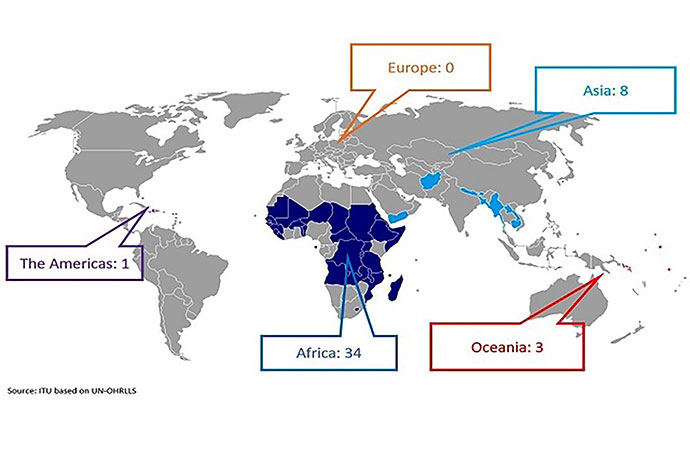
The "least developed country" (LDC) category was created in 1971 to identify low-income developing countries that encounter significant structural barriers to growth and to articulate international support measures for them. LDCs are defined as low-income countries that are suffering from long-term impediments to growth. They have low levels of human resource development and are vulnerable to both socio-economic, and environmental shocks.
There are forty-six (46) LDCs, with a population of close to one billion, representing around 13% of the world's total. The Doha Programme of Action for the Least Developed Countries for 2022-2031 articulates a vision and strategy for promoting the sustainable development of LDCs during this decade. The Programme's main focus is to strengthen the productive capacities and enable their graduation from the LDC category. ESCAP provides support to assist LDCs in the implementation of the Doha Programme of Action and assists graduating and graduated LDCs in preparing and implementing smooth transition strategies by providing intergovernmental support; through analysis on economic, social, and environmental data and statistics; through capacity building and technical assistance; and by promoting regional cooperation.
Bangladesh is indeed a leading, often the highest, user of Duty-Free Quota-Free (DFQF) facilities among LDCs, largely driving its RMG sector growth through the European Union (EU)'s Everything But Arms (EBA) scheme. This reliance on preferential access has made Bangladesh a dominant exporter among LDCs.
However, the RMG sector's dominance also made Bangladesh highly vulnerable. In the late 1970s when the RMG sector started its journey, it accounted for less than 5% of Bangladesh's total exports. By the end of the 1990s, this proportion had reached about three-fourths. After more than four decades, since 2013, it has been hovering between 80-85%, according to the Bangladesh Garment Manufacturers and Exporters Association (BGMEA).
Bangladesh's heavy reliance on a single export item makes its export basket one of the least diversified among the global economies.
The United Nations Department of Economic and Social Affairs (UN-DESA) uses three criteria for LDCs - GNI per capita, human asset index (HAI) and economic vulnerability index (EVI). Its evaluation in February 2025 shows that Bangladesh is in a much better position than Nepal and Lao PDR in terms of GNI per capita and EVI. Bangladesh with higher GNI per capita is economically less vulnerable than Nepal and Lao PDR, both of which suffer from additional disadvantages of landlockedness.
Bangladesh's economy is projected to grow at a faster rate (around 5.0%-5.1% in FY 2005-26 and 5.7% in FY 2026-27 according to the ADB) than both Nepal and Lao PDR despite slightly elevated inflation rates. Bangladesh also performs better in logistics, ranked 88th out of 139 countries by the World Bank compared to Nepal's rank of 114th and Lao PDR's 115th. Bangladesh also has better productive capacity according to the UNCTAD's productive capacity index.
Bangladesh will continue to enjoy DFQF (duty free, quota free) market access for three more years after its graduation as endorsed by the WTO. Australia and Canada indicated extended periods of DFQF access until at least 2034. The UK will allow 92% Bangladesh products duty-free access after 2029. There is a view that a delay for a better performing Bangladesh will be a bad signal for the LDCs aspiring to graduate from LDC status.
Three more years
This week, according to official sources, the CDP endorsed Bangladesh's request after carefully considering the country's concerns regarding a range of emerging uncertainties. At the same time, the committee has made it amply clear that the additional time should be used productively to address longstanding structural weaknesses that continue to impede the country's economic resilience. The message from the UN body is straightforward: the deferment is not a concession for complacency but an opportunity for preparation.
The reforms identified by the CDP are neither new nor unexpected. Financial-sector stability, stronger domestic resource mobilisation, higher tax revenue collection, enhanced productive capacity, economic diversification and improved private-sector readiness have long featured in policy discussions. The difference now is that these reforms can no longer remain aspirational goals. They must be translated into tangible actions if Bangladesh is to navigate the post-graduation landscape with confidence.
Significantly, the committee has acknowledged that Bangladesh has surpassed the graduation thresholds by a comfortable margin under all three criteria used to determine eligibility for LDC graduation. This recognition reflects the country's remarkable socio-economic progress over the past decades. It also dispels any notion that the deferment is a consequence of poor performance. Rather, it is an acknowledgement of the extraordinary uncertainties that have emerged globally, ranging from geopolitical conflicts and energy market disruptions to supply-chain vulnerabilities and a rapidly evolving international trading regime. It is also to be noted that Bangladesh has been for a number of years now, something of a misfit in the LDC club, thanks largely to the size of its population. It would be by far the largest economy to be graduating till now, and so there can be a case for handling its exit more carefully.
The recent turmoil in West Asia, coupled with persistent global economic fragilities, has underscored how external shocks can quickly affect developing economies. For a country like Bangladesh, for which growth remains closely tied to exports and international markets, prudence demands careful preparation before relinquishing the special preferences and support measures available to LDCs. The extension, therefore, offers a valuable window for reassessing priorities and strengthening institutional capacity. It allows policymakers and businesses to better prepare for a future in which preferential market access, concessional financing and other LDC-specific benefits may gradually diminish. Equally important is the CDP's emphasis on continued international support during both the preparatory and post-graduation phases. Such support will be crucial in ensuring a smooth and sustainable transition.
A Independent Newsweekly
© Copyright 2026 | Designed by ARK Reepon & Developed by Cosmos Group Software Team





Leave a Comment
Recent Posts
UNGA presidency: A significant ...
No matter how you look at it, Dr Khalilur Rahman's election as pre ...
On the trail of the Asian Wild ...
The conflict between humans and elephants has reached an extreme level ...
Electricity prices were hiked
Bishwajit Goswami’s work travels to Brooklyn, New Yo ..
The Intelligence That AI Is Missing
The One Man Who Could Give Trump Middle East Peace