


Featured 2
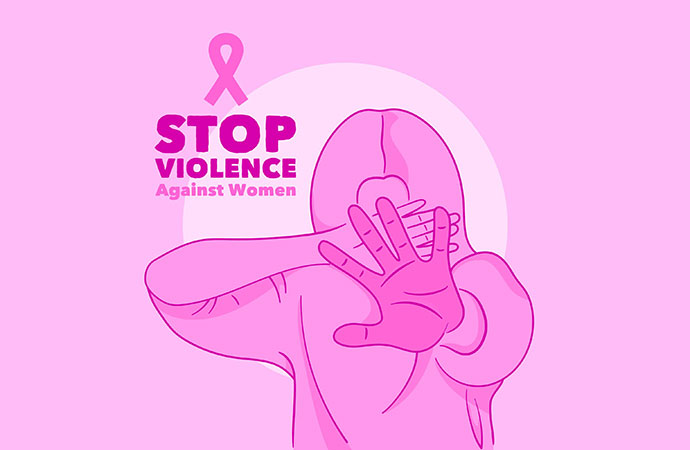
Violence against Women: A Silent Crisis We Can No Longer Ignore


An Independent Newsweekly

Featured 2
Freepik
Violence against women is one of the most serious human rights violations in the world today. It exists in every country, society, culture, and economic class. Despite laws, awareness campaigns, and global movements, millions of women continue to face physical, emotional, sexual, and psychological abuse every day. This violence is not only a personal tragedy for women but also a deep social crisis that weakens families, communities, and nations.
Violence against women takes many forms. It includes domestic violence, rape, sexual harassment, acid attacks, human trafficking, forced marriage, dowry-related abuse, and online harassment. In many cases, the abuser is not a stranger but someone close to the woman-her husband, partner, family member, teacher, or colleague. This makes the violence even more painful because it destroys trust and safety within relationships that should protect her.
One of the most common forms of violence is domestic abuse. Many women suffer silently inside their homes, beaten or mentally tortured by their husbands or relatives. Fear, social pressure, financial dependence, and concern for children often force women to stay quiet. In conservative societies, women are frequently blamed for the violence they suffer. They are told to be patient, adjust, or sacrifice, while the abuser faces little or no punishment.
Sexual violence is another horrifying reality. Rape and sexual assault leave lifelong scars on a woman's body and mind. Victims often face shame, victim-blaming, and threats instead of justice. Many crimes go unreported because women fear social rejection, police harassment, or retaliation from perpetrators. Even when cases are reported, delays in the justice system discourage victims and protect criminals.
Violence against women is deeply connected to gender inequality. From childhood, girls are taught to be obedient, quiet, and dependent, while boys are encouraged to be dominant and powerful. This unequal social conditioning creates an environment where violence is normalised and justified. When women are denied education, economic independence, and decision-making power, they become more vulnerable to abuse.
The impact of violence against women is long-lasting and damaging. It affects women's physical health, causing injuries, disabilities, and even death. It harms mental health, leading to depression, anxiety, trauma, and suicidal thoughts. Children who grow up witnessing violence often suffer emotionally and may repeat the same cycle in adulthood. Society also pays a heavy price through lost productivity, healthcare costs, and broken social trust.
Laws alone are not enough to stop violence against women. While many countries have strong legal frameworks, weak implementation remains a major problem. Police officers, judges, and medical staff must be trained to handle cases with sensitivity and seriousness. Survivors need safe shelters, counselling, legal aid, and economic support to rebuild their lives with dignity.
Education is one of the most powerful tools to fight violence. Schools must teach children about gender equality, respect, consent, and empathy from an early age. Boys and men must be actively involved in ending violence. Silence and indifference only protect abusers. Men must challenge harmful attitudes, support victims, and speak out against injustice.
Media also plays a crucial role. Responsible journalism can raise awareness, highlight survivors' voices, and expose systemic failures. Violence against women should not be treated as sensational news but as a serious social issue demanding urgent action. Newspapers, television, and digital platforms must promote respect, equality, and accountability.
Ending violence against women is not only a women's issue and it is a human issue. A society cannot progress while half of its population lives in fear. Every woman has the right to live with dignity, safety, and freedom. It is time for governments, institutions, communities, and individuals to take responsibility. Silence is no longer an option. Justice, equality, and respect must become realities, not promises. _ The writer is a student, Dept of English, BRAC University, Dhaka.
Jafrin Zakaria, Chandpur correspondent, UNB.
A Independent Newsweekly
© Copyright 2026 | Designed by ARK Reepon & Developed by Cosmos Group Software Team





Leave a Comment
Recent Posts
A commendable intervention by ...
A struggle for local dominance in the Chittagong Hill Tracts, specific ...
How close is the Amazon to a ‘ ...
While Brazil’s presidential candidates have not made policy of t ...
Another shipment of highly radioactive uranium fuel
Harmony: Diplomatic community joins Durga Puja celeb ..
What to know about the Ebola outbreak that has sprea ..
Brazil election: Trump’s ‘Donroe Doctrine’ faces its ..