


Society
Election 2026: Of power and patriarchy


An Independent Newsweekly
Society
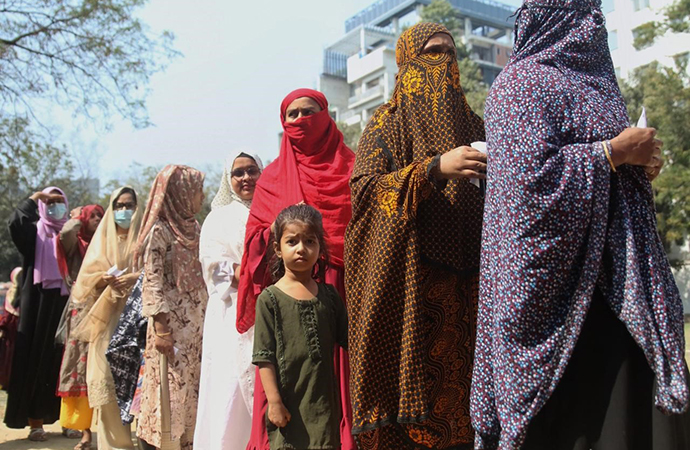
Photo: UNB
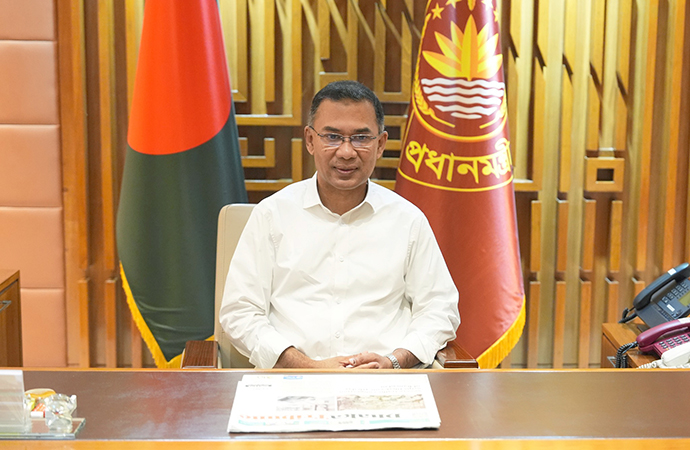
The 13th national parliamentary election of Bangladesh had quite some overwhelming socio-cultural and gender power dynamics, being also the first time in more than three decades that the country has been elected with a male Prime Minister. On the other hand, while at least 30 of the registered parties did not nominate any female candidate to the contesting seats (The Daily Star, 17 Feb 2026), that did not stop these parties from deploying masses of door-to-door women campaigners from trying to capture the votes of electorates where around half of the registered voters were women.
Side by side, there were visible campaigns calling for voters "To Respond to Bigotry and Misogyny through the Ballots", along with controversies ranging from social media hacking to outrageous remarks about women to increasing use of religious prejudice.
While quite a number of parties have signed the July Charter or taken oaths towards the referendum, and while some still debate legalities of the referendum, majority of the parties have failed to demonstrate their so-called gendered pledges towards the July Charter. Almost all parties also failed to comply with the Representation of the People Order (RPO) 1972, which mandates that parties reserve at least 33% of committee posts for women.
As per Transparency International Bangladesh (TIB) (8 Feb 2026), only around 4.05% of the nominated candidates by the political parties were women despite the pledge in the July Charter to nominate at least 5% women candidates. The female party nominees stood at around 2.8 percent for BNP (10 candidates), zero female candidates for Jamaat-e-Islami, 6.3% for NCP (2 candidates), and 3.1% for Jatiyo Party (6 candidates) (TIB, 8 Feb 2026; and Prothom Alo, 22 Jan 2026).
As per updates from the 13th National Parliamentary Election by the UN Electoral Project BALLOT and DRIP, a total of 88 female candidates contested the election, while 17 of these females contested from different constituencies in Dhaka. And inspite of all odds, 19 of the female candidates contested independently.
Heartiest congratulations go out to the seven of these women who have won the parliamentary seats, and the three females appointed to the cabinet. Notably, three women candidates were also close contenders securing the second highest number of votes in their constituencies.
The female contestants confronted difficult patriarchal battles and deserve special mentions for their courage and confidence to take a stance inspite of facing issues such as socio-cultural and gender power imbalances, lack of security and cyber bullying and harassment. TIB (2026) states that women candidates encountered significant barriers during their campaigns, such as derogatory and gender-biased remarks, vandalism of campaign materials, and harassment across social media platforms.
Around 75% of the female candidates were well-educated graduates or post graduates, while 67 per cent of them were in employment. (Prothom Alo, 8 Feb 2026). On the other hand, while some argue, that most of the female candidates had either strong family backing or solid party backing, that can also be said as true for our current Prime Minister and the majority of the rest of those in politics or power, both males and females.
The BNP's dominance among the winning female candidates reflects its overall electoral landslide. On the other hand, in this not-so-colorful election, Barrister Rumeen Farhana (Brahnmanbaria-2) stands out as not only the only female candidate to have won independently, but also as being one of only seven independent candidates who have won the election. Female contenders who fought strong but lost gracefully include, but not limited to, Dr. Tasnim Jara (independent candidate, Dhaka - 9) with her "serve and care" approach, and Dr. Manisha Chakrobarty (Bangladesh Samajtantrik Dal, Barishal - 5), conceding with the famous quote "We're not migratory birds; our struggle to change society will continue".
Side by side, Rangpur-3 had a note-worthy third-gender independent candidate, Anwara Islam Rani, who withdrew from the polls ahead of the elections, citing her commitment to protest discrimination and demanding for reserved seats in the parliament for the transgender community and other marginalized groups.
The July Charter referendum ahead of the 2026 Bangladesh election, retains the existing arrangement of 50 women's reserved seats in the 350-member parliament, allocated to parties on a proportional basis. At the same time, it sets out a phased expansion plan aimed at eventually raising the number of reserved seats for women in the lower house to 100 in future electoral cycles. However, critiques argue that such women's reserved seats in the parliament should be filled through direct elections instead of selections that open door ways for utilization by political parties to juggle power. In this regard though, the existing local government election structure is ahead in terms of mandates in Bangladesh, whereby women's reserved seats are contested through direct elections instead.
In terms of social inclusion, while the July Charter calls for pluralism, a stunning 29 political parties did not nominate any candidate from either religious minorities and / or indigenous communities. Only 3.91% of the candidates were from such minorities, including candidates from political parties, 12 independent candidates and 10 women candidates (TIB, 8 Feb 2026). Among these minority candidates, four of them have won the elections for BNP, while two of them have been appointed to the cabinet.
On the other hand, while the youth uprising leading to the elections is appreciable, vote centers in the future also need to learn to make reasonable adjustments for elderlies and persons with disabilities. One of my family members, for example, in her mid-70s, did not go out to vote due to spinal pain, and the fear and hurdle of climbing stairs in her health status.
As we embark upon a new dawn of democracy, we hope that plans and actions will unfold soon towards a more gender just and inclusive society, with a mandate for a "Government of the People, by the People, for the People".
Mehzabin Ahmed is a development professional.
A Independent Newsweekly
© Copyright 2026 | Designed by ARK Reepon & Developed by Cosmos Group Software Team



Leave a Comment
Recent Posts
An unaccountable process leave ...
The latest price hike of all four major petroleum products by Tk 20 pe ...
The French Connection in South ...
France Ambassador to Bangladesh Jean-Marc Séré-Charlet h ...
Ties with China enter new phase
Happy 61st birthday, Singapore!
In defiant speech, Pezeshkian calls out Trump and sa ..
The banality of evil