


Featured 2
Peptide Valley’s Penchant for Looksmaxxing

An Independent Newsweekly






Featured 2
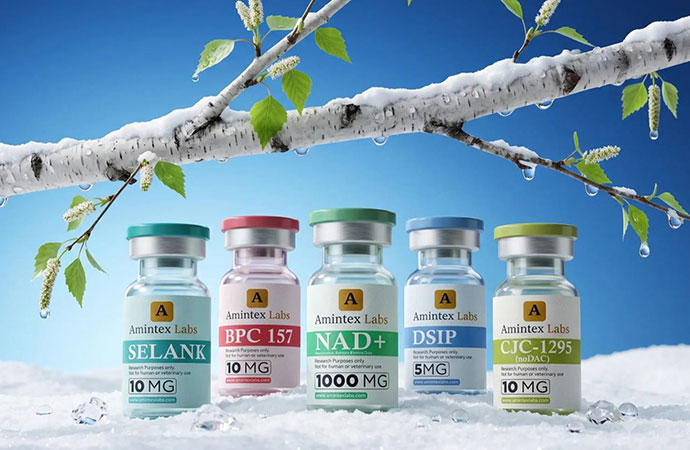
Photo: Peptide Vials, Collected
California's intellectual stronghold has been entrenched by a USD $328 million gray market, with vials being sold like candy and a Utah-born billionaire turning peptide supplements into Silicon Valley's newest religion.
Bodybuilders and biohackers once had unlicensed injectable peptides to themselves. Now a younger, vainer market is buying them, and some of the vendors used to sell something darker. "Honey, I won't tell you anything." So said "Louise", a WhatsApp saleswoman for Shanghai ERP Peptide Biotechnology, when a Fortune reporter asked this spring why her firm preferred cryptocurrency. "I won't risk sending my boss to jail." Ten vials of an orange powder sold as 5-amino-1MQ, a supposed fat-burner, arrived in late May from a facility in New Hampshire for $109 in stablecoin. Chainalysis, a blockchain-analytics firm, traced about $3.6 million in digital assets to the same company between late January and early June.
Draw one circle around people who want to live longer and another around people who want to look better. The first is crowded with gym-obsessed men in their 40s keeping spreadsheets of blood results, the second with teenagers in front of ring lights, and for most of the past decade each ignored the other's gurus. The overlap is now the busiest customer base in the grey market for peptides, short chains of amino acids that the body uses as signals and that vendors sell as freeze-dried powders labelled For Research Use Only. Chainalysis counted $32 million in crypto payments to peptide vendors in the first quarter of 2026, against roughly $1 million a quarter in 2024.
A penchant for the biometric ring, a glucose monitor, and a vial of white powder labeled For Research Use Only dissolving in bacteriostatic water on your kitchen counter. You are not a researcher. Nobody in this story is. The quest for "perceived aesthetic potential" maxing started somewhere between infamous crowned social media weight-loss-craze Ozempic's $29 billion vindication and a Reddit thread titled "What's up with the peptides hype?". And lo, a new pseudo-pharmaceutical cult was born in the Bay Area. Its sacraments are in bodily sacrilege. Their prophets wear Patagonia vests.
The prophet wears streetwear
The overlap's mascot is Braden Peters, a 20-year-old streamer from New Jersey known as Clavicular, who rose on TikTok and Kick in 2025 preaching "looksmaxxing", the project of improving one's face and body by any available means. The New York Times reported he was earning over $100,000 a month from streams. He says he began injecting testosterone at 14, and that years of steroids left him infertile. His $50-a-month online course includes peptide guidance, and the substances he has discussed on stream range from Melanotan II and retatrutide to Accutane.
In November 2025 a video circulated of him injecting his then 17-year-old girlfriend with a fat-dissolving acid named AQUALYX. In February police in Scottsdale, Arizona, arrested him on suspicion of possessing Adderall and the steroid Anavar, charges dropped four days later, and in April Florida prosecutors charged him over firing a gun at an already dead alligator during a stream. "There will always be a way to get peptides," the admin of a 9000-member Telegram group told its members, according to the New York Post.
Looksmaxxing is the practise of systematically optimising one's physical appearance through any available means - from the mundane (skincare, posture, diet) to the extreme (jaw surgery, bone-breaking, experimental subdermal cocktails). Originating in male self-improvement forums in the early 2010s, it migrated through Reddit and 4chan before TikTok industrialised it for a mass audience.
Peptides arrived late to a culture already fond of amateur skeletal engineering. Mewing, named after the British orthodontist John Mew and popularised by his son Mike, holds that pressing the tongue to the roof of the mouth will slowly reshape the jaw. In November 2024 the UK's General Dental Council struck Mike Mew off its register, finding he had recommended expansion appliances and headgear to two six-year-olds with no clinical justification. Bonesmashing goes further: devotees tap their cheekbones and jaw with a hammer or fist in the belief that the bone will heal back thicker, an idea no clinical study supports.
What he has built is not merely an audience but a permission structure, a manifesto. It is not unlike a cultural dispensation for a collective of predominantly young men, to treat their bodies or "matrix vessels" as unsanctioned clinical trials.
The original sin
Ozempic laid the groundwork of this rising pandemic, since semaglutide is itself a peptide, a modified copy of the gut hormone GLP-1, and once Novo Nordisk's drug became a household name around 2022 the weekly self-injection lost its stigma. A KFF poll of 1350 US adults in late 2025 found 12 per cent currently taking a GLP-1 drug. A Denver reseller who gave only his first name, Max, told the New York Post his firm fills about 80 orders a day, mostly through TikTok. "Peptides are the future of medicine," he said. "Eventually, there's going to be one for everything."
Washington has warmed up too. In 2023 the US Food and Drug Administration put BPC-157 and more than a dozen other peptides into "Category 2", effectively barring pharmacies from compounding them. Health Secretary Robert F. Kennedy Jr, who told Joe Rogan "We created the black market", ordered 12 of them re-evaluated in April 2026, and on 23 and 24 July the FDA's Pharmacy Compounding Advisory Committee recommended six against the advice of the agency's own scientists. Committee member Elizabeth Rebello of MD Anderson Cancer Centre was "concerned that we're responding to a market-induced demand rather than a decision based in solid science." "RFK Jr. takes peptides," one reseller told the Post. "He gets it. He'll protect us."
A field guide to peptides
● BPC-157: a 15-amino-acid fragment of a gastric-juice protein, sold for tendon and gut repair. The evidence is mostly from rats, and the only trial FDA staff found involved 46 people and an enema. The committee backed it 8 votes to 6.
● Aqualyx: no peptide at all, but often in the same basket: a deoxycholic acid solution injected under the skin to dissolve fat, the kind of product Clavicular was filmed using.
● TB-500: a synthetic fragment of thymosin beta-4, a protein involved in wound repair, with even less human data than BPC-157, often stacked with it as the "Wolverine" protocol.
● GHK-Cu: a copper-carrying tripeptide permitted in skin creams and injected for skin and hair. Injectable versions were barred from compounding in 2023, partly over immune reactions to impurities.
● Melanotan II: a synthetic copy of the hormone that darkens skin, also taken for libido. The FDA cites case reports including melanoma, and Chioffi quit when his moles darkened.
● Semax: a Russian-developed pituitary-hormone fragment, sold as a nasal-spray "nootropic" and among the six the committee endorsed.
● Retatrutide: Eli Lilly's experimental triple-hormone weight-loss drug, still in trials and sold online as "reta". Nathan Carranza, an 18-year-old in California, paid about $90 for a supply.
Peptides for thought
Andrew Huberman, the Stanford neuroscientist with one of the world's most popular podcasts, has argued both sides. In an April 2024 episode he warned listeners off black-market peptides, which can carry bacterial toxins. On The Joe Rogan Experience in September he described two BPC-157 injections clearing up a sore shoulder in a week, wondered aloud whether saline would have done as well, and watched Rogan wave the thought away. Daniel Cushman of the University of Utah, who co-wrote a review of the BPC-157 literature, put it to Scientific American more plainly: "There is very little existing information on most of these peptides."
"I started last year," says a 29-year-old Dhaka resident - a marketing graduate, son of a public service officer, who asked not to be named. He sources through a contact found on Xiaohongshu. "I'm doing Sermorelin and BPC. Sometimes it takes six weeks; sometimes customs hold it." He opens a Telegram group of roughly 180 members - predominantly young South Asian men - sharing bloodwork (an expansive test result of their blood ingredients), dosing schedules, and supplier reviews. He is planning a Bangladeshi community around the practise, and a trip to Turkey next year for a hair transplant.
Between September 2025 and early 2026, looksmaxxing generated more than 806,000 social media mentions globally. A peer-reviewed 2025 study in Sociology of Health and Illness documented body shame, self-harm encouragement, and measurable mental health deterioration among forum participants.
The human desire to outrun biology is ancient and not without its dignities. It has driven medicine, surgery, and every vaccine ever administered. Looksmaxxing adherents relegate the Promethean bargain - fire stolen from the gods, eternity on a rock, liver consumed daily.
The longevity crowd trusts nothing it cannot graph, while the looksmaxxers measure themselves only in the mirror, which leaves open which of the two was the vanity in the first place.
The eagle, historically, has proven extremely reliable. But will the liver always grow back?
Shoumik Zubyer is a science correspondent, and a Bioremediation researcher at the Bangladesh Atomic Energy Commission and Bangladesh Council of Scientific and Industrial Research (BCSIR).
A Independent Newsweekly
© Copyright 2026 | Designed by ARK Reepon & Developed by Cosmos Group Software Team









Leave a Comment
Recent Posts
Resting in Peace in Pirojpur
I never had the privilege of meeting freedom fighter Manik Pashari, wh ...
An impending disaster in the h ...
There has been a fresh spike in both dengue and measles cases, hospita ...
‘Stories bring us together’: Laetitia Troussel-Luber ..
A high-speed train slammed into another that had sto ..
Bangladesh and Malaysia concluded the first round of ..
CPC's international department head Liu Haixing to v ..