


Column
France’s Postcolonial Fracture: Unkept Promise Coming Home to Roost?

An Independent Newsweekly




Column
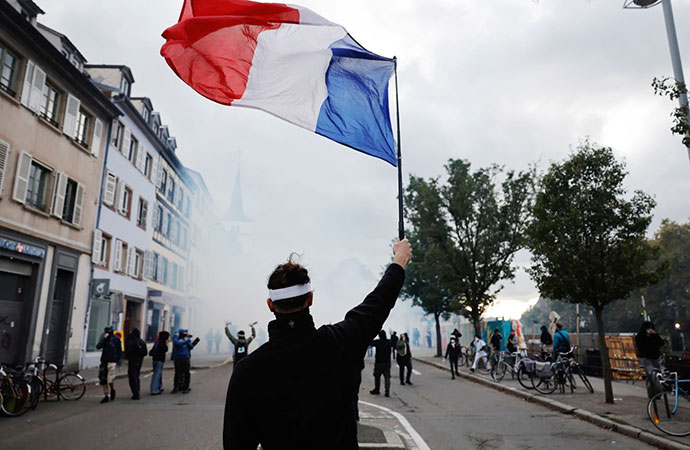
Photo: AP/UNB
It is an incontrovertible historical axiom that France and French culture have contributed immensely to global civilisation. It came through the conduits created by the Enlightenment, the arts, philosophy, sciences, and the ideas and ideals of the Liberty, equality and fraternity that the French Revolution espoused. Voltaire stimulated mind, hearts and the intellect. Napoleon gave a famous legal Code. Theirs became the language of diplomacy in much of the globe. He French went abroad, like some other Europeans, to colonize parts of the global cartography. These colonies, too, often helped spread the French literature. Leopold Senghor, a Senegalese poet and statesman, used French to develop the thoughts on Negritude, and enrich the Francophonie ethos. Nothing apparently appeared to explain the conflagrations that have seized France, and are seen across Euroean Societies, from Paris to Tirana. The Austrian Chancellor Klemens von Metternich had said: "When France sneezes, Euroe catches cold!" It's happened again! Why.
French colonialism had a unique character. On the positive side, as already explained a, it propagated many positive features. It thereby created ties that still link France, the metropolitan entity. To their North and West African colonies. Indeed many of these were, and some remaining ones are, seen by metropolitan France as integral parts of the French Republic. Some colonial subjects were thought to see themselves as current or future French citizens. This promise of belonging was key to defining the future relationship. But this promise was never real for both. French colonialism was often seen as ranking people by race. It was perceived as including forced labour, violence and unequal law. It demanded full assimilation while denying full equality. This contrarian mix- universal assurances and deep exclusion- was the legacy that characterise their connections of the future.
That legacy connected colonialism to immigration. When the Colonies were given independence in the decades following World War 11, while the predatory relationship ended of the 'periphery' of the empire with metropolitan 'core' France, another kind of relationship began. His was called 'Structural Dependency' by its proponents like Raul Prebisch, Celso Furtado and Samir Amin. It was a social framework where resources, wealth, and labour flowed from poorer countries to the rich, from the 'periphery to the 'core', from the Colonies to France. Colonial explotation continued in another, far more subtle form. Mihration from the 'Periphery' to the core' as an inexorable consequences. The migrants were placed in poor housing at the edges of cities. These became 'the banlieus', or the 'suburbs'. They were separated from good schools, jobs and public services. Generations of immigrants began to see the former colonial masters' promises as unkept!
The unrest is mainly a result of this fracture. The situation is exaxacerbated by other contributing factors as the unending wars, overall poverty , unemployment , inflation and cultural conflicts, Tariq Ali , a British-Pakistani student leader at Oxford during the Europe's May uprising in 1968, views the current ss "echoing "those events rather than a "repeat" of them. But he noties similar assion against social injustices by the youth today. The State says it is colour-blind. Yet those cramped in the 'banlieues' feel that their citizenship is forma; not real. Many analysts and observers riots seem to have become the political language of the excluded.
While, the colonial legacy is central to the current conflict, it is not the only cause. Cass, neoliberal urban policy, olice culture, and media interpretations, both social and mainstream, also matter. Still French authorities will not be able to resolve the issuesithout agddressing the postcolonial roots of the 'banlieues'. The rapidly changing global order or the lack of one will create many such unrests in the various regions across the continents where big powers pursue relentless self-preservation policies , bereft of values, which have to date been the greatest tools of our social an civic organisation. Exclusion, however, remains the bane of contemporary States and Societies. The unrest I address in this essay is less a rejection of France by the protesters than a demand to be included in it. Unfortunately France's unrest may not see a conclusion until the Republic learns that the colonial past it had pushed to the margins has now come back to the centre to roost! But not to demolish the nation, but to ask for a place in it!
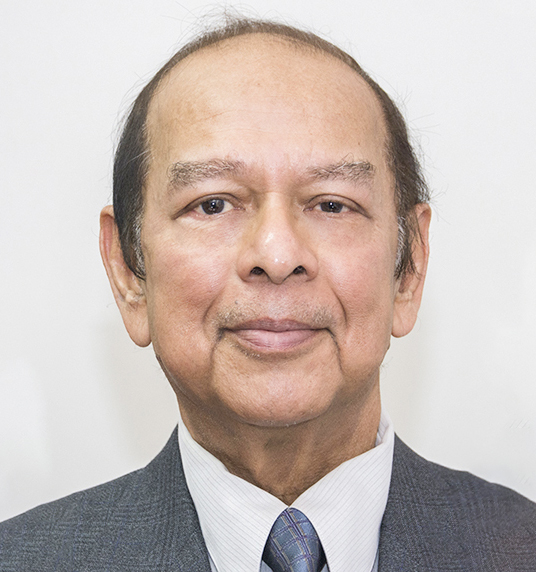
Ambassador Iftekhar Chowdhury (Rtd.) PhD President, Cosmos Foundation, Dhaka. Former Foreign Advisor (Minister for Foreign Affairs) 2007-2009 Bangladesh Caretaker Government
A Independent Newsweekly
© Copyright 2026 | Designed by ARK Reepon & Developed by Cosmos Group Software Team








Leave a Comment
Recent Posts
Resting in Peace in Pirojpur
I never had the privilege of meeting freedom fighter Manik Pashari, wh ...
An impending disaster in the h ...
There has been a fresh spike in both dengue and measles cases, hospita ...
‘Stories bring us together’: Laetitia Troussel-Luber ..
A high-speed train slammed into another that had sto ..
Bangladesh and Malaysia concluded the first round of ..
CPC's international department head Liu Haixing to v ..