


Society
Roots in Rome, Heart in the Carpathians


An Independent Newsweekly
Society
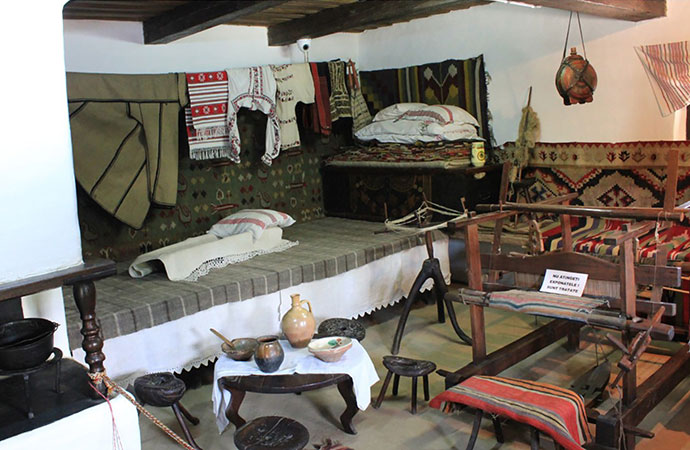
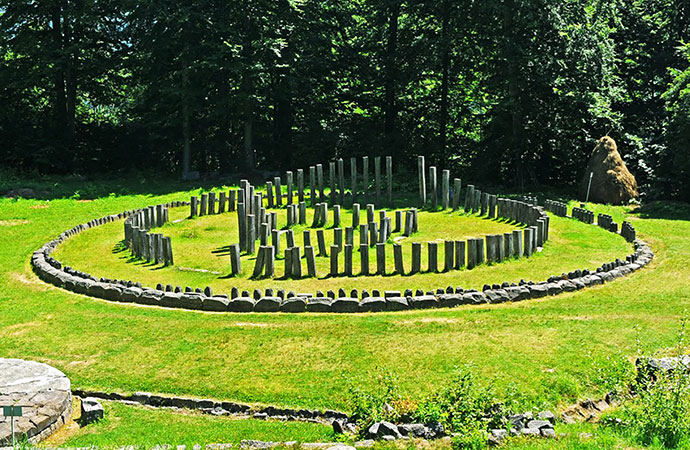
Romania's history has never been as idyllic and quiet as its scenery. A land inhabited by tenacious, hardworking, dignified and courageous people was constantly challenged by waves of invaders who attacked this part of Europe.
Romania is a relatively young state. It was founded in 1859 by the union of Moldavia with Wallachia, later joined by Dobrogea in 1878 and Transylvania and Bukovina in 1918. Before this moment, the whole territory was divided politically, economically and religiously. The only common element has always been the Romanian language, a Latin language. Romanians are the only people of Latin origin from this part of Europe, the only ones from the eastern part of the continent who keep a memory of ancient Rome. The great Romanian historian Nicolae Iorga compared the nation to "a Latin enclave at the gates of the Orient" or "a Roman island in a Slav sea."
It is said that the current territory of Romania was inhabited continuously for 40,000 years. The strongest argument is the discovery made in 2002 in the "Cave with Bones" (Caraș-Severin County) of three skeletons believed to be the oldest remains of modern humans found in Europe.
Another peak moment in the history of these places is the Cucuteni Culture (5500-2750 BC), one of the most fascinating and mysterious civilizations that used painted pottery in ancient times. Fragments of their craftsmanship remain in vessels exquisitely decorated in a style strikingly similar to that of today.
The first population of the Carpathian-Danubian-Pontic territory whose name we know were the Thracians, mentioned in Homer's poems The Iliad and The Odyssey. The historian Herodotus (484-425 BC) states that "the Thracian nation is the largest in the world after that of the Indians" and that "if they had one ruler or if the Thracians understood one another, their people would be invincible and more powerful than all nations."
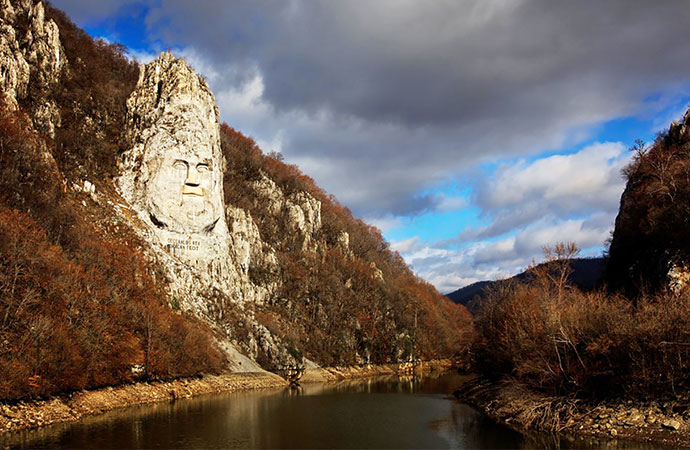
A century before Christ, the Dacian king Burebista controlled a large territory similar to today's Romania. According to the Greek historian Strabo, "Once he brought his nation, exhausted by frequent wars, under control, Burebista raised them so much through training, abstention from wine and obedience to commands, that in a few years he built a powerful state and subdued most of the Getae's neighbours, coming to be feared even by the Romans." The Dacian state reached its highest power under King Decebal (85-106 AD), who was eventually forced to fight two wars with the Romans. After these wars, the Romans conquered and colonized part of Dacia, which became a Roman province, while the Dacians adopted the language of the conquerors. The wars between the Dacians and the Romans are displayed on the spiral bas-relief of Trajan's Column in Rome. A period of 165 years of Roman rule followed-sufficient to Latinise the population north of the Danube.
According to Christian tradition, St. Andrew brought Christianity to the area; however, historians disagree on when exactly the inhabitants adopted the faith. Centuries followed in which migratory tribes used this territory as a passage to Western Europe in search of pasture and better living conditions. At the beginning of the new millennium (10th-11th century), the population north of the Danube was the only Latin nation in Eastern Europe and also the only Latin Orthodox nation.
In the 12th and 13th centuries, the first Romanian states emerged. The principalities of Wallachia, Moldavia and Transylvania were formed. Germans arrived in Transylvania at the behest of the Hungarian king and founded several towns. Between 1211 and 1225, on the territory of the present-day Țara Brsei, the Teutonic Knights were settled (at the invitation of King Andrew II of Hungary) to help defend Hungary's eastern border from incursions by migratory peoples. Many citadels and fortified churches date back to this period, such as those in Prejmer (a UNESCO monument) and Feldioara.
The conquest of Constantinople by Mehmed the Conqueror in 1453 caused a shockwave throughout Christian Europe. Through battle or tribute, the rulers of Moldavia and Wallachia managed to keep the Turks at bay. This is the era of leaders considered heroes: Mircea the Old, Stephen the Great, Vlad the Impaler, Petru Rareș. The buildings of those times-churches, monasteries, fortresses, princely courts-express the cultural encouragement given by these rulers.
In Transylvania, during the 14th-16th centuries, many fortresses and fortified churches were also built by the Saxons to protect rural communities.
In 1600, under the leadership of Michael the Brave, a temporary union of Wallachia, Moldavia and Transylvania took place. The union lasted only a year; Michael the Brave was defeated by the Turks and the Habsburgs. Transylvania later came under Habsburg rule, while Ottoman suzerainty continued in Wallachia and Moldavia.
Transylvania was ceded in 1699 by the Ottoman Empire to Austria. Almost a century later, in 1774, part of Moldavia (which would later be called Bukovina) was incorporated into the Habsburg Empire. Under the progressive Habsburg rule, the two Romanian provinces prospered economically and culturally. However, the Austrians were Catholics, and the Great Schism of 1054 had placed an anathema on Orthodox believers. The Habsburgs destroyed Orthodox churches, killed priests and forced inhabitants to convert to Catholicism.
In 1848 another milestone occurred when all Romanian provinces joined, one by one, the Forty-Eighters' movement that swept across Europe. These were the years in which nationalist sentiment grew, discussions of the common origin of the Romanian provinces intensified, and national consciousness became more clearly defined.
In 1859, under the leadership of Alexandru Ioan Cuza, the Union of the Romanian Principalities (Moldavia and Wallachia) took place. Seven years later, the German prince Carol of Hohenzollern-Sigmaringen was proclaimed ruler. Through him, Romanian diplomacy sought support from the major royal houses of Europe for independence. An era of modernization and prosperity then began for the Romanian lands, with key moments in 1878, when Romania declared independence from the Ottoman Empire, and in 1918, when the Great Union was achieved through the incorporation of Transylvania, Bessarabia and Bukovina.
Interwar Romania-also called Greater Romania-was the result of the collapse of empires and the proclamation of nations' right to self-determination. As part of the victorious camp, Romania became a component of Europe's "cordon sanitaire" against the danger of Soviet Bolshevism. It was a time of major change: a new Constitution, among the most progressive in Europe, agrarian reform and universal suffrage.
Culturally, it was the era in which the Romanian school of painting matured and the capital gained a flourishing image thanks to avant-garde architecture, earning Bucharest the title "Little Paris." New theatres, exhibition halls, museums and concert halls opened, and publishers raced to promote young writers such as Eugen Ionescu, Mircea Eliade, Nae Ionescu, Camil Petrescu, Liviu Rebreanu, Mihail Sadoveanu, George Bacovia and Mihail Sebastian. It was also the era of the universal genius Constantin Brncuși and the Dadaist Tristan Tzara.
In 1939, the onset of the Second World War found Romania strong economically, with thriving agriculture that had made it the breadbasket of Europe. After entering the war on the side of the Axis powers, Romania switched sides on 23 August 1944, joining the Allies. Shortly after, Soviet troops occupied Romania, placing it within the Soviet sphere of influence. The Communists took power and forced King Michael to abdicate, proclaiming the Romanian People's Republic.
Communist rule in Romania was one of the most repressive and brutal regimes in Eastern Europe, marked by crimes, torture and deportation. From former landowners to students, from priests to intellectuals, from political opponents to peasants who refused collectivisation-many became enemies of the new regime. Two terrible decades followed, during which hundreds of thousands of people lost their lives in communist prisons.
Internationally, Romania's history is best known after the Second World War as part of the socialist bloc, largely because of the excesses of dictator Nicolae Ceaușescu. Although he initially earned Western appreciation for denouncing the USSR's invasion of Czechoslovakia (1968) and for making Romania the first Eastern bloc country to establish official relations with the European Community (1974), Ceaușescu later attracted global condemnation by adopting an extreme personality cult influenced by Asian models and by continually violating fundamental human rights.
Ceaușescu was removed from power during the 1989 Revolution, which left more than a thousand people dead. In 1991, Romania adopted a new constitution and became a republic with a multiparty system, market economy and individual rights-freedom of expression, religious freedom and private property. Since then, Romania's progress has been steady along Euro-Atlantic lines, with its most important steps being membership of NATO in 2004 and accession to the EU in 2007.
A Independent Newsweekly
© Copyright 2026 | Designed by ARK Reepon & Developed by Cosmos Group Software Team





Leave a Comment
Recent Posts
Is the international community ...
A spate of downgraded economic projections, from Bretton Woods to Mani ...
A Childhood Lesson in Arithmet ...
As children, we learned a simple mathematical rule: if we know the pri ...
Indian authorities launched a major security crackdo ..
Police dispersed garment workers from the Azampur ro ..
Why Saudi Arabia has struggled to defend itself agai ..
Iran-backed Houthis strike Saudi oil company Aramco’ ..