


Reportage
Losing its mojo


An Independent Newsweekly

Reportage
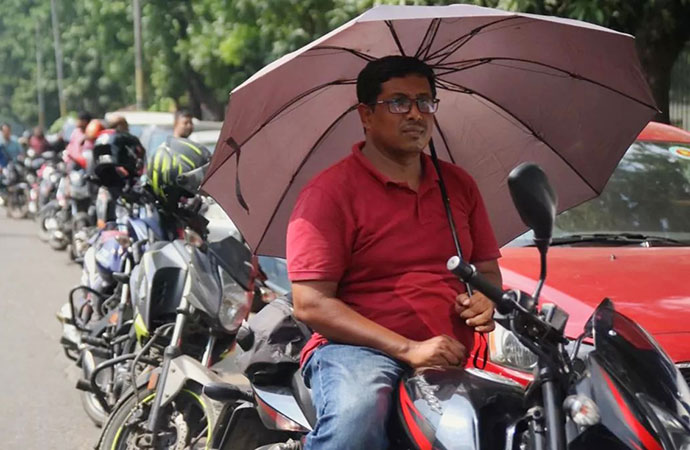
Long queues of motorcycles and vehicles stretched across fuel stations in the Asad Gate area, Dhaka, on Wednesday, April 22, 2026. Photo: Tahiyat Nazifa Noor/UNB
Can the BNP revive this sagging economy?
With parts of the country experiencing severe loadshedding to the tune of a 3000MW shortfall between electricity demand and generation, the government was forced to acknowledge the severe dent in the economy at least in the short term, from the war in the Middle East/West Asia.
The acknowledgement partly came in the form of the formation of a 10-member parliamentary committee, with Energy, Power and Mineral Resources Minister Iqbal Hasan Tuku in the chair, and equal representation from the treasury and opposition benches, to work together on finding 'rational solutions' to the country's ongoing energy crisis in the national interest.
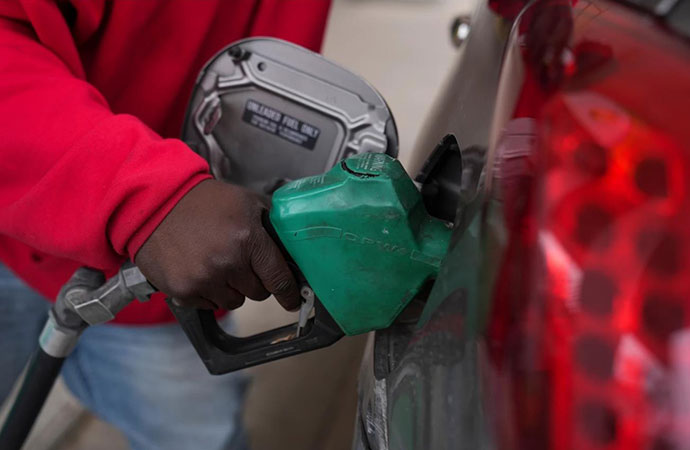
Even before that though, it was reflected in its quite sudden decision to increase the prices of all types of fuel at the consumer level in line with the rise in global fuel prices due to the war in Iran.
Following the hike, the price of diesel rises to Tk 115 per litre from Tk 100 per litre, octane rises to Tk 140 per litre from Tk 120 per litre, petrol to Tk 135 per litre from Tk 116 per litre, and kerosene to Tk 130 per litre from Tk 112 per litre, said a PID handout. The new prices came into effect almost immediately, within hours of the announcement, from last Sunday (Apr. 19).
In raising the prices in the middle of the month, the government circumvented the system introduced in March 2024, whereby an automatic pricing formula is used to fix fuel prices on a monthly basis, with prices for the following month announced at the end of each month. Consumers obviously weren't happy, as economists warned that the public must brace for the impact of higher inflation in the days and months ahead.
The country's economic growth slowed in the second quarter of fiscal year 2025-26 as a sharp fall in industrial activity dragged down overall output, according to provisional data from the Bangladesh Bureau of Statistics (BBS). The economy expanded 3.03 percent in the October-December quarter, down from 3.53 percent a year earlier, with industrial growth slipping to just 1.27 percent from 5.78 percent in the same period last year.
It was the slowest second-quarter expansion since FY21, when growth fell to 1.28 percent during the Covid-19 disruption. Earlier in the fiscal year, the revised growth figure for the first quarter stood at 4.96 percent, compared with 3.91 percent in the corresponding quarter of FY25, showing that the slowdown has gathered pace as the year progressed.
Economists said weak exports, energy constraints and political uncertainty weighed on production. Besides, reciprocal tariffs imposed by the Trump administration affected global trade flows, hurting export-oriented manufacturing.
According to the economists, domestic disruptions like frequent street protests and demonstrations further dented output, especially in energy-intensive sectors such as ceramics. Manufacturing investment and production are usually slow in periods of political uncertainty.
In the October-December quarter, agriculture grew 3.68 percent, up from 1.90 percent in the corresponding quarter a year earlier. Favourable weather supported Aman rice production this year, compared to last year when flooding in parts of Noakhali region disrupted output, he said.
The services sector expanded 4.45 percent, compared with 3.48 percent in the same quarter of the previous fiscal year. Although higher year-on-year, growth in the service sector usually remains above 5 percent.
Mustafa K Mujeri, executive director of the Institute for Inclusive Finance and Development (InM) and a former chief economist of the Bangladesh Bank, points out that growth has remained weak since the economic fallout from the Russia-Ukraine war.
The slowdown may have deepened in the latest quarter as both public and private spending tightened ahead of the national elections in February. Usually, the government scales back annual development programme (ADP) spending before elections, while private investors adopt a wait-and-see approach.
ADP spending was in any case abysmally low during the interim government's tenure.
Remittance earnings rose about 20 percent year-on-year to $8.67 billion in the second quarter of 2025-26, according to Bangladesh Bank data. However, economists say the inflows have yet to translate into stronger overall growth.
The subsequent two quarters have also not witnessed any transformative movements on the commercial front that could have any substantial effect on the economy in a positive direction. The current quarter shows little sign of a strong rebound, amid the ongoing war in the Middle East and the risk of higher fuel prices disrupting production across sectors.
Multilateral lenders, however, expect some recovery over the full fiscal year. The World Bank has projected the economy will expand by 4.6 percent in this fiscal year ending June 2026, despite persistent inflation, falling exports and sluggish investment. The International Monetary Fund (IMF) expects growth to reach 4.9 percent in FY2025-26.
Show me the money
According to banking sector insiders, borrowing for new investment for business and industries have almost come to a standstill. Bangladesh Bank figures show that bank loans in the private sector touched rock bottom in June 2025. In the month of July, bank loans for business and industries were in the negative territory. While bank loans for the private sector in June was Tk 17.47 trillion, the figure amounted to Tk 17.40 trillion in July.
To combat inflation, Bangladesh Bank had put the ceiling on private sector lending growth at 9.8 per cent during last fiscal. It ended up managing only 6.5 percent. The modest target of 7.2 percent private sector credit growth fixed for the current fiscal year seems unlikely to be met, judging by the record of borrowing during the first quarter of the fiscal.
On the basis of imports of machinery etc for investment and low level of borrowing for business and industries, it can be concluded that the amount of investment in the private sector is not conducive for growth. Needless to say, this has implications for the employment market.
Public sector investment under the annual development plan has remained lacklustre for almost two years now. Among other constraining factors is the poor collection of public revenue. The National Board of Revenue (NBR) is running nearly Tk 98,000 crore behind its revised collection target for the current fiscal, even as it posted over 11 percent growth in revenue.
The gap came into sharp focus this week as business associations urged the tax authority to slash import duties ahead of the 2026-27 national budget. Business groups met NBR Chairman Abdur Rahman Khan in the office for pre-budget consultations, presenting a raft of proposals aimed at nurturing domestic industry and reducing reliance on imports.
The shortfall in revenue collection has become chronic and is not likely to go away any time soon, constraining fiscal space for public sector investment. According to data published by NBR's Research and Statistics Wing, the board collected Tk 2,87,862 crore in the nine months through March 26 against a revised target of Tk 3,85,852 crore - leaving a deficit of nearly Tk 97,990 crore. And this is despite double digit growth in revenue collection compared to the same period last year, or in the last fiscal.
The development-budget (ADP) execution has shown modest improvement in the current fiscal year (FY 2025-26), with public agencies completing just over 30 percent of planned spending in the first eight months. However, the overall pace remains below pre-2024 levels, as weak performance in several key sectors continues to weigh on implementation despite signs of recovery.
At the IMF's doorstep again?
Bangladesh is now eyeing $2 billion in emergency aid from the IMF's Rapid Financing Instrument (RFI) window to cushion the economic shock stemming from the Middle East war.
The RFI provides rapid, low-access financial assistance to countries facing urgent balance of payments needs that, if not addressed, would result in an immediate and severe economic disruption.
The Middle East war is an external shock to the Bangladesh economy, raising the import bill for fuel/LNG, fertiliser and food, and increasing the subsidy and social protection pressures in real time. As a result, there is an additional subsidy requirement of Tk 38,542 billion (about $3.2 billion) for March-June, risks of rapid reserve drawdown and tighter external financing conditions.
Funds under the RFI would provide bridge liquidity to preserve reserves while sustaining essential fuel, LNG, fertiliser and food imports; create fiscal space for targeted and time-bound support; and reduce the risk of disorderly adjustment. It would thus protect macroeconomic stability.
The Bangladesh delegation led by Finance Minister Amir Khosru Mahmud Chowdhury discussed availing the RFI during the International Monetary Fund-World Bank Spring Meetings in Washington DC last week.
The formal request for funds under RFI, whose disbursement takes place in one go, will be sent once Prime Minister Tarique Rahman signs off on key conditions. While funds under RFI would be provided without conditionality or reviews, a commitment to continuing with key reforms under the $5.5 billion loan programme signed earlier ($4.7 billion with the AL government in January 2023; $800 million supplemented during the interim).
The government is weighing the implications of implementing the conditions for the emergency funding, Finance Ministry sources say.
One of the prime minister's key advisers sounded out the warning this week that the IMF's loan conditions are limiting the country's economic flexibility and could weaken growth while increasing inflation, according to a report.
Prof. Rashed Al Mahmud Titumir, who is the prime minister's key adviser when it comes to the economy, said strict IMF-linked reforms, including higher tax-to-GDP targets under weak economic conditions, could push growth below 3% and intensify pressure on households and businesses. He cautioned that policies not tailored to local realities may worsen inflation, particularly affecting farmers and low-income groups.
Prof. Titumir also criticised global institutions for promoting subsidy cuts despite acknowledging rising poverty levels. He argued that Bangladesh's reliance on IMF support stems from earlier policy choices and stressed the need for more context-specific solutions, stronger private investment, improved use of domestic funds, and better coordination between fiscal and monetary policies to stabilise the economy.
Delivering the keynote at a seminar titled "Economic Stability, Financial Capacity and the Government's 180-Day Action Plan", organised by the Economic Reporters Forum (ERF) at its auditorium in Dhaka this week, Prof. Titumir, a former chair of the Department of Development Studies at Dhaka University, also stressed that Bangladesh must advance toward its desired development trajectory by ensuring democratisation of the economy, increasing investment, and securing energy stability.
A 'plan' to rejuvenate the economy?
The BNP has pledged in its manifesto to double the size of the economy-from roughly $460 billion to $1 trillion in nominal GDP by 2034. Achieving that target would require annual growth of about 9%, which is surely a tall order for a country whose economic growth has slowed to around the levels discussed above.
Tarique Rahman has also promised to increase education spending from 2% to 6% of GDP and health spending from 0.75% to 5%. No credible plan exists to raise the government revenue needed to fund such ambitions. But whether or not these are achieved, these are commendable intentions, and we would like to see the government craft credible pathways to gradually achieving these targets. To more than double the growth rate, private investment would have to rise from 23% of GDP to 35% - this is the most vital jump that successive governments have talked about but none has succeeded. The share of private investment as a proportion of GDP has remained stuck at that level (23-24 percent) for over a decade now.
The interim government pursued high interest rates over the course of its tenure in an effort to rein in persistently high inflation, but met with only limited success. The policy drew fierce criticism from businesses, and even some economists, who criticised it as a bookish approach. They rather focus on the structural bottlenecks in distribution channels as the chief cause of elevated food prices.
The new government needs to move decisively to tackle powerful, unregulated middlemen in food distribution, who raise prices along the supply chain while depriving the farmers of fair prices.
In his keynote at ERF, Dr. Titumir said the BNP's election manifesto has set three major goals: building a trillion-dollar economy by 2034, establishing a new economic model based on investment, production and employment, and raising public expenditure in social sectors such as education and health. The manifesto also emphasises ensuring "an economy for all" through its democratisation.
He noted that Bangladesh has overcome numerous crises in the past and continued to make progress. "Despite challenges such as post-war devastation, famine, and global oil price shock; the country has charted its own path based on local realities," he said.
These experiences, he added, can provide valuable guidance for future reforms and policymaking. Highlighting human creativity and resilience as key drivers of economic development, he pointed to their impact in agriculture, livestock, and small enterprises.
Prof. Titumir, who is adviser to the PM with the rank of minister attached to the Finance and Planning Ministry, also stressed the importance of encouraging private sector participation and building incentive structures to expand the use of renewable energy.
"The country can't rely solely on government incentives for sustainable progress; the private sector must also play a significant role," he said.
The adviser further noted that attracting foreign investment is not possible without strengthening domestic investment capacity. He emphasised utilising region-specific potentials and enhancing the capabilities of regulatory bodies to support export diversification, particularly in pharmaceuticals, leather, and light engineering sectors.
He also stressed that sustainable reforms require not only legal frameworks but also social harmony, inclusive development, and media freedom. "Participatory development, rather than division, will strengthen the economy in the long run," he added. Prof. Titumir expressed optimism that visible economic progress could be achieved within the next few years if realistic and evidence-based policies are adopted.
A Independent Newsweekly
© Copyright 2026 | Designed by ARK Reepon & Developed by Cosmos Group Software Team




Leave a Comment
Recent Posts
Why not zero tolerance for mea ...
While the nation continues to be swept up by World Cup fever, we must ...
The Long Present: A Dialogue A ...
The exhibition The Long Present, currently on view at Bengal Shilpalay ...
South Asia’s cultural future lies in collaboration: ..
Tribandhon: Three Artistic Voices in Conversation
A B-52 bomber crashed shortly after takeoff at a US ..
Amid intense political controversy, Bangladesh Bank ..