


Featured 2
Village Games: Magical Childhood of Bangladeshi Children in Winter

An Independent Newsweekly



Featured 2
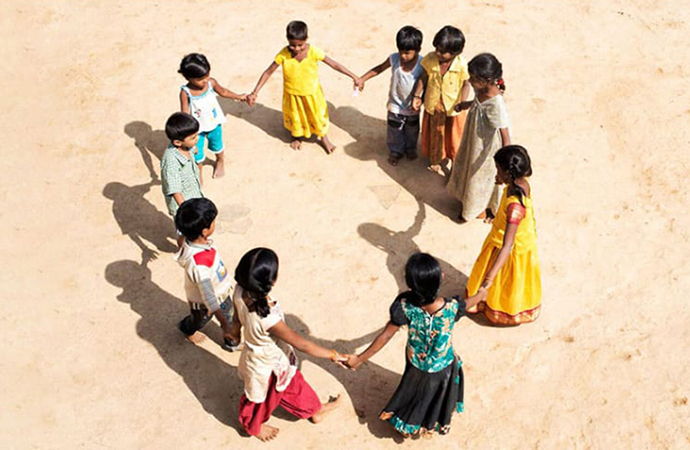
Photo: Collected
For the village children across Bangladesh, December was not just the end of the year; it was the start of an annual period of pure, unadulterated joy. The whole month became electric with a feeling of true holiday freedom, a feeling amplified by the weather itself. The air was thick with the winter fog (kuasha in Bangla) and an intense, joyful spirit of camaraderie. These were, quite simply, the golden days of childhood.
The minute December arrived, the village landscape underwent its annual transformation. A cool, beautiful mist began to cloak the mornings, setting a uniquely serene tone for the day. This chill was the first signal of winter, quickly bringing with it the irresistible smell of pithas (sweet rice cakes) a culinary cornerstone of Bengal and spreading a visible warmth of community
The Great Village Reunion
While the core group of children played together year-round enjoying classics like Cricket and Football December brought a massive expansion to their crew. As the first week of the month saw school exams conclude, the village became a hub for a grand reunion. Relatives, cousins, and friends who had gone away to towns and cities for their studies would return home, turning quiet lanes into bustling playgrounds.
Multiple children would converge at various homes, instantly doubling, even tripling, the number of playmates. This influx of fresh faces and high spirits intensified the festive atmosphere, making the simple fun of everyday games feel twice as exciting. The children lived for this time of year, eagerly soaking up the collective energy.
Games and Endless Days
The long break meant days that stretched out forever, perfect for every game imaginable. Beyond the mainstream international sports, the children brought back traditional village games that needed a huge crowd to work properly.
While Cricket and Football completely took over the open fields, turning foggy mornings into chaotic, unforgettable matches, the real heart of the playtime was in the indigenous games. These included:
Satchara:
Satchara (seven tiles) a team game with an equal number of players on both sides, played with seven potsherds or flat stones. The stones are placed one on another. A member of one team (the seekers) throw a ball at a pile in an attempt to knock them over. The seekers try to restore the pile of stones while staying safe from the opposing team's (the hitters') throws. The hitters' objective is to hit the seekers with the ball before they can reconstruct the stone pile. If the ball touches a seeker, that seeker is out and the team which the seeker came from continues, without the seeker. A seeker can always safeguard themselves by touching an opposite team member before the ball hits the seeker.
Kutkut:
Kutkut (also known as kitkit or Ekka-Dokka) is a traditional Bangladeshi hopscotch game played by at least two people on a drawn grid. Players toss a stone into a square, hop in, and push the stone out with their foot while repeating "kit-kit-kit." The goal is to successfully hop through all squares in the grid, completing rounds without letting the stone touch the lines, losing the rhythm, or using two feet. The first player to complete all squares wins.
Knamachhi (blind bee)
Kanamachhi is a popular Bengali game played by both boys and girls, similar to Blind Man's Bluff. One player is blindfolded with a scarf, becoming the 'blind bee,' while the others circle them as the 'bees.' The circling players lightly strike the blindfolded player and chant the rhyme: "Kanamachhi bhon bhon, yake pabi take chon" (Oh buzzing blind bee! Touch us if you can!). The blind player tries to tag or catch one of the moving players, often responding with the verse: "Andha gondha bhai, amar dos nai" (I'm blind, don't blame me if I bump against you). The player who is successfully tagged takes on the role of the blind bee in the next round.
Baucchi:
Baucchi is a team-based tag game centered on capturing a player called the "bride" (or "old lady"). The "bride-snatching" team must tag and eliminate members of the "bride-protecting" team while holding their breath. If a snatcher breaks their breath-hold or is tagged by a protector, they are out. The goal is for the remaining snatcher(s) to clear a path, allowing the bride to run to their team's area without being tagged by the remaining protectors.
Gulli Danda:
Gulli Danda was a popular Bangladeshi village game, played by two teams of at least four boys, considered a precursor to cricket. Using a long stick (danda) to flick a smaller tapered stick (gulli) into the air and hit it for distance, the 'hitter' scores based on the measured distance. The opposing team aims to catch the gulli mid-air for an immediate out. The game enhances hand-eye coordination, concentration, and competitive spirit among the children.
Elating Belating:
Elating Belating is a traditional Bengali team game played with two opposing teams that form lines while holding hands. Teams advance toward each other while reciting a rhyme. Once the rhyme is complete, the team that just spoke attempts to grab and pull a player from the opposing line. If they successfully take an opponent back to their side, that grabbing team is immediately declared the victor.
Phul Tokka:
Phul Tokka is a team-based guessing game where players face each other across a boundary line. Players are alternately blindfolded and must guess which opponent has touched their forehead. A player who guesses correctly earns a jump forward; an incorrect guess grants the opponent a leap forward instead. The first team to successfully advance a player completely across the dividing line wins the game.
Dariyabanda:
Dariyabanda is a competitive team game played on a marked grid by two teams of five to seven players. One team guards the lines of the grid, aiming to prevent the opposing team from crossing between squares. An attacker must dodge past the guards to cross all cells from the starting square (gadighar) and return without being tagged. Successfully crossing all cells earns the attacking team points and wins the round; being tagged results in a loss of the round and a switch of roles.
Gollachut:
Gollachut is a traditional competitive village game played inside a large circle with a central stick. The 'king's team' (8-10 players) forms a hand-holding chain around the stick and circles it. Players then break off from the chain and attempt to run out of the circle without being tagged by the opposing team. The game is thought to be symbolic of laborers or slaves attempting to escape agricultural work.
That perfect picture, the sharp winter air, the sweet scent of pithas from the kitchens, the sheer noise of kids playing that memory is real. But here's the problem: for the kids growing up now, that tradition is gone. All those good, active village games are disappearing, swapped out for phones and screens.
We cannot let this part of who we are just fade away. We have to make sure our next generation actually gets to feel the joy of playing together, outside. It's up to all of us the community, the schools, everyone who remembers to start programs that keep the spirit of these Bangladeshi games alive. That is the only way those golden December days, full of shared joy and true feeling, will ever come back.
Md Arman Hossen, Product Analyst, United News of Bangladesh (UNB)
A Independent Newsweekly
© Copyright 2026 | Designed by ARK Reepon & Developed by Cosmos Group Software Team






Leave a Comment
Recent Posts
Is the international community ...
A spate of downgraded economic projections, from Bretton Woods to Mani ...
A Childhood Lesson in Arithmet ...
As children, we learned a simple mathematical rule: if we know the pri ...
Indian authorities launched a major security crackdo ..
Police dispersed garment workers from the Azampur ro ..
Why Saudi Arabia has struggled to defend itself agai ..
Iran-backed Houthis strike Saudi oil company Aramco’ ..