


Featured 2
Beware of AI


An Independent Newsweekly







Featured 2
Freepik
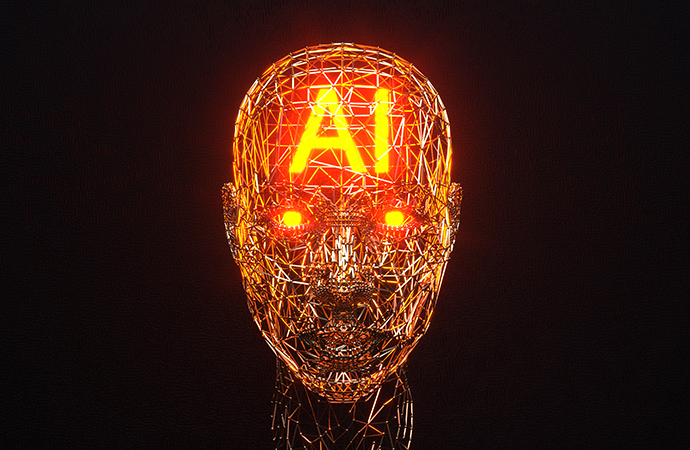
Artificial Intelligence (AI) is not artificial at all. It is real - in the sense that its dangers are real.
A friend sent me what was purportedly a CCTV recording of an incident at Brahmapuri Forest Guest House in the Chandrapur district of Maharashtra. It showed a tiger attacking a man seated outside the guest house and dragging him away. I responded in horror, as anyone would.
Then I checked out the incident on the Web. It had never occurred.
According to Sushmitha Ponnala of Factly, on "performing a keyword search regarding the incident, we couldn't find any reliable sources reporting such an incident. On closer observation, we can see the tiger and the guard seem to blend oddly with the background in a few frames, hinting that the video may have been digitally created. Furthermore, we analysed the video using Hive Moderation, an AI content detection tool, which indicated that the footage was 94% likely to be AI-generated. To verify further, we contacted the Chandrapur Forest officials, who confirmed that the video is fake. Moreover, PIB (the Press Information Bureau) Maharashtra, through (an) X post, refuted the claim and confirmed that the viral video was AI-generated, not real CCTV footage. To sum up, the video claiming to show a tiger attack at the Brahmapuri Forest Guest House is AI-generated."
I thank Factly and other media organisations that are devoted to the detection of fake news. Imagine the panic the digital deceit would have created among residents of Chandrapur and others planning to visit the forest before it was detected.
Digitally-doctored videos, particularly those that are AI-generated, can cause immense social harm. They can ignite immediate and widespread reactions. Imagine a video of a man in religious garb attacking a helpless child from another faith community with a knife. That video can lead to retaliatory attacks, riots and killings of members of the putative killer's community, including children and women, when no provocation existed in the first place.
Also imagine the face of a respected political leader which digitally replaces the face of an actual convict being led away in handcuffs to jail. Everything else remains factual: the physical background that confirms the arrest's location in space, the impassive faces of the overworked policemen who have seen it all, the jeers of the gathered crowd, the normal rhythm of everyday life of people buying and selling at a nearby market, and the startled behaviour of playful children pausing to observe the obscene adult world at work. Just one transposition changes the meaning of everything else in that videographed image.
Of course, the victimised politician or his supporters will respond with an appeal to veracity but the reputational damage would have been done by then. Not everyone who watched the first video will watch the second one. In the case of the riots, the massacred will not be able to make even a vindicatory video. The unexpurgated violence will pass into the digitised annals of the unwritten history of social hatred.
Love
Now, even the creation of hatred is not the worst that Generative Artificial Intelligence can inflict on humans. Love constitutes a greater harm.
People are falling in love with convenient digitally-fabricated companions, having preferred to give up on testy human-to-human relationships. A Massachusetts Institute of Technology study has found that Americans are forging emotional bonds with AI chatbots, which they view as being emotionally supportive in reducing loneliness. Naturally, questions arise over emotional dependency and unrealistic expectations of essentially robotic partners.
Omair Pall of Mashable India writes: "The MIT researchers observed that users are not merely interacting with chatbots for productivity or information, they are increasingly seeking the kind of emotional engagement typically associated with human relationships. This includes sharing personal thoughts, discussing daily struggles and, in some cases, expressing romantic feelings toward AI companions. The study points to several reasons behind this growing trend. Many users report feeling more comfortable opening up to AI systems because they offer non-judgmental interaction, constant availability, and predictable emotional responses. For individuals experiencing loneliness, social anxiety or limited access to support networks, these qualities create a sense of emotional safety that can feel more stable than human relationships."
Someone help me. (Not a chatbox.) I fell in love with Romeo's Juliet at 10, Dushyanta's Shakuntala at 12, Majnu's Laila the same year, Antony's Cleopatra at 17, and Haemon's Antigone at 19, knowing that those women were the creations of Shakespeare, Kalidasa, Amir Khusro and Sophocles. I knew that they were not real, that the poets had transformed whatever they might have been or not into the permanence of creations of the artistic imagination. Those women remain my girlfriends to this day, their ever-blossoming glory undimmed by my obsolescent age, because they were generated at the static pinnacles of the human imagination, not by the passing writ of technology in the service of commercialised ingenuity. I have lost in my quest to meet my eternal girlfriends because I can never be Shakespeare's Romeo or Antony, or Kalidasa's Dushyanta, or Amir Khusro's Majnu, or Sophocles' Haemon. I have never loved the writers' created females as much as their created males have done. I do not belong to the unending texts of the great: I belong to the unravelling of my self. Yet, what I have read and what little I know keep me company. I am never lonely enough to turn to AI for vicarious support.
AI is not for me. I know that I will have to live with it, but I shall certainly never live for it, either to make fake videos or to fall in fake love.
The writer is Principal Research Fellow of the Cosmos Foundation. He may be reached at epaaropaar@gmail.com
A Independent Newsweekly
© Copyright 2026 | Designed by ARK Reepon & Developed by Cosmos Group Software Team





Leave a Comment
Recent Posts
Cancer coverage must go beyond ...
A newspaper story can be accurate, well-sourced and informative, yet s ...
The World Economy Is Swerving, ...
For decades, companies, investors, and policymakers operated on the co ...
A Future With Chinese Characteristics
From Gaza to Trump, the age of ‘Big Security’ is her ..
PM’s popularity cutting across party lines
Bridging Horizons: Singapore and Bangladesh find a s ..