


Column
The politics of graffiti

An Independent Newsweekly





Column

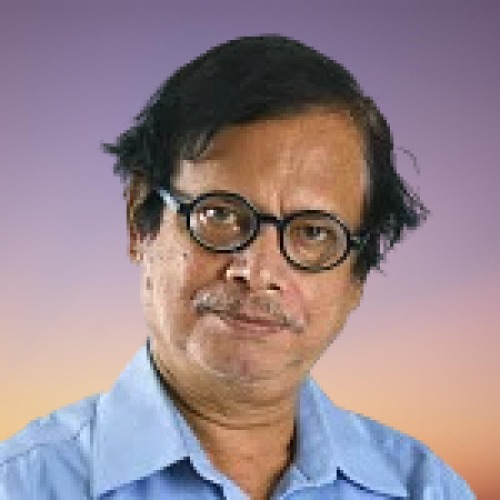
Photo: Collected
The following news item appeared in Prothom Alo English on April 21. I quote from it: "A clash broke out between activists of Jatiyatabadi Chhatra Dal and Islami Chhatra Shibir at Government City College in Chattogram. After an initial confrontation this morning (Tuesday), the two sides again engaged in clashes in the afternoon. During the incidents, brickbats were thrown. In this situation, classes and scheduled college exams were suspended. However, degree second-year and master's examinations under the National University were held.
"According to college sources, there was a graffiti on a college building wall that read: 'Campus free of student politics and Chhatra League.' On Monday night, a group of activists led by Abdullah Al Mamun, joint convener of the college unit of Chhatra Dal, went there and erased the word 'student' from the graffiti. They replaced it by writing 'Gupto' above. Gupto is roughly translated as clandestine or secret. Some student organisations including Chhatra Dal have been accusing Shibir of being involved in clandestine politics on different campuses."
I take no side in this dispute. I am too young and handsome to participate in student politics. My handwriting borders on the illegible. I cannot paint. Most of all, I am not a Bangladeshi citizen. All I can hope is that the two sides reconcile their differences and proceed with their studies.
However, I am not old enough to forget the graffiti that scarred my Indian youth in the lawless 1970s. The communist Naxalite movement was a graffiti-driven one. Its choice slogan was "China's Chairman is our Chairman". It was painted wherever it could be, in Kolkata or elsewhere, brazenly or surreptitiously, including on the wall of a temple that I passed by often. The deities of the Indian temple would not have welcomed the chairmanship of the Chinese Mao Zedong, an atheist to boot. Someone asked the Naxalites whether that slogan was not insulting to Indians at large, Indians whose country had lost a war with China as recently as in 1962. The answer was: "But the Canadian Maoists have the same slogan." Well, China had not defeated Canada in 1962. Indian and Canadian graffiti did not belong to the same ideological league. The graffiti lasted till the Naxalites themselves were whitewashed from Indian history. They were forgotten in China as well, where China's chairman was dethroned by Deng Xiaoping.
Graffiti evolved in West Bengal after the Maoists. An organisation emerged from the ideological nowhere to write motivational graffiti. One was: "Bangali, gorjao!" (Roar, O Bengalis). Someone drove an ink brush through that slogan and wrote below it: "Halum!" (the tiger's roar). An even better riposte was that to "Bangali, jego otho!" (Arise, O Bengalis). Someone defaced it while still keeping it still visible and wrote under it: "Ah, kancha ghumti bhangiyo na" (Gosh, don't disturb my infant sleep). Precocious humour cancelled out pretentious graffiteering.
Why this angst? It is because graffiti captures visual space and transforms it into ideological time. In a largely-literate society, life transforms itself into words and, more easily, images. Life changes every siren day: Images and words do not change until they are defaced or erased out of visual existence. I do not believe that anyone, including diehard (or live-easy) supporters of a cause, actually believe that their partisan words and images will make any difference to anyone. They still fight to capture walls because they think that the mere presence of words and images will establish their hegemonic presence for as long as their political regime or system lasts.
I remember an article written by Somdeb Das Gupta, one of the best writers to have worked within the walls of The Statesman newspaper in Kolkata. In the 1980s, he wrote an Op-Ed that captured the essence of political posters. A poster put up by the ruling party somewhere in Kolkata, stuck partly over another poster left behind by the party that it had defeated, had both fallen prey to heavy rains that had caused floods to rise to alarming levels. They were both peeling off because of the rising water and the damp wall, and soon would be washed away by the tide of natural time. Somdeb-da, one of my literary icons during my fledgling journalistic years at The Statesman, taught me to take passing time more seriously than the claims that political parties and their personalities make on it.
The writer is Principal Research Fellow of the Cosmos Foundation. He may be reached at epaaropaar@gmail.com
A Independent Newsweekly
© Copyright 2026 | Designed by ARK Reepon & Developed by Cosmos Group Software Team







Leave a Comment
Recent Posts
Why not zero tolerance for mea ...
While the nation continues to be swept up by World Cup fever, we must ...
The Long Present: A Dialogue A ...
The exhibition The Long Present, currently on view at Bengal Shilpalay ...
South Asia’s cultural future lies in collaboration: ..
Tribandhon: Three Artistic Voices in Conversation
A B-52 bomber crashed shortly after takeoff at a US ..
Amid intense political controversy, Bangladesh Bank ..