


Reportage
War and its Discontents


An Independent Newsweekly





Reportage
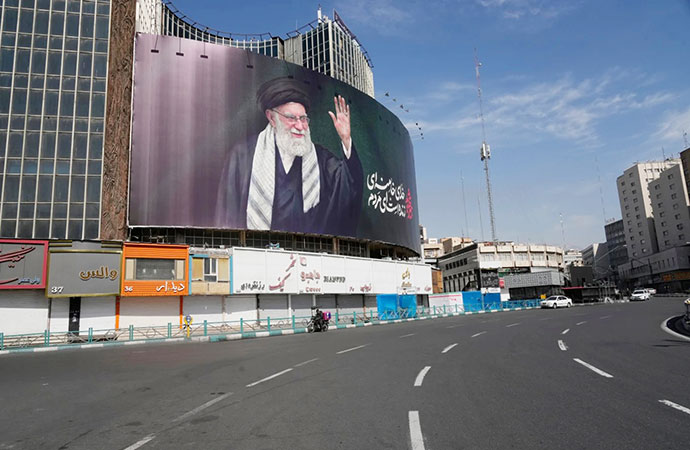
A billboard showing a portrait of the late Iranian Supreme Leader Ayatollah Ali Khamenei, who was killed in U.S.-Israeli strikes, looms over an empty square in Tehran, Iran, Thursday, March 5, 2026. Photo: AP/UNB
As the US-Israel invasion of Iran entered its sixth day on Thursday, tensions intensified and began to spread across the Middle East and beyond, with significant implications for countries heavily dependent on imported fuel.
The war has killed more than 1,000 people in Iran, more than 50 in Lebanon and around a dozen in Israel, according to officials in those countries. Meanwhile the Bangladesh government has confirmed that two Bangladeshi nationals were killed and seven others injured in missile and drone attacks in different parts of the Middle East.
In a press release issued on March 2, the Ministry of Foreign Affairs (MoFA) said the government is "deeply saddened" by the casualties amid the escalating conflict in the region. The hostilities have disrupted key energy routes, driven up global oil prices and heightened economic uncertainty in regions reliant on Middle Eastern energy supplies.
The war is already being felt in the Bangladeshi economy, sparking a sharp rise in energy costs and leaving thousands of tons of export goods stranded.
As the conflict threatens the vital Strait of Hormuz, economists and business leaders warn of a multi-dimensional crisis involving fuel shortages, record-high shipping costs, and a potential spike in domestic inflation.
President of the Bangladesh Garment Manufacturers and Exporters Association (BGMEA) Mahmud Hasan Khan said that all entrepreneurs are concerned about export and import in the Middle East conflict.
"We are talking with the government and foreign buyers on export shipment, along with watching the situation," he said.
The same opinion was echoed by the president of Bangladesh Knitwear Manufacturers and Exporters Association (BKMEA), Muhammad Hatem, who said that export is also involved with import. So, both need a sustainable environment for smooth business. Any kind of disruption in export-import or energy supply uncertainty will affect business severely, he said.
On Wednesday (March 4), global oil prices hit their highest levels since early 2025. Brent crude rose to US $82.53 per barrel, while West Texas Intermediate (WTI) climbed to $75.37.
For Bangladesh, which relies on the Middle East for nearly 90 percent of its fuel imports, the stakes are high. The Strait of Hormuz serves as the gateway for one-fifth of the world's oil and significant LNG supplies. Any prolonged disruption here directly impacts Bangladesh's power generation, transport costs, and foreign exchange reserves.
The conflict has created a logistical nightmare at Hazrat Shahjalal International Airport and Chittagong Port. Major airlines from Qatar, Kuwait, Oman, and the UAE have suspended cargo operations from Dhaka. Over 1,200 tons of export goods, primarily Ready-Made Garments (RMG), are currently stuck at the airport.
Shipping lines, including the Mediterranean Shipping Company (MSC), have halted new bookings for Middle East-bound containers. Over 1,000 containers filled with frozen fish, processed food, and plastic goods are stranded across various ports.
The "war premium" is already being felt in the kitchen market. Importers report that the cost of transporting palm oil from Malaysia and Indonesia has jumped by $8-$10 per ton.
"The war's duration is uncertain, but the impact is immediate," says Dr. Mustafizur Rahman, Distinguished Fellow at CPD. "While the initial hiccup is in logistics, the long-term threat is energy security. We must prepare an emergency roadmap for alternative sourcing."
The conflict exposes several critical vulnerabilities for Bangladesh, such as supply chain rerouting. Vessels are being forced to take the Cape of Good Hope route, adding 5,000 kilometers to journeys, significantly increasing freight charges and delivery times. The textile industry faces delays in importing cotton from Western markets, while the plastic sector is struggling with blocked petrochemical shipments.
Beyond trade, the safety and stability of the millions of Bangladeshi expatriates working in the Gulf remains a looming concern for the country's remittance inflow.
Business leaders and economists are urging the government to engage in immediate tripartite consultations with researchers and traders.
While the government maintains that there are several weeks of fuel and grain reserves, experts argue that "strategic stockpiling" and "source diversification" are no longer optional. If the tensions in the Persian Gulf do not subside quickly, Bangladesh may face a period of forced austerity and heightened economic volatility.
Bangladesh's economy faces a significant risk of sudden uncertainty if the conflict in the Middle East expands further, economist Professor Selim Raihan of SANEM warned.
In a Facebook post on Wednesday, Raihan said the situation became more alarming after Iran on Monday declared the closure of the Strait of Hormuz, triggering sharp volatility in the global energy market.
"Tehran has reportedly warned that its Revolutionary Guard and navy would take strict action against any vessel attempting to cross the strategic waterway."
He said that a substantial share of the world's crude oil and liquefied natural gas (LNG) shipments pass through the Strait of Hormuz.
"Any disruption to shipping along this route could cause major interruptions in global energy supply, with immediate consequences for import-dependent economies such as Bangladesh."
Raihan noted that Bangladesh's energy security could come under serious strain in the current circumstances: "Although the country has some reserves of oil and LNG, prolonged disruption to fresh imports may quickly deplete existing stocks."
He observed that LNG prices in the international market have already started to rise amid growing uncertainty: "Higher import prices would increase the cost of electricity generation, as Bangladesh relies heavily on imported fuel for power production."
If electricity and fuel prices rise, production costs across industries would increase, transport expenses would go up and overall inflationary pressure would intensify, he said.
"The combined effect would push up the cost of living for ordinary people while weakening the competitiveness of the country's industrial sector in export markets."
Raihan cautioned that there is little ground for optimism that the crisis will be resolved quickly.
"A prolonged war could create significant global economic stress, which would inevitably spill over into Bangladesh's economy through trade, energy and financial channels."
He stressed the need for immediate government preparedness to manage potential fallout. According to Raihan, policymakers should convene urgent consultations with business leaders, energy experts and economists to formulate a coordinated response strategy.
Among the measures he suggested are exploring alternative sources of energy supply, diversifying import origins, strengthening strategic fuel reserves and curbing non-essential expenditure to ease fiscal pressure.
He emphasised that timely and coordinated action would be crucial in mitigating the impact of a possible prolonged global energy shock. He also mentioned that proactive planning and swift policy coordination would be essential to safeguard macroeconomic stability and protect vulnerable groups from the brunt of potential price shocks.
Geopolitical implications
According to the Bangladesh Institute of Peace and Security Studies (BIPSS), the joint US-Israeli attack on Iran has immense geopolitical and geo-economic implications for Bangladesh.
The rapid collapse of the traditional supply chain and the rise in operational costs are evident due to the Iranian blockade of the Strait of Hormuz, on which Bangladesh's energy imports and RMG exports are heavily dependent.
Major global marine insurers' prompt cancellation of war risk coverage in the Persian Gulf and the war risk surcharges from the shipowners are going to impact the export and import badly. Increased shipping costs and delays are in effect as the ships are avoiding the Suez route and are rerouting around the southern tip of Africa.
RMG export cost is going to increase by 30-35%, and the per-barrel crude oil price would surge between $95 and $110, BIPSS said in a security update.
The anticipated supply chain disruption affects the country's scheduled 18 out of 22 LNG cargoes from March to May via the Strait of Hormuz. As 103 of 115 LNG cargoes will come from long and short-term agreements this year, the probability of straining the long- term contracts would increase dependency on the spot market, BIPSS points out.
Given Bangladesh's reliance on the Middle Eastern labour market for foreign reserves, the country would suffer as flights are already down due to the high-risk situation.
The instability in the Middle Eastern nations challenges remittance outflow as the safety of 12 million migrant labourers are in concern. This is going to impact Bangladesh's foreign currency reserves that would negatively impact the country's purchasing capacity.
All this has also led to an expectation that the overall inflation rate is going to spike.
As the war escalates with the increase in shipping rates, the supply chains of the industrial raw materials and commodity goods are at stake. That's why there is a high likelihood of an increase in consumer prices for necessary commodities.
Collective discontent
The US-Israeli war on Iran has been condemned as illegal across much of the global south, with China saying it was unacceptable to "blatantly kill the leader of a sovereign state".
Many countries objected that negotiations between the US and Iran over its nuclear programme and missile capability were not given a chance to succeed before Washington and Israel began bombing, and analysts often saw the war in terms of a colonial-style exercise of might.
Pakistan's prime minister, Shehbaz Sharif, offered condolences over the killing of the Iranian supreme leader, Ayatollah Ali Khamenei, saying that international law prohibited the targeting of heads of state. South Africa's president, Cyril Ramaphosa, questioned the "pre-emptive" justification provided for the war, saying that self-defence was only permitted in response to an armed invasion and that "there can be no military solution to fundamentally political problems".
Brazil said that it had grave concerns, adding that "the attacks occurred amid a negotiation process between the parties, which is the only viable path to peace".
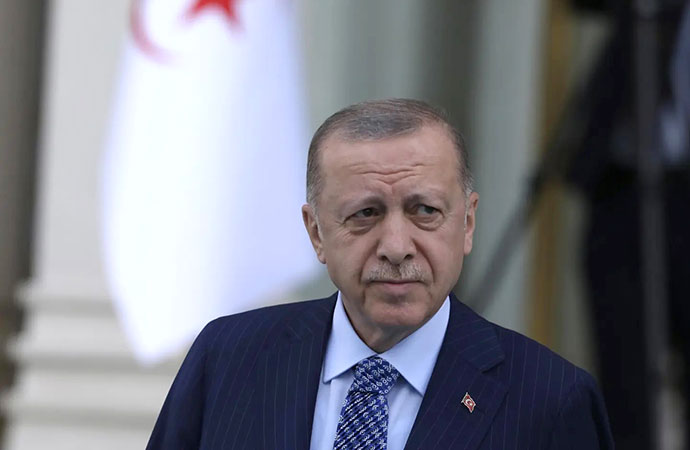
Turkey's president, Recep Tayyip Erdoğan, deplored the attacks, which he said were "instigated" by the Israeli prime minister, Benjamin Netanyahu. Oman's foreign minister, Badr Albusaidi, who had said on the eve of the attack that a deal was within reach, said: "I urge the US not to get sucked in further. This is not your war." Oman downed two drones, while another crashed near its Salalah port on Tuesday, state media said.
Cuba, whose regime is under substantial pressure from Donald Trump, said: "Once again, the US and Israel threaten and seriously endanger regional and international peace, stability, and security." Malaysia, condemning the attack, said that "disputes must be resolved through dialogue and diplomacy".
Indonesia, one of the few countries to announce troops for Trump's Board of Peace's planned international security force for Gaza, said it "deeply regrets" the failure of the Iran negotiations - while its president offered to travel to Tehran to reopen dialogue. The Indonesian Ulema Council, an organisation of the country's Muslim clerics, urged their government to withdraw from the Board of Peace in protest.
Many other developing nations, including Bangladesh, also lambasted Iran's attacks on its Gulf neighbours.
Analysts said the conflict should be understood in the context of past wars of regime change in Iraq and Libya, Israel's impunity for its war in Gaza since 2023, and colonialism - pointing to a speech of US secretary of state, Marco Rubio, last month, where he appeared to glorify past western conquests of developing nations.
Siphamandla Zondi, professor of politics at the University of Johannesburg, said that in the west, wars were viewed as having moral purpose, while in the global south, conflict was seen as evil and a failure to behave as adults. He said that the US and Israel had cajoled some countries through the Abraham Accords for diplomatic recognition of Israel, and used force against others.
"This is a war of domination and subordination, therefore it has imperialist undertones and motives," said Zondi. "It makes the world unsafe for all of us."
Commentators said Europe had shown double standards, stridently defending international law when it came to Trump's attempts to annex Greenland but muted in the case of this war.
Amitav Acharya, author of The Once and Future Global Order, quoted in The Guardian, said that in the past, the US had sought influence and legitimacy. Now, the US acted solely through coercion, even as Chinese soft power was gaining, with Beijing offering investment to developing countries. He said that Russia, too, would benefit, as Iran and other Trump foreign policy shocks took the focus away from Ukraine.
"Many countries in the global south are going to look for a coalition of powers that will stand up to the United States, as the United States is seen as so aggressive, so imperial," said Acharya.
Some commentators emphasised that criticism of the war did not mean support of the Iranian regime.
"I condemn the Iranian theocratic regime for its dictatorial and repressive nature, but these ongoing attacks are a violation of international law," said Heraldo Muñoz, a former foreign minister of Chile. "The motives are more of a domestic nature in the US by an American president who feels empowered by the successful military extraction of Maduro from Venezuela."
The Trump administration sought neither the approval of the UN security council - as Washington attempted for the Iraq war in 2003 - - nor even the approval of elected representatives at home, analysts said.
Oliver Stuenkel, professor of International Relations at Fundação Getulio Vargas (FGV) in São Paulo, said that there was fear in Latin America that, emboldened by his actions in Venezuela and Iran, Trump would attempt to target Cuba.
"There is a profound sense that international law is being eroded more systematically, and that has, I think, profound consequences for many countries in the global south, which are militarily weak and vulnerable, have rich natural resources, and have long made a bet on international rules and norms," said Stuenkel.
Maleeha Lodhi, Pakistan's former ambassador to the US, said the US was negotiating with Iran in bad faith, as it did last year, using talks as a smokescreen to complete preparations to attack.
"Who can trust the Trump administration now? It acts unilaterally in total defiance of international law and any norms of diplomacy," said Lodhi. "This will come back to haunt them."
A Independent Newsweekly
© Copyright 2026 | Designed by ARK Reepon & Developed by Cosmos Group Software Team




Leave a Comment
Recent Posts
Is the international community ...
A spate of downgraded economic projections, from Bretton Woods to Mani ...
A Childhood Lesson in Arithmet ...
As children, we learned a simple mathematical rule: if we know the pri ...
Indian authorities launched a major security crackdo ..
Police dispersed garment workers from the Azampur ro ..
Why Saudi Arabia has struggled to defend itself agai ..
Iran-backed Houthis strike Saudi oil company Aramco’ ..