


Column
Better off and poor elderlies: Same age, different deprivations

An Independent Newsweekly

Column
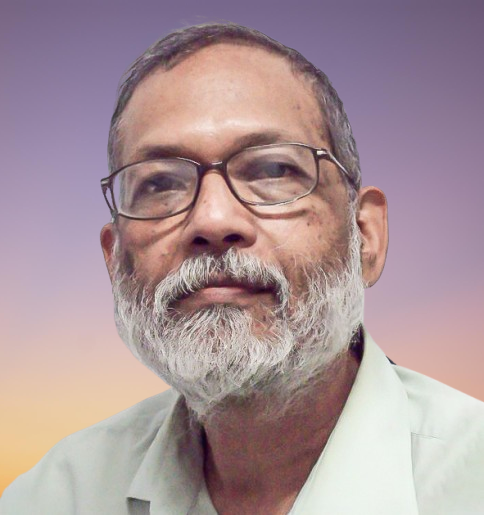
Photo: Collected
About 25 + years ago I began to explore the world of the elderly to do a radio series on this population group for the BBC. The radio series was supported by Help Age, a UK INGO working for the benefit of the Global Elderly.
One of the best things about the BBC was the variety they offered. I had spent most of my regular hours as a full time reporter on political issues but after I left and later did assignments for them on social issues. I certainly enjoyed doing them more than doing a daily broadcast on political matters.
I also had a long track record in the development world, both nationally and internationally for the UN and other agencies. So both my interest and skill as a journalist matched. I liked the format of a radio series too as it allows one to explore in-depth much.
The socio-economics of the Elderly
When I began working on the series I did so by asking the experts about the topic. It took me some time to locate them because not many seemed to know who the experts on the issue were. Finally, a cluster of such people were located there who pointed to a few more. They were proper academics and knew their topic.
They were very happy because few media persons ever went to talk to them and me from the BBC- that being the media Brahmin in those days- gave them an opportunity to reach a wider audience. Many issues were discussed and their insights were worth it all. Their description and analysis of the survival and coping mechanisms of the very poor particularly in the rural and peri-rural areas were very significant.
They said that the elderly from the very poor class were often abandoned by their families that are their children. They had no place to turn to and 25 years back even less than today, meager that it is even now. I was a bit surprised to learn that in the shrines, the mazars offered sanctuary to some. Those finding refuge there survived on social charity and the shrines were literally like a shelter home to these members of the very poor class. It was a telling example of religious values serving social causes.
Contrary to commonly held views, rural people didn't look after the elderly including the parents like their urban counterparts. The rural population like the urban ones is the same and all are guided by ideas of self-preservation. During the Covid days, this became obvious.
The elderly and Covid days
Years later, I was involved with several research projects on the impact of the pandemic on various classes and groups. Data showed that the elderlies were not anyone's priority so they suffered the most. In the urban middle class apartment ecology, the young carried the virus home and the stay-at-home elderly caught it. They were of course unable to cope with it and experienced high level suffering. Once the disease was advanced, few did caregiving and the elderly constituted most of the dead even though many were at home. While messages were sent that the elderly were vulnerable, few actions were taken to protect the highest vulnerable group by the people.
In the rural areas, the situation was devastating. The grown up children were unable to take care or unwilling if you prefer it to take care of sick elderly parents and many were simply packed off to die. These elderly and sick parents simply had no way of surviving. So deprived of access to basic survival needs and medical attention, they were left destitute and they ultimately died, the lesson that we learn is that human beings can't or don't take care of the elderly beyond a point. It's particularly so when they can't afford to.
Recent scenario
In our survey on emerging professions, we found that elderly care had emerged as a profession that was growing in urban Dhaka and also had a demand abroad. Hence several training institutions had sprung up. We learnt that a new upper middle class had emerged who were into elderly care. Individuals' and families were both seeking elderly care.
It appears that many elderly who can afford it and live as a single person are seeking paid care. Many even prefer to live alone and look for professional care-givers. A section of this group does live in "Care Homes" but the quality is not always great and supply is less than demand. So they stay at home and buy services from professional caregivers. They belong to the upper middle class mostly who can afford this on their own.
Another group that is providing work for this sector are the expatriates who live in the West so can't take care of their parents here but can afford to provide professional care. These are new trends but again remain limited to the better off.
But what happens to the elderly poor both in the rural and urban areas? That's what needs exploring.
A Independent Newsweekly
© Copyright 2026 | Designed by ARK Reepon & Developed by Cosmos Group Software Team



Leave a Comment
Recent Posts
A commendable intervention by ...
A struggle for local dominance in the Chittagong Hill Tracts, specific ...
How close is the Amazon to a ‘ ...
While Brazil’s presidential candidates have not made policy of t ...
Another shipment of highly radioactive uranium fuel
Harmony: Diplomatic community joins Durga Puja celeb ..
What to know about the Ebola outbreak that has sprea ..
Brazil election: Trump’s ‘Donroe Doctrine’ faces its ..