


Featured 1
On shaky ground, some hope for respite


An Independent Newsweekly




Featured 1
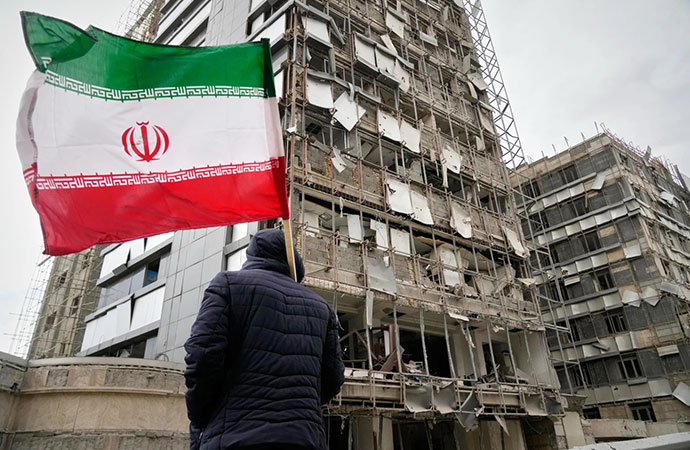
Photo: AP/UNB
The announcement of a ceasefire in the catastrophic "war of choice" that unfolded in West Asia over the last six weeks obviously comes as a relief to many, not least to those of us in Bangladesh. Being familiar with the burden that comes from being a net energy importer on the international market with a weak currency and volatile forex reserves, policymakers in Bangladesh will be particularly relieved, given some of the dire forecasts of a looming energy crisis in the country that had started to emerge, in the event of a prolonged war.
For now, even this fragile ceasefire brokered by Pakistan at least lifts the sense of doom surrounding such projections. Although reports suggest the panic buying witnessed at filling stations around the country pretty much from day one of the war continues to persist. That may have something to do with the uncertainty surrounding the announced ceasefire, with both sides accusing each other of violations and even misrepresenting each other's positions - particularly over the inclusion of the war theatre in Lebanon within the ambit of the ceasefire agreement.
Close to 42 hours since the deal was announced, the all-important Strait of Hormuz has remained closed, which is not surprising since Iran has made abundantly clear that any agreement to end hostilities must include the Lebanese theatre. The hope must be that it gets sorted out soon, but it is difficult to see Israeli prime minister Binyamin Netanyahu acting in good faith towards a peace agreement. Which is particularly concerning for us here in Bangladesh, given the lack of breathing room for the economy. The latest report from the General Economics Division (GED) of the Planning Ministry highlights mounting challenges from the energy crisis and persistent inflation, despite some improvement in foreign exchange reserves. The report warns that the ongoing energy crisis is affecting fiscal balances, external accounts, and investment activities.
The GED noted the difficult trade-off faced by policymakers. Maintaining exchange rate stability could strain reserves at a time when the import bill for energy may be set to spike, while further depreciation of the taka may intensify inflationary pressures. Similarly, energy subsidies continue to shield consumers but are adding to fiscal burdens that eventually must be borne by the public. At the same time, export performance has been weakening, with ready-made garment (RMG) exports falling to $2.8 billion in February from $3.6 billion in January - a 22% drop - reflecting softer global demand and higher domestic production costs.
Releasing its latest Bangladesh Development Update in Dhaka this week, the World Bank attributed a downgrade in its projection for the country's GDP growth rate in the current fiscal, from 4.6% to 3.9%, to "spillover effects from the war," alongside pre-existing weaknesses in export growth and continued sluggish public and private investment. It also projects some 600,000 jobs could be lost. The human cost of war, as always, is inescapable.
A Independent Newsweekly
© Copyright 2026 | Designed by ARK Reepon & Developed by Cosmos Group Software Team




Leave a Comment
Recent Posts
Is the international community ...
A spate of downgraded economic projections, from Bretton Woods to Mani ...
A Childhood Lesson in Arithmet ...
As children, we learned a simple mathematical rule: if we know the pri ...
Indian authorities launched a major security crackdo ..
Police dispersed garment workers from the Azampur ro ..
Why Saudi Arabia has struggled to defend itself agai ..
Iran-backed Houthis strike Saudi oil company Aramco’ ..