


Column
Disharmonic times

An Independent Newsweekly



Column

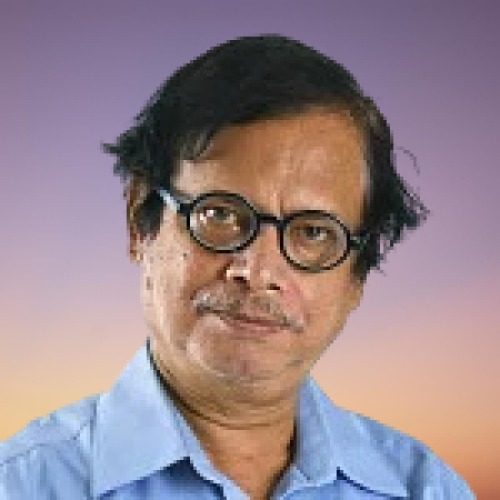
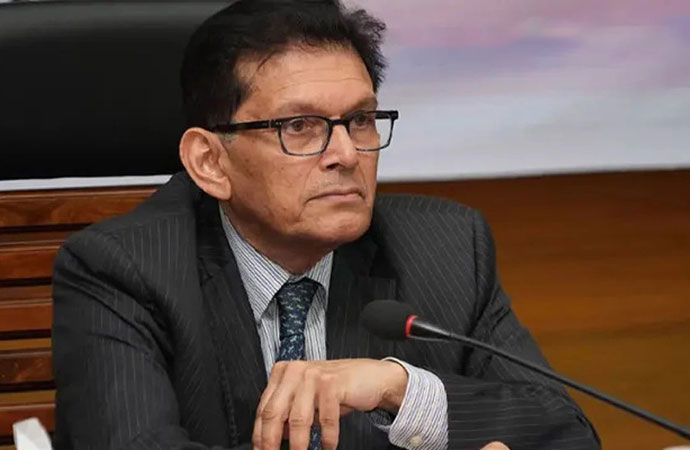
André Béteille. Photo: Collected
There are some ideas that outlive their times.
In the 1970s, the Indian sociologist André Béteille made an important distinction between what he called harmonic and disharmonic societies. In a harmonic social system, "there is consistency between the existential order and the normative order", whereas in a disharmonic system, the two are in conflict. That is, in a harmonic system, inequalities exist not only in fact but are accepted as being legitimate. "In a disharmonic system, inequalities continue to exist in fact but they are no longer invested with legitimacy. Hence, these societies are marked by open and endemic conflict, which is limited and subdued in harmonic societies," he wrote in his 1972 book, Inequality and Social Change, which was published in Delhi by Oxford University Press. Béteille's focus lay on contemporary India, which is an essentially disharmonic society because its progressive laws coexist with traditional loyalties, as does its democratic egalitarianism with chronic inequality.
I believe that Béteille's distinction is applicable not only over time but space. It applies to the very course of modern history as it does to India and the rest of South Asia. In my view, Béteille's harmonic societies approximate supply-side societies; his disharmonic societies are comparable to demand-side societies. Supply-side societies provide and insist on traditional paradigms into which modern citizens are expected to fit their life-expectations; demand-side societies are those in which living citizens decide what to make of dead or dying traditions that validated or even valorised life in a departed or departing past. Since tradition is riddled with inequality and since its invocation today is an investment in the harmonic continuation of inequality, demand-side societies are disharmonic by definition. The 1970s were a demand-side decade in South Asia during which Bangladesh was born.
Béteille does not base his distinction on a differentiation of European and non-European societies; rather, every society can move from being harmonic to being disharmonic if democracy opens up channels of political awareness, mobilisation and action. Europe (and its colonial inheritor, North America), which began to democratise long before Asia, Africa and Latin America, has led the way in the struggle for legitimacy based on equality.
But now
The key problem now is that swathes of the world are turning their back on the human condition of disharmony to recreate an imagined past in which harmony apparently provided benign answers to the vicious problems of living on a discordant earth.
The chief variable, although not the only one, here is religion. Religious revivalism has taken on a frightful visage in which the caste system, for example, is supposed to have been inclusive - when, as every schoolgirl knows, the system is nothing but an institutional demonstration of hierarchic exclusion based on the biological accident of birth and sanctified by the dominance of upper-caste male power. Equally, it boggles the mind to come across a video in which an apparently sane woman, from a religion that is casteless, declares that the Creator intended to make males higher than females in the chain of being. Then, abortions are treated as a case of genocide against unborn life even if the mother's life could be at risk from a birth.
What is happening is that the world stands in collective danger of regression from disharmonic knowledge to harmonic belief. All the lessons of the 3Rs of Europe - the Reformation, the Renaissance and the Industrial Revolution - that have made the world what it is today, stand to be discarded if a sufficient number of fools are prepared to follow the lead of one reactionary lunatic. And lunatics abound in a terrestrial sphere pockmarked by psychotic divisions of fractious race, divergent religion and competitive imbecility.
One consequence of this state of affairs is the tendency of humans to contrast the existential best in their own beliefs - for example, "my faith does not segregate people by caste" - with the normative worst in a contending society - for example, "your society is full of caste violence". This contrast is a fake one. Instead, what is required is a comparative examination of societies today that collapses the existential and the normative into a single empirical whole. In that whole, questions would be like these. "No matter what the past says, how does your society treat women today?" "Whether or not there was class conflict in your ancient times, do princes and paupers go to equally-peaceful sleep today?" "Whether or not gender is divinely ordained, how do biologically third-gender humans fare in your society?" And so on.
In other words, it is wrong to contrast the imagined best in any society with the concrete worst in any other society. Comparisons must be made marker-by-marker: class, gender, individuality and solidarity. Disharmonic societies excel at asking such questions, although they do not produce answers immediately. Harmonic societies do not ask questions: They always call off the graduating examinations. But the human questioning goes on.
So, then, what about equality? There is no equality in a harmonic world because it functions well enough without it. Equality is consigned to the charity of a diffused and ultimately divine will that operates over and above the concrete needs of practical humans. In a disharmonic world, however, where disparate humans seek to achieve collective aspirations, nothing but the idiom of egalitarianism can enliven the grammar of being.
India is a good example of how a disharmonic society can cohere in spite of the fragmenting and centrifugal pulls of the caste system. Bangladesh exists because it is a living organism: Its disharmonic whole is greater than the sum of its harmonic parts. Tension and discord prevail in such societies. But that is why they live on.
Three cheers for André Béteille!
The writer is Principal Research Fellow of the Cosmos Foundation. He may be reached at epaaropaar@gmail.com
A Independent Newsweekly
© Copyright 2026 | Designed by ARK Reepon & Developed by Cosmos Group Software Team






Leave a Comment
Recent Posts
Is the international community ...
A spate of downgraded economic projections, from Bretton Woods to Mani ...
A Childhood Lesson in Arithmet ...
As children, we learned a simple mathematical rule: if we know the pri ...
Indian authorities launched a major security crackdo ..
Police dispersed garment workers from the Azampur ro ..
Why Saudi Arabia has struggled to defend itself agai ..
Iran-backed Houthis strike Saudi oil company Aramco’ ..