


Column
Building Assets, Losing Time: Why Bangladesh’s Projects Stall and How to Fix the System

An Independent Newsweekly



Column
Collected
Economic development largely relies on infrastructure particularly in Bangladesh where economic development is pegged on connectivity, effective logistics and industrial growth. In the last 20 years, roads, bridges and urban transport have been heavily invested in, changing the economic environment in the region and enhancing the integration of the region. However, even with these accomplishments, there is one constant weakness. Most publicly funded projects are done long after their deadlines and at much higher prices than they were originally planned, which is indicative of more fundamental inefficiencies in the project delivery system. In the FY 202526, 8.3% of the Annual Development Programme has been implemented during the initial four months, which has gone to 17.5% in six months and a little above 21% in seven months, which represents slowing progress. Slows increase expenses, postpone gains and undermine the effectiveness of government expenditure in general.
Education as a Regional Experientialist
The problems of Bangladesh are not peculiar. At one time, India did experience the same problem such as delays in land acquisition, institutional responsibility and complexity in approvals. Over the years however, it made reforms that enhanced the execution of projects to a great extent. Digital monitoring platforms which are currently applied allow real time tracking of infrastructure projects, and more powerful coordination mechanisms have increased accountability and efficiency. This has made highway construction in India to range in prices of USD 6-8 million per kilometre, depending on the terrain and the condition of the land. Contrastingly, other comparable projects in Bangladesh tend to be twice or even thrice more. This difference is not predetermined only by the complexity of engineering. It can be seen to be indicative of systemic inefficiencies like exaggerated Bills of Quantities, lack of competition in procurement, claims associated with delays by contractors and administrative costs.
When Time becomes Cost
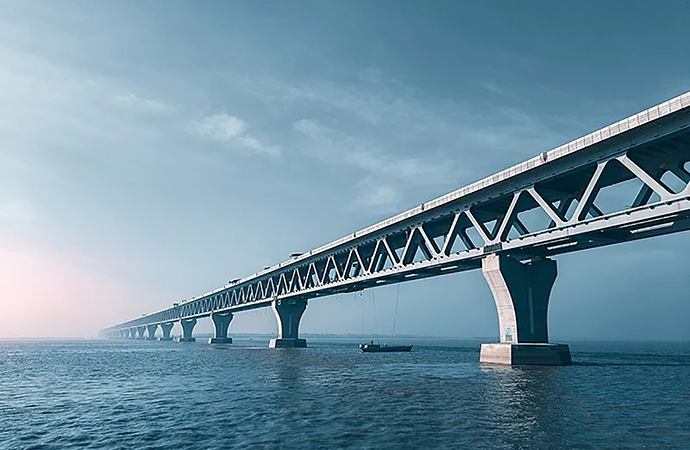
The economic costs of failure to carry out in time are high. A good example is the Padma Bridge project. Its original estimate was at approximately Tk 10,161 crore but the actual cost was estimated at Tk 30,193 crore. Although some of this growth was because of changes in the design, and the necessity of river training, delays also significantly contributed to cost growth. The same trend is observable in MRT Line-6 metro rail project whereby the costs escalated between Tk 21,985 crore to about Tk 33,472 crore. Those hikes are not just financial modifications but rather are lost time, economic gains and extra burden on the taxpayer.
Spending Preferences above Problem Solving
Another problem that is not so apparent, yet equally significant is the management of development projects within the budgetary framework. In most instances, success is quantified based on how much money is used as opposed to the quality of results realised. Government departments are usually under unspoken pressures to spend the allocated budgets in a fiscal year and thus this may obscure their view on the actual issues. This puts a scenario that projects can excel in financial utilisation but fail to yield meaningful results.
Disjointed Control, Minimal Accountability
There is also institutional fragmentation, which makes the implementation of projects even more complicated. These mega infrastructure projects normally have numerous ministries, divisions and implementing agencies. Accountability is not often concentrated despite the distribution of responsibilities. This means that the outcome of a project is not entirely owned by an individual entity. The leadership changes frequently contribute to the problem. Project Directors are transferred in most instances before the projects could be completed thereby interfering with continuity and ownership.
The Missing Voice of Project Design
The actual people concerned in the actual project implementation are occasionally consulted in the first design. Project Directors and their deputies and procurement specialists are appointed normally after the approval of the project. At that point, feasibility research, budget estimates and sourcing strategies are already developed. This disconnection poses problems in operations whereby the implementation teams must operate under the framework that they did not assist in their development. Moreover, most project leaders are not trained in project management, procurement systems and contract administration which means that they are incapable of handling complicated projects.
Reconstructing the Delivery Framework
These challenges must be dealt with by including extensive institutional changes. The preparation of projects should be stricter and, at the same time, based on credible information and factual assumptions. Continuity of leadership is necessary to help in accountability across the project lifecycle. The implementation teams should be engaged at the very beginning where vital project design can be based on experience. It is also important to have professional capacity building. Project leaders can be provided with the essential skills in procurement, contract management and risk analysis through the organisation of training programmes. Simultaneously, digital surveillance systems will be able to increase the transparency, better coordination, and allow timely intervention in the event of delays. Enhancing the flexibility of operation to the implementing agencies would further empower them to meet the emerging challenges.
The Unspoken Cost of Smaller Projects
Although large infrastructure projects tend to take the center stage, there is considerable proportion of small projects that make up a considerable proportion of the government spending. The inefficiencies in this level are often not realised but may lead to significant losses in terms of fiscal. The initiative to reform should thus be on all levels of state investment with uniform levels of planning, implementation and accountability.
Between Construction and Capability
The infrastructure is not the only thing that should be built, the system according to which the projects are implemented should also be enhanced. Effective implementation, on time delivery and sound governance will make or break the conversion of the public investments to long-term economic benefits. In the absence of these improvements, development spending will keep on losing its gains due to delays and cost overruns.
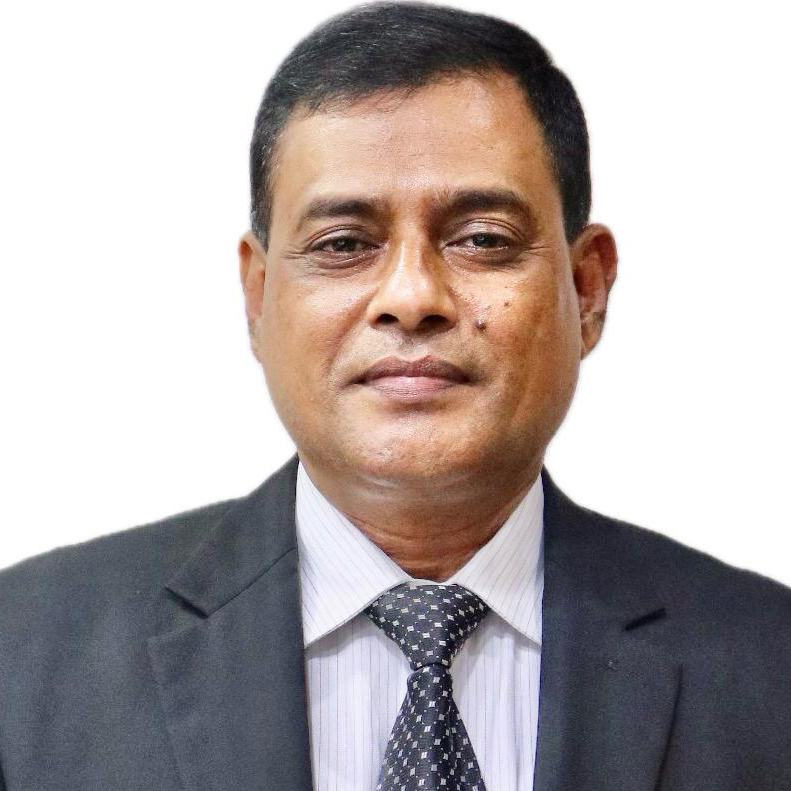
Major General (Retd) Md Nazrul Islam is a former executive chairman of BEPZA, a retired Major General of the Bangladesh Army, and a PhD researcher on technology, workforce transformation, and industrial competitiveness.
A Independent Newsweekly
© Copyright 2026 | Designed by ARK Reepon & Developed by Cosmos Group Software Team





Leave a Comment
Recent Posts
Is the international community ...
A spate of downgraded economic projections, from Bretton Woods to Mani ...
A Childhood Lesson in Arithmet ...
As children, we learned a simple mathematical rule: if we know the pri ...
Indian authorities launched a major security crackdo ..
Police dispersed garment workers from the Azampur ro ..
Why Saudi Arabia has struggled to defend itself agai ..
Iran-backed Houthis strike Saudi oil company Aramco’ ..