


Reportage
China’s Diabetes Breakthrough Will Be Met with No Immediate Rebuttal


An Independent Newsweekly




Reportage
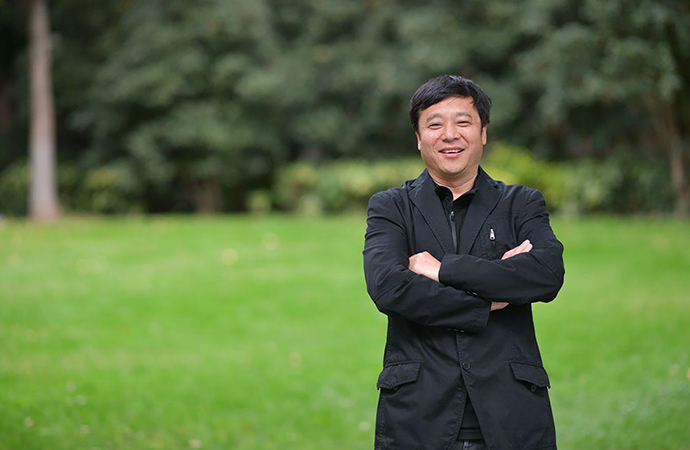
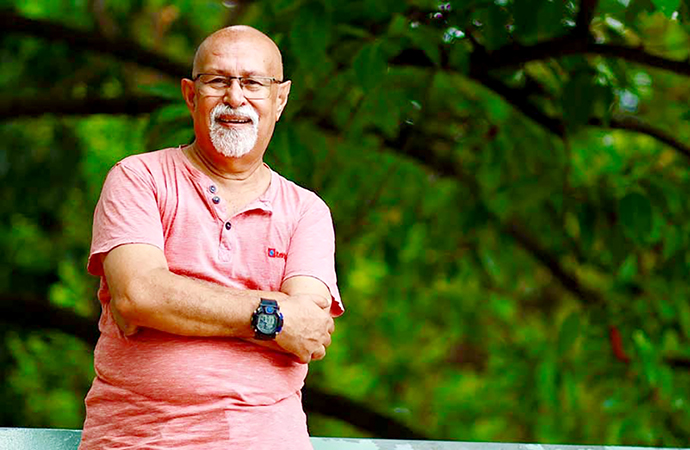
Hongkui Deng and his group demonstrated success in a new approach to developing stem cell-derived therapy and transplantation into a novel site. [FROM The Scientist]
"She can eat anything she likes now, especially all things saccharine," said Biologist Hongkui Deng of Peking University, the lead researcher behind the landmark diabetes cure referring to his patient who made it all possible.
For over a century, humanity has managed diabetes but never cured it. But last fortnight's headlines announced that Chinese scientists have achieved what insulin manufacturers the world over long prayed would never come: a functional reversal of both Type 1 and Type 2 diabetes using stem cell therapy. This time without any monkey business with monkey pancreases, they were able to turn a patient's own fat cells into insulin producing units. The implications, if borne out at scale, are nothing short of seismic.
From Fat to Pharmacy
In a development that reads just like science fiction, researchers at Tianjin First Central Hospital and Peking University achieved something worldly medical establishment had long considered aspirational at best, delusional at worst: they reversed diabetes. Not managed, not slowed, but reversed it - using the patient's own fat cells.
The tale began with a 25-year-old woman in China who had lived with Type 1 diabetes for eleven years. Intensive insulin therapy had failed to control her blood sugar and she was reportedly chronically lethargic.
In 2024, Professor Deng's team extracted fat cells from her body, chemically reprogrammed them into induced pluripotent stem cells (iPSCs), a versatile class of cells capable of becoming almost any tissue in the human body. They then coaxed the iPSCs into functioning pancreatic islet cells, the very type the human body uses to produce insulin. These clusters were then implanted under the abdomen. Within months, she was producing her own insulin. One year later, she still needed no injections. The results, published in the prestigious journal Cell, marked a quantum leap that few researchers had dared predict would arrive so soon.
In T1D, the immune system attacks insulin-producing cells, β cell islets, in the pancreas, resulting in a gradual decline in the availability of insulin to regulate blood sugar. Dysregulated blood sugar can cause increased blood acidity, and an array of cardiovascular complications. "The only therapy we can really provide right now in clinical practice to manage diabetes is to provide [patients] with insulin therapy," explained Melena Bellin, a pediatric endocrinologist at the University of Minnesota.
While tools like insulin pumps and continuous glucose monitoring devices mitigate the risks of extreme events, according to Bellin, "Those systems still really don't replicate what the pancreatic islets do."
In February 2026, researchers in China published the world's first documented reversal of Type 2 diabetes via the same therapy - a condition affecting the vast majority of the world's 500 million diabetic patients, and a staple of the South Asian community. A study published in Nature (2025) had already been laying the theoretical scaffolding, detailing how pluripotent stem cell-derived islet transplantation could address both the immune dysfunction of Type 1 and the insulin resistance driving Type 2.
Decades of incremental research had been building like a slow tide. Where Western research institutions debated ethics of progress, the supposed life force of cell blobs and funding cycles, China simply had the state funding, the regulatory agility, and the political will to ride that tide all the way to shore.
Experts, predictably however, urge caution, as a single documented case does not make a universal cure. Questions about long-term islet cell viability, scalability, cost, and immune rejection remain unanswered for the time being. But in medicine, as in history, someone has to be first, and China just managed to plant its flag firm with the world watching.
America's $495M Pharma Band-Aid, Too Little, Too Late
While Washington was busy subsidising insulin at $300 a vial, Beijing appears to have been quietly paving a way to make the vial obsolete.
The American pharmaceutical response has been, depending on your charitable impulse, strategic repositioning, or less charitably - panic in formalwear ready for a press release. In February 2026, Reuters reported that Pfizer signed a licensing pact with Hangzhou's SciWind Biosciences for Ecnoglutide, a receptor agonist for Type 2 diabetes, in a deal that could trigger up to $495m in milestone payments. SciWind framed it as "an important first step to advance Pfizer's global strategy in the metabolic field in China." Pfizer, for its part, kept the upfront fee, launch dates and pricing strategy under lock and key.
It is hard not to squint at the optics. America's biggest pill-pusher has apparently written a substantial cheque to sell a management drug inside the same country that says it may have figured out how to wipe the disease out entirely. The commercial logic here reads like a hedge fund memo written by someone who still believes in quarterly miracles.
The US pharmaceutical lobbying apparatus, which spends roughly $380 million per year nudging Congress, around the precipice of democracy so that chronic illness stays reliably profitable. Cure the disease, and you blow up whole retainer models that some quarterly reports treat as sacred scripture, catastrophic for an industry dependent on the sweet predicament.
Pfizer had already struck a separate deal in December 2025 with another Chinese drugmaker for an experimental oral drug, making this its second China-based licensing agreement in a matter of months.
At least 23 Chinese companies were already developing biosimilars of Novo Nordisk's Semaglutide, with three having filed new drug applications and twelve advancing to Phase III studies - a pipeline so prolific it made Silicon Valley blush. The usual suspects in Copenhagen and Indianapolis - Novo Nordisk and Eli Lilly, guardians of the holy trinity of Ozempic, Mounjaro, and the $20 billion annual insulin industry are watching clinical updates from Shanghai with the intensity of day traders refreshing a ticker. However, Shanghai's stem-cell efforts operate in a particularly Chinese register of opacity, which leaves American pharma counterparts squinting over the data wall, trying to discern the real from a hopeful spin.
Dhaka's Dose
In Bangladesh, diabetes is not a background statistic, it is a family story. The International Diabetes Federation has estimated that over 13 million Bangladeshis live with the condition, with an almost equal number walking around undiagnosed.
In March 2025, Chief Adviser Muhammad Yunus' visit to Beijing had precipitated a landmark healthcare cooperation consensus between the two governments. The Chinese Embassy subsequently launched a Green Channel health visa scheme, a direct outcome of the Yunus-Xi bilateral engagement amidst tense overtures with India.
Bangladesh had been on the verge of securing a $138 million healthcare grant from China, with part of the funds earmarked for projects that address the country's enormous medical tourism deficit. The 2025 China-Bangladesh Symposium on Healthcare and Education Cooperation, organised by the Chinese Embassy in Dhaka in conjunction with the Chinese Medical Alumni Association of Bangladesh, facilitates a keen tenet. "Greater collaboration between Bangladesh and China in the medical sector can significantly strengthen Bangladesh's healthcare capacity," said Nahar Khan, Vice President of Cosmos Group, at the symposium.
Policy circles and correspondence channels are now floating the idea that under Tarique Rahman's cabinet, the Ministry of Health could channel such funding into a Joint Regenerative Medicine Lab in Dhaka, mentored by West China School of Medicine. The plan, at least on paper, would see Bangladeshi clinicians rotating through training placements in Kunming to learn mesenchymal stem-cell protocols for treating diabetic complications, This partnership would facilitate phase III clinical trials within Bangladesh, technology transfer that turns memoranda of understanding into something more than framed calligraphy.
It would mark a small but meaningful reversal in the assumption that cutting-edge medicine must always happen somewhere else.
Shoumik Zubyer is a researcher at the Bangladesh Atomic Energy Commission, the Space and Environment Research Centre and a science correspondent.
A Independent Newsweekly
© Copyright 2026 | Designed by ARK Reepon & Developed by Cosmos Group Software Team



Leave a Comment
Recent Posts
Is the international community ...
A spate of downgraded economic projections, from Bretton Woods to Mani ...
A Childhood Lesson in Arithmet ...
As children, we learned a simple mathematical rule: if we know the pri ...
Indian authorities launched a major security crackdo ..
Police dispersed garment workers from the Azampur ro ..
Why Saudi Arabia has struggled to defend itself agai ..
Iran-backed Houthis strike Saudi oil company Aramco’ ..