


Reportage
Bangladesh's Indo-Pacific Outlook and China-Bangladesh Cooperation


An Independent Newsweekly




Reportage
At present, the world has entered a period of turbulence and transformation: the world's profound changes unseen in a century have accelerated their evolution, and the international balance of power has undergone profound adjustments. From the perspective of civilization, Asian civilizations represented by China, India, Bangladesh, and Southeast Asia are rapidly reviving, while Western civilization is relatively declining. The dominant power in the international system has taken much more measures to maintain its hegemonic position, including containment, suppression, and sanctions. The COVID-19 that broke out in 2020 has a far-reaching impact. The trend of anti-globalization is rising, unilateralism and protectionism are rising significantly, the world economy is recovering weakly; regional conflicts and turbulence are frequent, and global issues such as climate change are intensifying. Some countries intentionally provoke geopolitical tensions and conflicts, trigger an arms race, promote the "decoupling" of economy and technology, and try to pull the world back to the Cold War era of ideological opposition. This is not only reflected in the Russia-Ukraine conflict, but also in the geopolitical competition in the Asia-Pacific region, the current political and economic center of the world. Changes of the world, of our times, of history, and of Asia-Pacific region are unfolding today in ways like never before. The dominant power in the international system requires regional countries to take sides, which poses a challenge to almost all countries in the region, and Bangladesh is no exception.
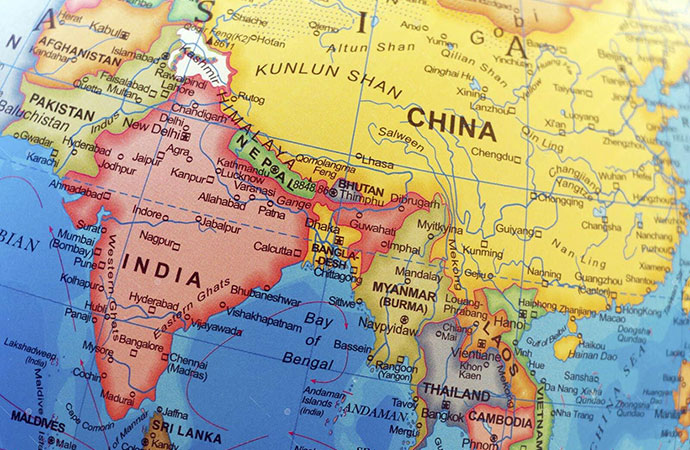
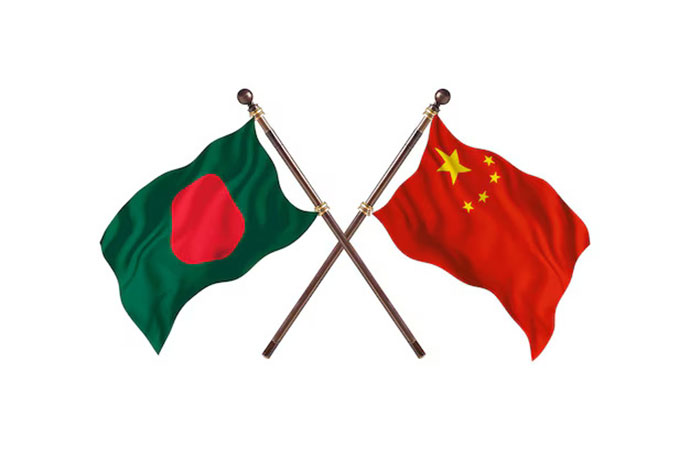
It is in this context that last month, the Ministry of Foreign Affairs of Bangladesh released the "Indo-Pacific Outlook, which formulates a blueprint for the interaction between Bangladesh and stakeholders in the Asia-Pacific region. From my observation, the release of Bangladesh's "Indo-Pacific Outlook" is not only an initiative for Bangladesh to maintain its diplomatic independence and pursue its own national interests, but also a helpless move under constant pressure from the United States and India to take sides. This document of Bangladesh, like that of ASEAN, is called Outlook, which itself shows its neutrality rather than its specific strategic implications. At the same time, I also noticed that Bangladesh's Indo-Pacific Outlook is tailored to the country's specific threat perception and strategic reality, with a focus on managing non-traditional security issues, strengthening connectivity, and promoting economic development and prosperity.
Bangladesh's choice is representative of the global south. In order to contain China, Russia and some other countries, the United States is now engaging in global diplomacy to gain support from developing countries, regardless of the harm the United States has done to these countries before. Most developing countries are concerned about being pressured by the United States to take sides and join the US' "Indo-Pacific" strategy. This can be understood because developing countries are more concerned about the impact of climate vulnerability, the access to advanced technology and capital, and the need for better infrastructure, healthcare, and education systems. The increasing global instability in geopolitical, economic and financial aspects will pose a threat to them in addressing these challenges. They have already experienced it firsthand. The radical economic sanctions imposed by Western countries on Russia have had a strong impact on the developing countries, including Bangladesh and other South Asian countries, which are unrelated to the Ukrainian crisis, especially in terms of energy, fertilizer, and food prices.
For smaller and medium-sized countries in South Asia, the pressure comes not only from the global hegemony, but also from the regional hegemony. India is deeply concerned about China's economic cooperation with South Asian and Indian Ocean countries. India used to oppose security cooperation between its smaller neighbors and the United States, but now sees this cooperation as a valuable means of confronting China. India and the United States have formed a strategic synergy relationship targeting China under the "Indo-Pacific" strategy and Indo-Pacific economic framework. India assists the United States in strengthening strategic and defense cooperation with key countries in the region. And in the past two years, due to the impact of the fluctuation of the Fed monetary policy, the COVID-19, the Russia-Ukraine conflict, and the impact of some domestic economic policy mistakes and party struggles, some South Asian countries has been facing the challenge of a debt crisis. India and the United States view the crisis as a unique opportunity to strengthen their regional leadership and regain influence. India hopes to use this opportunity to consolidate its hegemonic position in South Asia and the Indian Ocean, and establish an exclusive economic and trade zone centered around it.
Chinese government doesn't like the term "Indo-Pacific" because it is a geopolitical design aimed at China from its source around 2006, and its security implications are obvious. But in today's world where the United States has a clear advantage in discourse, we also have to face the increasing use of this term by more and more countries, and carefully study what these countries refer to when using this term. As the largest developing country, China has firsthand experience of the concerns of the developing countries. Therefore, Chinese leaders have proposed the Global Development Initiative, Global Security Initiative, and Global Civilization Initiative. China hopes to work together with developing countries for an open, inclusive, clean and beautiful world that enjoys lasting peace, universal security and common prosperity.
The Bengal region was once one of the most prosperous regions in South Asia in history Bangladesh is exploring its own path of modernization to achieve Vision 2021-2041. Due to the political consensus on opening up and finding advantageous industries suitable for the country, Bangladesh's economy has developed very fast. Bangladesh is an important direction for the outward shift of China's industrial and supply chains. China and Bangladesh have become an inseparable part of the Asian industrial and supply chains, which is the fundamental guarantee for the economic prosperity of both countries. China and Bangladesh should work together to maintain regional security and stability. as well as the stability of the Asian industrial and supply chains. In the exploration of modernization, China has some beneficial experiences and is willing to share them with developing countries such as Bangladesh. Especially in areas such as flood control and drought prevention, poverty reduction and disaster relief, river governance, and urban river sewage treatment that Bangladesh particularly needs, China and Bangladesh can further strengthen cooperation and exchange.
Liu Zongyi is a senior fellow and secretary general of the South Asia and China Center, Shanghai Institutes for International Studies.
A Independent Newsweekly
© Copyright 2026 | Designed by ARK Reepon & Developed by Cosmos Group Software Team





Leave a Comment
Recent Posts
Is the international community ...
A spate of downgraded economic projections, from Bretton Woods to Mani ...
A Childhood Lesson in Arithmet ...
As children, we learned a simple mathematical rule: if we know the pri ...
Indian authorities launched a major security crackdo ..
Police dispersed garment workers from the Azampur ro ..
Why Saudi Arabia has struggled to defend itself agai ..
Iran-backed Houthis strike Saudi oil company Aramco’ ..