


Column
Why Are We Losing Patience? Bangladesh’s Overlooked Mental Health Challenge

An Independent Newsweekly




Column
AI Generated Image
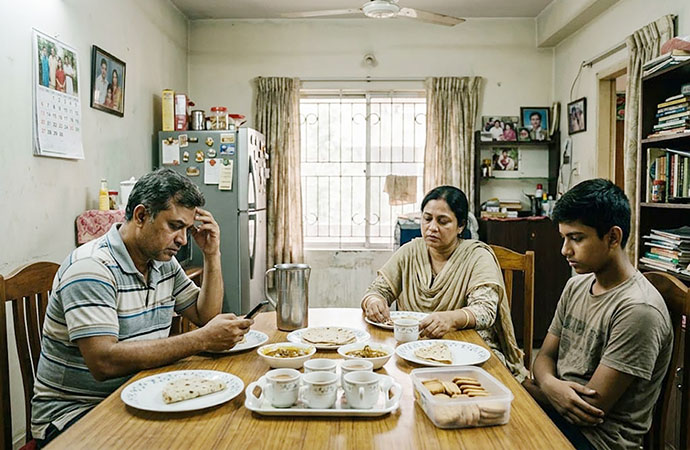
The family was having breakfast when just one question led to a quarrel. The father was concerned about work, the mother was feeling she was overwhelmed and their son had withdrawn after a dismal disagreement. Each had a load to carry, the others could scarcely imagine. All they wanted was to be asked, "Is there something wrong?" World Mental Health Day (on 10 October) is a day to celebrate the sections and recognise that care starts here, in these normal moments.
The Silent Burden Behind Everyday Life
The health is comprised of physical, mental and social health. Feeling sad and feeling conflicted is normal, but if you have ongoing sadness that interferes with sleep, relationships or daily functioning, then you need help. Bangladesh is still depending on the national survey of 2019 reported by Dhaka Tribune on 10 October 2026: Mental disorders impacted 18.7 per cent of adult population and 12.6 per cent of children and adolescents, of whom over nine in ten were not treated. Family, workplace and digital pressures and undocumented suffering should be measured by a new household survey.
Under One Roof, Yet Unheard
With the bills to pay, children's schooling and the needs of an older parent, families can be feeling tired and impatient. There's a lot of people to be heard, but there's not enough people listening. Evaluate each phone call, listen, agree to share some duties and apologise for being sharp with someone can help to defuse the situation. If distress persists, don't be embarrassed to go for counselling.
Young people also require an opportunity to talk about the problems with their relationships without going on the defecive. Love should never be used to justify the asking for passwords, controlling friendships or for forced marriage. Elders to listen calmly; in case of threats/violence, safety has to be first, not family's reputation.
Before We Judge, Let Us Listen
I witnessed how the family issues and career uncertainty might impact behaviour and performance as Adjutant General of the Bangladesh Army and then in the corporate world. If the response is impatient or performance is low, ask a question then make a judgement. Listening helps to foster good discipline. We should also ask ourselves at home and at work, if our words promote openness or silence. Dignity cannot be substituted for by professionals, but it can be kept safe and people can be reached and assisted in accessing care. The book "The Pressure We Carry" by Rachel Simmons is a great read. Stress to mental health can be caused by examinations, unemployment, increased costs, strict supervision and isolation. Trapped in comparing with others online and losing sleep can aggravate that tension. Listening to the whole person - their pressures, relationships and the support available to them.
Care Within the Circle of Life
According to the study conducted by WHO, the mental, neurological and substance-use disorders in 2021 cost Tk21,050 crore to the economy of Bangladesh. However, mental health only got 0.44 per cent of the health budget with approximately two-thirds of this being spent on mental hospitals. Care needs to come into closer contact with everyday life. WHO-supported programmes conducted more than 20,000 consultations and enhanced the skills of 846 non-specialist providers in 2025, laying a programme-level groundwork to be evaluated and scaled up. Bangladesh could start establishing a similar relationship between schools and the local healthcare teams, with the support of tele- and online counselling services, inspired by the successful practise in England and Australia with headspace services.
From the Family to the Nation: A Shared Responsibility
1. Start with the family. When there is conflict in the family unit, families should be able to find time to discuss the issue, share responsibilities and not insult or threaten each other. Avoid eating in front of the TV and have sensible screen time limits. If a person continues to be upset or having trouble living, encourage him to get professional help.
2. Make confidential counselling easily available. Create a 'Talk Privately' feature in school, college and university web portals that will be linked to a national counselling service. The public should be able to use the same service, also via a toll-free number and website. Resource poor institutions could provide qualified counsellors on district level. Personal information to be protected, separated from academic and employment files and confidentiality limits to be clearly explained.
3. Connect advice with treatment nearby. Schedule a weekly fixed mental health session at identified upazila health complex under the supervision of mental health specialists of district hospitals. Individuals who require additional treatment should be offered an appointment and, with their permission, subsequent treatment. Poor families may require assistance from local organisations, in terms of transport and treatment costs.
4. Foster responsible use of digital technologies. Schools should educate students how to use the internet safely, and take responsibility for incidents of cyber-bullying. Avoid unnecessary calls and messages after work hours in Office. Easy complaint facilities in Bangla and child protection measures should be provided on the digital platform. The authorities concerned should be alert to the way complaints are dealt with and respect privacy and freedom of expression.
5. Facilitate government, NGO and society collaboration. The need cannot be met, it cannot be fulfilled by the government. It should provide funding, standards and supervision and qualified NGOs are able to reach remote communities and train workers and provide counselling. The services should be made available to people by educational institutions, employers and community organisations. Start in selected areas and spread out once you have assessed the quality of services and number of treatments given and users experience.
A Nation's Strength Begins in the Mind
My years in uniform, preparing soldiers to fight and, if necessary, sacrifice their lives, taught me that strength begins in the mind. Later, as an administrator, educator and social worker, I saw how mental wellbeing shapes everyday life, relationships and performance. I write from these experiences, not as a psychologist. A nation's ability to work, innovate and overcome adversity rests on its people. Caring for their minds must therefore be a national priority.
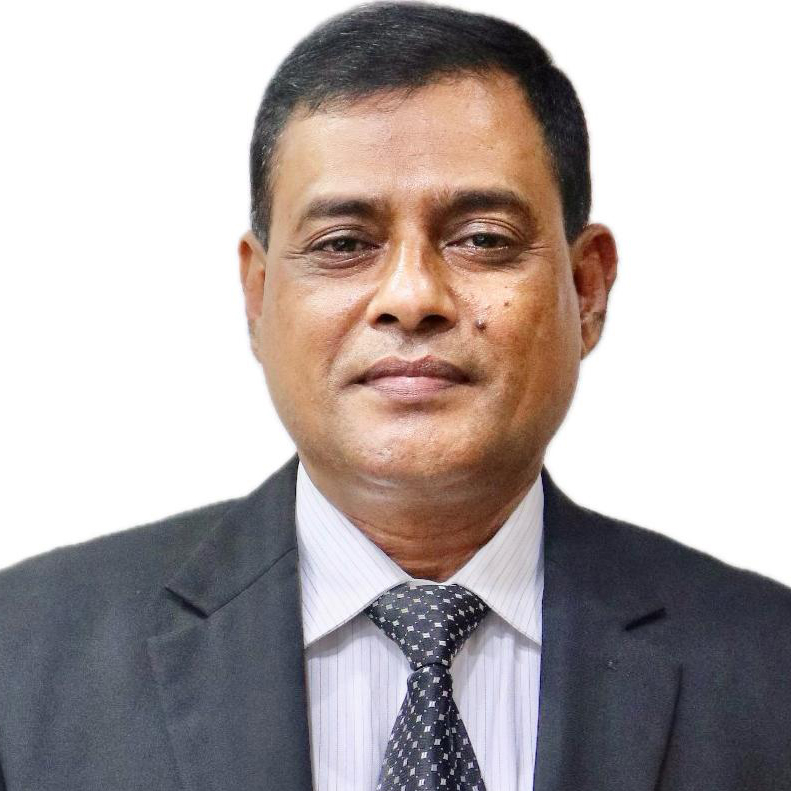
Md. Nazrul Islam, PhD, is a retired Major General from Bangladesh Army. He was the Executive Chairman of BEPZA and also served in BEZA. He is a regular columnist and writes on technology, workforce transformation and industrial competitiveness. He is the author of Zi-DoNa Trilogy, a book on self-development.
A Independent Newsweekly
© Copyright 2026 | Designed by ARK Reepon & Developed by Cosmos Group Software Team









Leave a Comment
Recent Posts
Is the international community ...
A spate of downgraded economic projections, from Bretton Woods to Mani ...
A Childhood Lesson in Arithmet ...
As children, we learned a simple mathematical rule: if we know the pri ...
Indian authorities launched a major security crackdo ..
Police dispersed garment workers from the Azampur ro ..
Why Saudi Arabia has struggled to defend itself agai ..
Iran-backed Houthis strike Saudi oil company Aramco’ ..