


Column
Grow up, forget Empire

An Independent Newsweekly

Column

I heard an interesting story some time ago. Two Bangladeshi scholars met at a foreign conference. In the course of a discussion, one of them said that Bangladeshis had been Indian before 1947. The other one disagreed violently, arguing that they had been British before having become Pakistani in 1947.
I found this story intriguing, to say the least. Yes, there was a British Empire, but it was the British Indian Empire where the subcontinent was concerned. Yes, that empire broke up in 1947, leading to the formation of India and Pakistan, the latter of which states Bangladesh seceded from in 1971.
As I have argued many times, what Bangladesh is today emerged from two independence movements: united India's from colonial Britain in 1947, and Bangladesh's from united Pakistan in 1971. To deny the agency of either independence would be to deny the reality of Bangladesh as a sovereign and independent nation today.
To say that Bangladeshis were British once would be to ignore the reality of the Indian anti-colonial movement, which created both India and Pakistan; and to ignore the reality of the Liberation Movement from Pakistan that created contemporary Bangladesh. Bangladesh provides witness to the break-up of the British Empire. It does not provide witness to the vicarious identification with the empire of the British.
Indeed, my point is that we, the decolonised, do not owe our identity to the real or imagined virtues of any empire. Take the Mughal Empire. To this day, many Indian Muslims fall back on its glories in a sentimental effort to reclaim a privileged place in Indian history.
The truth is unsentimental. The historian Mohammad Habib analyzed the composition of the Mughal Empire through study of the fusion of foreign (central Asian) and local (indigenous Indian) socio-political forces. The early foundations of the empire brought Central Asian (Turkic/Mongol) and Persian structures of military organisation, administrative centralism and cultural frameworks to the subcontinent. However, the empire stabilised itself only by integrating local Rajput elites and indigenous regional authorities with the central bureaucracy.
Thus, in one account, for Mohammad Habib, "the true essence of Indian history lay not in the foreign lineage of the emperors, but in the material conditions of the local agrarian population". Medieval Indian history was not merely a series of external religious conflicts.
His son, Irfan Habib's seminal work, The Agrarian System of Mughal India, demonstrated how the centralised Mughal state extracted local economic surpluses to sustain its vast imperial machinery, which eventually led to widespread local agrarian revolts (such as those by Marathas and Jats) that dismantled the empire eventually.
Clearly, indigenous Indian Muslims, who were overwhelmingly the peasantry then, did not benefit from the Mughal Empire in any way comparable to the Muslim and Hindu elites which collaborated with the foreign-derived dispensation. Religion was but a dependent variable. The land was the independent variable.
Hence, Muslims, whether in India or Pakistan or Bangladesh, who draw emotional satisfaction from the Mughal Empire should ask themselves where their forebears belonged in that empire. If they were peasants, they paid for the empire's upkeep with their sweat and blood. If they were aristocrats, they had a wonderful life - before the revolting peasants within and the invading hordes outside put paid to it for ever. Then, why glamorise the past either way?
In the same spirit, current Indian attempts to valorise the Hindu past by marginalising the Mughal and British pasts fail the litmus test of history: to whom did that past belong? To Hindus? Which Hindus? The high castes, or the Dalits? Priests or peasants? How about women? Tell us how.
India has had a plethora of non-Muslim and non-British empires: the Maurya Empire, the Gupta Empire, the Chalukya Empire, the Rashtrakuta Empire, the Chola Empire, the Vijayanagara Empire, the Maratha Empire, and the Sikh Empire. How did they begin? Why did they end?
To try and gain emotional sustenance from absent empires is to undercut one's own identity.
For Bangladeshis, the answer to current predicaments should not mean regression to vanished empires of any kind. Instead, it must mean adopting a progressive outlook on history, which means knowing how things came to be and hence knowing how they could be expected to move forward.
The historian Afsan Chowdhury - a blessing to Bangladeshi letters - traces the formation of Bangladesh to the aspirations of the peasantry, the majority of the population, to be free of colonial landlordism. What began as resistance to colonial rule matured into a political project for statehood. In alliance with other classes and social partners, a state-making journey that had begun in the mid-1700s was completed in 1971.
In the flow of Bangladesh time, having been "British", Indian or Pakistani once carries no historical weight whatsoever. Empires, colonialism and internal colonialism have all passed. What remains is to seek freedom from all past empires - and to not wish for their recreation.
If they were to be recreated, who would be pauper and who prince?
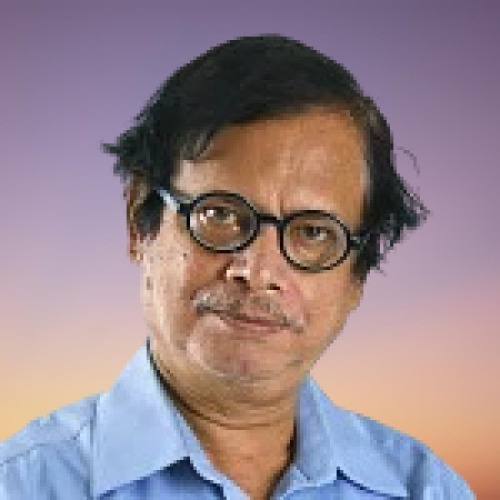
The writer is the Principal Research Fellow of the Cosmos Foundation. He may be reached at epaaropaar@gmail.com
A Independent Newsweekly
© Copyright 2026 | Designed by ARK Reepon & Developed by Cosmos Group Software Team






Leave a Comment
Recent Posts
Is the international community ...
A spate of downgraded economic projections, from Bretton Woods to Mani ...
A Childhood Lesson in Arithmet ...
As children, we learned a simple mathematical rule: if we know the pri ...
Indian authorities launched a major security crackdo ..
Police dispersed garment workers from the Azampur ro ..
Why Saudi Arabia has struggled to defend itself agai ..
Iran-backed Houthis strike Saudi oil company Aramco’ ..