


Column
The documentary on Armenians


An Independent Newsweekly
Column
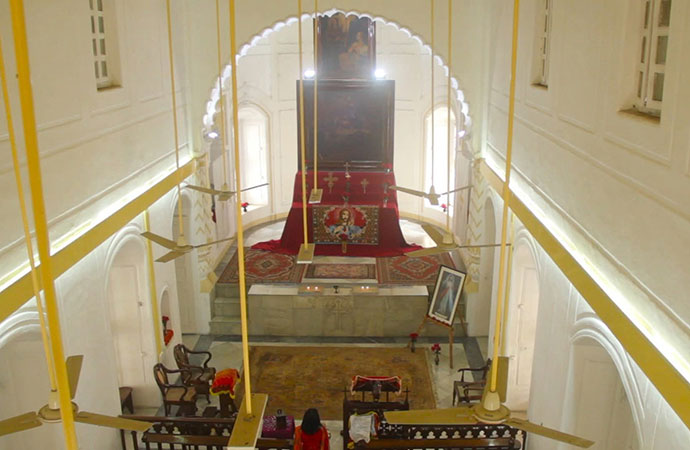
The Armenians were rich and powerful and belonged to a cultural segment which didn’t have deep historical roots in Dhaka but they felt close to the community. The filmmaker Mehzad Ghalib discusses her documentary in her own words.
"The title of my documentary which is also my first is 'A Day in the Armenian Church'. In 2015, I first visited the Armenian Church in Dhaka. That visit sparked my curiosity and inspired me to make a documentary about its history and the multicultural community connected to it. At that time, I had no budget. I applied for a government short film grant in 2015, but my proposal was not approved. Despite this, I decided to continue the project independently.
My husband, Aka Reza Ghalib, who is also a filmmaker, encouraged me to start with whatever resources we had. He owned a DSLR camera, and with that, I began filming. I received incredible support from my husband, my daughter, and several cinematographers. Although I could not pay anyone, they still contributed generously. Among them were Mazraul Raju and Subrata Paul, both of whom studied film, as I did.
We shot the documentary as a truly independent, no-budget film. Since it was my first project, the experience was deeply personal and nostalgic.
During my research, I found that very little had been documented about the Armenian community in Dhaka. However, the Armenian Church authorities had recently begun preserving records, memories, and stories of the people who once lived there. They supported me greatly throughout the process.
Through them, I was able to connect with the late Mr. Michael Joseph Martin, believed to be the last Armenian resident of Dhaka. At the time, he was elderly and living in Canada. His wife is buried at the Armenian Church in Dhaka. His daughter recorded his interview and sent it to me, which is featured in my documentary.
I am deeply grateful to the church authorities, as well as to researcher and writer Shamim Aminur Rahman, renowned architect Adnan Morshed, and all the friends and family who supported me. I also travelled to Kolkata to gather more information about the Armenian Church there, but found very limited documentation. Today, however, the Armenian Church in Bangladesh is doing commendable work in restoring and preserving its history.
This documentary is a personal journey-an attempt to rediscover a multicultural community that once thrived in Old Dhaka, a history I had previously known nothing about.
The film was screened worldwide at several international film festivals, including the Religion Today Film Festival in Italy, the Kazan International Film Festival in Russia, the Jaffna International Film Festival in Sri Lanka, the Short Film Festival in Kolkata, and in the United Kingdom.
Last but not least, my daughter, Prathama Nandini, created the subtitles for the film. So yes, 'A Day in the Armenian Church' is truly a family production.
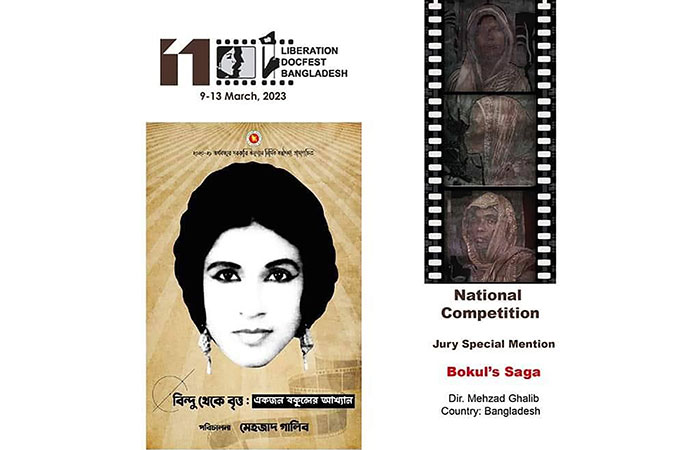
I take the opportunity to inform that my second documentary is also rooted in history. It focuses on Bangladesh's first woman filmmaker, Rebecca, and is titled 'Bokul's Saga'. This film was funded by the Ministry of Information and Broadcasting, Bangladesh.
It is not just a documentary; it is also a recreation and restoration of the life and legacy of Bangladesh's first woman filmmaker, Rebecca."
A Independent Newsweekly
© Copyright 2026 | Designed by ARK Reepon & Developed by Cosmos Group Software Team





Leave a Comment
Recent Posts
A commendable intervention by ...
A struggle for local dominance in the Chittagong Hill Tracts, specific ...
How close is the Amazon to a ‘ ...
While Brazil’s presidential candidates have not made policy of t ...
Another shipment of highly radioactive uranium fuel
Harmony: Diplomatic community joins Durga Puja celeb ..
What to know about the Ebola outbreak that has sprea ..
Brazil election: Trump’s ‘Donroe Doctrine’ faces its ..