


Column
Proposing a reset button for Bangladesh and India

An Independent Newsweekly
Column
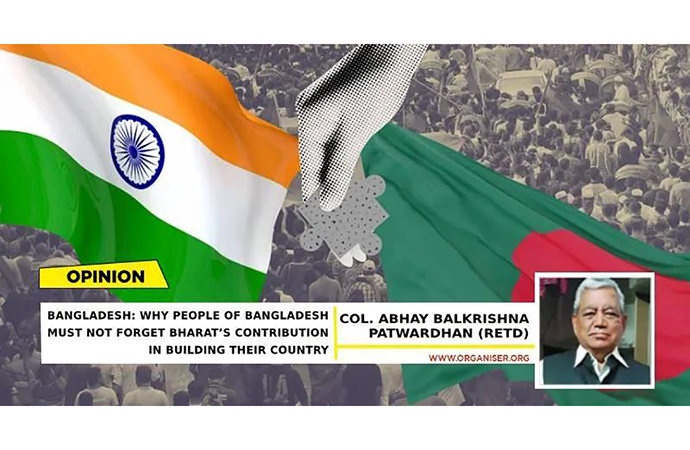
From O.Rganizer, Indian weekly published in New Delhi
A few weeks ago, I joined a live TV conversation with an Indian journalist known for his expertise on Bangladesh. He has even written a novel about the 1971 Liberation War. Our back-and-forth focused on India's decision to host Bangladesh's ousted prime minister, Sheikh Hasina.
"She represents the bond we created together in 1971, through blood and tears," he said. "India believes ousting her is a betrayal of that spirit."
I asked him: How long must we remain stuck in 1971 to define our relationship?
In response, he recalled a conversation he once had with an Indian general who had fought in the war. "We did not just help Bangladesh," the general told him. "We made Bangladesh in fourteen days. We broke Pakistan in two."
I felt a familiar exasperation. "Of course we are grateful for 1971," I said. "But how long do we have to keep paying for it?"
The Indian journalist, looking at me from the other side of the webcam, paused. "I hear you, my friend," he said. "I do hear you."
That exchange captures the central problem in India-Bangladesh relations today: India remains emotionally anchored in its moment of triumph, while Bangladesh seeks a future no longer defined by permanent gratitude. The fall of Sheikh Hasina in the 2024 Monsoon Revolution has only revealed how deep this mismatch runs.
India and Bangladesh now stand at a crossroads. One path leads toward a mature, sovereign partnership. The other leads toward resentment, drift, and strategic miscalculation. To choose wisely, both countries must first understand how they arrived here.
The Hasina Crisis: A Symptom, Not the Disease
Today's immediate dilemma revolves around Sheikh Hasina. Bangladesh's courts have handed down a death sentence, yet implementing it requires solving an impossible equation: intense domestic pressure to bring her back and execute the verdict, against India's unwillingness to send a long-time ally to certain death.
India now finds it cannot easily "swallow or spit her out." Returning her would be politically explosive; keeping her indefinitely guarantees a prolonged chill in bilateral ties. Meanwhile, Pakistan and China are eager to slip into the diplomatic vacuum created by the collapse of Hasina's India-aligned regime.
But Hasina herself is not the root of the problem. She is the product of a long-term Indian strategy: treating Bangladesh less as a co-sovereign neighbor and more as a client state, managed through loyalty to a single leader. When that leader fell, India lost both its eggs and the basket.
Structural Asymmetry and Its Political Consequences
For more than fifteen years, India relied on Hasina more than on the institutions or people of Bangladesh. Indian analyst Vinod Khosla calls this a form of "structural asymmetry": a relationship in which the larger power expects compliance, and the smaller one is expected to demonstrate gratitude.
This dynamic appeared stable-until it wasn't.
Former Indian National Security Adviser Shivshankar Menon has long warned that India's habit of personalizing relationships is a strategic liability. When a country relies on an individual leader rather than a democratic system, the relationship collapses the moment the leader does.
Bangladesh's 2024 Monsoon Uprising made this painfully clear. Many Bangladeshis believe that Hasina's authoritarianism endured for so long because India shielded her. Their anger was directed not only at Hasina, but also at Delhi's patronage.
Indian strategist Raja Mohan has described this dynamic succinctly: when a small neighbor feels its sovereignty is being bent, a "nationalist backlash" becomes inevitable. Bangladesh today is living proof.
The Nostalgia Trap: Foreign Policy Through 1971
Beneath this structural imbalance lies a powerful emotional grammar. For many Indians-politicians, diplomats, military veterans-1971 is not just history. It is a moral and strategic triumph. Bangladesh's independence is remembered simultaneously as India's victory and India's gift. As Garry Bass, author of The Blood Telegram, wrote so succinctly, "Delhi saw the birth of Bangladesh as its own triumph - a moral vindication and a strategic victory." A former Indian army officer.
This produces a paternalistic sentiment: India as the "big brother," Bangladesh as the "little brother." It is affectionate, but hierarchical.
This nostalgia shapes policy. Narendra Modi's message to Dhaka on March 26 invoked the "spirit of 1971" as the guiding light of bilateral ties. Indian media frequently remind Bangladesh that 1971 is the foundation of the relationship-and, implicitly, that gratitude is owed.
Some commentators go much further. One defense analyst wrote: "We brought Bangladesh its independence," and lamented that Bangladesh's youth now question India's role. Another insisted that Bangladesh's freedom would have been "impossible" without India's "financial and military backing," and condemned current Bangladeshi leaders as "ungrateful." Col (retd) Abhay Patwardhan, in a long essay in New Delhi's pro-BJP weekly, made it even simpler: the people of Bangladesh must not forget India's contribution in building their country.
This resentment reveals an uncomfortable truth: for many in Delhi's strategic community, the fall of Hasina is not merely political change in Bangladesh-it is a rejection of India's self-image as the savior of 1971.
But history cannot be used as a permanent invoice. Bangladesh's younger generation does not see Hasina as the custodian of 1971; they see her as the betrayer of its ideals. India's nostalgia does not match Bangladesh's lived political reality.
Real Sovereignty: Equal States, Unequal Treatment
International law recognizes India and Bangladesh as equal sovereigns, even though their size and power differ vastly. Both have one vote at the United Nations. Both have the right to shape their futures independently.
Yet India often expects a level of deference from Bangladesh that is inconsistent with sovereign equality. American scholar Stephen P. Cohen long ago described India's tendency to demand symbolic "deference"-gestures of acceptance of its regional primacy. This expectation is reinforced by unresolved grievances, including:
Water sharing: The failure to resolve the Teesta dispute-despite decades of promises-has undermined India's credibility. Even former Indian Foreign Secretary Nirupama Rao has admitted as much.
Trade barriers: India exports about USD 16 billion to Bangladesh; Bangladesh exports roughly USD 1.5 billion to India. This imbalance is worsened by India's extensive non-tariff barriers, which delay or block Bangladeshi goods. Security expert Sushant Singh has observed: "You cannot call yourself someone's best friend while erecting barriers to their exports."
Security and transit: Bangladesh cooperated extensively on India's security needs and transit routes during Hasina's tenure. Many Bangladeshis believe these concessions were not reciprocated in any meaningful way.
Addressing these issues does not require nostalgia. It requires negotiation.
The Reset India Must Make
Delhi must recognize that Bangladesh after 2024 is not the Bangladesh of 1971, or even of 2023. New actors, new priorities, and new sensibilities now define the political landscape. The fantasy of reinstalling Hasina-kept alive in some quarters in Kolkata and Delhi-is a strategic dead end. A genuine reset requires India to stop treating Bangladesh as a client and start treating it as a co-sovereign partner. That means:
Building relationships with institutions, not individuals. Delhi failed to do this under Hasina; it must not repeat the mistake.
Ending political grooming on Indian soil. Allowing exiled Awami League leaders to operate openly in Kolkata and Delhi is widely read in Dhaka as interference. Ending this practice would send a powerful signal of respect.
Offering meaningful concessions. India should move seriously on Teesta and other water issues, reduce non-tariff barriers, and pursue transparent, rule-based security and transit agreements.
It is also imperative that whatever government emerges from the next Bangladeshi election be treated as Bangladesh's choice-not as India's failure or victory. That requires strategic humility-something many Indian analysts, including Vinod Khosla, argue Delhi has historically lacked.
And the reset Bangladesh must make
Bangladesh, too, bears responsibility and must act to restore productive bilateral relations. Anti-India sentiment there is real, structural, and politically tempting. If it is weaponized, it will sabotage the relationship for decades.
The interim government, including its advisers, must avoid inflammatory rhetoric-such as references to the "chicken's neck" or claims to be the sole "guardian of the Bay"-and symbolic provocations, such as dubious maps or performative gestures of alignment with Pakistan's military establishment.
Two core issues particularly worry India and must be addressed by Bangladesh in a realistic, serious way: fundamentalism and communal strife.
Since the fall of the Hasina regime, religion-based parties have re-entered mainstream politics, prompting fears of a slide toward extremism. Bangladesh must find ways to put them in check. Here the role of civil society is of utmost importance. For too long, the role of interpreting religion has been monopolized by the clergy. It is important for secular voices to debate and when possible, challenge them on religious issues. Bringing religion-based parties into formal politics can impose certain accountability-a lesson even India has learned. Jamaat-e-Islami's recent moderation suggests that political incentives matter.
As for violence against Hindu minorities, it cannot be dismissed as isolated incidents or a myth concocted by Indian media. Discrimination and, at times, open hostility towards Hindu citizens are real and should be a top concern for Bangladesh, not because India raises the issue, but because it concerns the fundamental rights of Bangladesh's own people. Protecting minorities is Bangladesh's responsibility to its citizens, not a concession to Delhi.
Beyond Emotion: A Partnership Built on Institutions
Bangladesh and India share more than a border. They share history, culture, language, and the trauma and triumph of 1971. But no relationship can survive if it remains trapped in its origin story.
To move forward, both countries must build institutional mechanisms that make the relationship predictable and resilient. Pragmatic and mutally beneficial steps need to be taken on such areas as transparent water-sharing agreements, rule-based transit and connectivity, fairer trade arrangements, and security cooperation grounded in reciprocity rather than patronage.
For India, 1971 is a moment of national pride. For Bangladesh, it is the foundation of statehood. But it cannot be the sole lens through which either country interprets the present. To honor 1971 is not to weaponize it politically or demand eternal gratitude. It is to uphold the values that animated it: sovereignty, dignity, and justice.
The past united them in war.
The future will test whether they can unite in sovereignty.
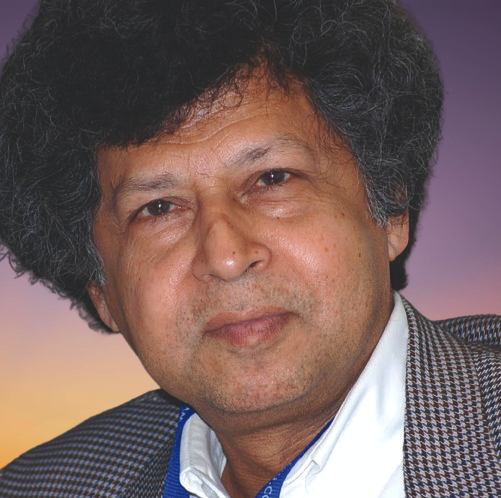
Hasan Ferdous is an author and journalist based in New York
A Independent Newsweekly
© Copyright 2026 | Designed by ARK Reepon & Developed by Cosmos Group Software Team





Leave a Comment
Recent Posts
Is the international community ...
A spate of downgraded economic projections, from Bretton Woods to Mani ...
A Childhood Lesson in Arithmet ...
As children, we learned a simple mathematical rule: if we know the pri ...
Indian authorities launched a major security crackdo ..
Police dispersed garment workers from the Azampur ro ..
Why Saudi Arabia has struggled to defend itself agai ..
Iran-backed Houthis strike Saudi oil company Aramco’ ..