


Column
In Gulistan zone after 32 years: Poetry, protest and body counts

An Independent Newsweekly

Column
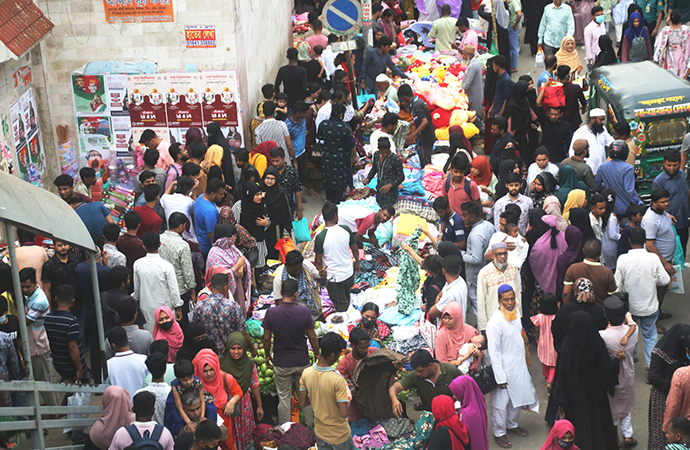
Golap Shah mazar area
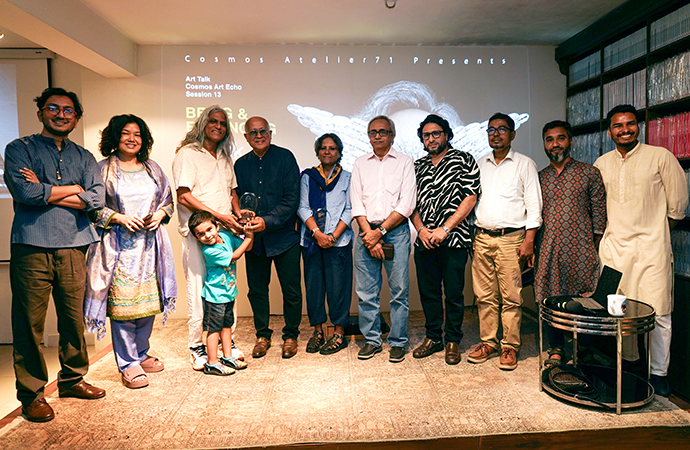
On 26th September that is last week I attended an event at the National Book Centre (NBC) to discuss poetry. Afsana Begum, Director of the National Book Centre organised the event, part of NBC's regular schedule to discuss a favourite literary book.
I do get invited by various institutions to deliver lectures on various topics but they are usually on academic topics like history, ethnography, research methodology, development studies etc. But literature to me is not academic research, it's a subject of my heart and soul. I was very happy.
The book I had chosen was poet Shamsur Rahman's most accomplished work - "Roudro korotite " - Sun and the skull "or whatever that translates into English. The event was held in participation with the cultural group" O A KO KHO". It was very participatory with group members discussing their perspectives of the book with great depth and insight. I was very impressed indeed.
When my turn came, I spoke with candor but didn't limit myself to discussing the book or the poet. I spoke about their times, how they interacted with each other and even with me, their junior acolyte. I drifted into personal reminiscences, almost all self-deprecating and ironic but all somehow connected to a time and spirit that has passed and a new world was being shaped. It was a wonderful evening.
But my mind had been shaken a few hours back when I arrived in a space or zone I rarely if ever go to, Gulistan Golap Shah mazar area. For me, that area held a deeply significant memory of one day and three deaths.
Hello February, 1994: Blood, bombs and protest
It was February 1994 and I was there to cover a protest gathering called by the then Opposition Party Awami League against the ruling BNP regime. I was covering the event on behalf of the Bengali services of the BBC. It was also my first day at work.
I remember arriving and from the Secretariat area went to the Press Club where senior field reporters were hanging about. I met Farid bhai of AP, Nadeem Qadir of AFP and of course my senior at the BBC and my mentor Ataus Samad bhai.
Meanwhile Nadeem came around and said we better get to the heart of the action. We took a CNG and several of us reached the Golap Shah mazar zone.
The area was full of police barricades and the authorities had them mostly manned by Ansars who looked very nervous. The police were patrolling and were probably aware that violence explode anytime. Meanwhile the main AL's michil arrived and stood at the barricade shouting slogans.
I talked to the leaders - Md. Nasim and Samad Azad both senior AL leaders about their plans. They both said they had no plans to breach the barricade. I recorded them to play on my broadcast.
When hell breaks loose
I felt it was a relatively peaceful protest march and retreated back towards the Pir Yemeni market to observe the situation there as crowds were gathering when two cocktails were thrown at the upper walls of the market and the sound of the blast rang all around and all hell broke loose.
Suddenly nothing was under control and brickbats and cocktails kept going off all around and the police hit back with tear gas shells and baton charged the protesters. A brick landed on Md. Nasim's head and he started to bleed badly, somebody held a cloth on his bleeding injury. It was a seriously violent helter skelter situation for almost half an hour.
The police had used tear gas shells to disperse the crowd but the smoke got into our eyes too. As advised by Shahidul Alam, who has a ph.d in chemistry and was there to take pictures, we burned the brown pages of the Financial Express newspaper and soaked our eyes in its smoke. The doctor knows best. Our eyes felt better.
Carnage had left two dead but while the police had fired shells, they hadn't used bullets. Who shot them? For that matter, who threw the two bombs at the Yemeni market walls that triggered the bloodletting? Never found out.
The sight of the crushed leg
The most gruesome sight awaited me at the hawker's market below the AL office. A young man sat there on a bench, his left leg blown away, white calf bones sticking out. I have rarely seen such a sight except in a war. The boy was answering questions asked by the curious as people huddled around him watching the shattered bones of his leg.
He was from Domar, he had arrived the night before and spent the night in one of the makeshift shops of the market waiting for his relative to come and pick him up. He had come to Dhaka to look for a job.
I asked the police to take him to the hospital and the police did. The broadcast time was 7.30 but I had to send the news by 6.30 to London. We had two confirmed dead and had prepared the news accordingly. Just before the London call came, Ataus Samad bhai called. "Make the body count 3. The boy hadn't made it.
As we sat and chatted on the book at the NBC so many years later, the dead boy with the shattered leg would come and knock on the doors of my memory. Hello past....
A Independent Newsweekly
© Copyright 2026 | Designed by ARK Reepon & Developed by Cosmos Group Software Team



Leave a Comment
Recent Posts
Is the international community ...
A spate of downgraded economic projections, from Bretton Woods to Mani ...
A Childhood Lesson in Arithmet ...
As children, we learned a simple mathematical rule: if we know the pri ...
Indian authorities launched a major security crackdo ..
Police dispersed garment workers from the Azampur ro ..
Why Saudi Arabia has struggled to defend itself agai ..
Iran-backed Houthis strike Saudi oil company Aramco’ ..