


Column
Growing old

An Independent Newsweekly






Column

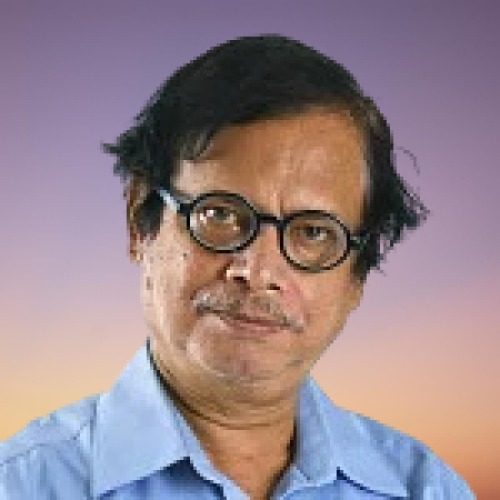
Image: Courtesy
I turned 69 recently.
Gabriel García Márquez writes that a man realises he is aging when he looks in the mirror and starts to resemble his father. That I have done for years. So what? My father resembled his father and his father resembled his own father. What is so exciting about this automatic geriatric inheritance? What is exciting is another thought of Marquez: "It is not true that people stop pursuing dreams because they grow old, they grow old because they stop pursuing dreams." In the process, he averred, the secret to a peaceful later life lies in making an honourable pact with solitude rather than fighting it. Dream on in solitude, in other words.
Solitude takes many forms. There are these famous lines of Faiz Ahmed Faiz, in his poem, "Let Me Think": "You ask me about that country whose details now escape me,/ I don't remember its geography, nothing of its history./ And should I visit it in memory,/ It would be as I would a past lover,/ After years, for a night, no longer restless with passion,/ With no fear of regret./ I have reached that age when one visits the heart merely as a courtesy."
Some have viewed the lines as evidence of Faiz abjuring his past, which wedded erotic passion and political activism. An excellent commentary on a website devoted to poetry (https://allpoetry.com/Let-Me-Think) says that the poem replaces Faiz's "famous revolutionary fire with a chilled, personal resignation. This detached tone is a major departure from his typical work calling for collective action". The poem thereby swaps "political manifestos for intimate memory, making the loss of home or ideals feel like a failed romance, which hits harder today". The poem's "fragmented, forgetful form mirrors modern displacement and the shaky nature of history better than any polished, heroic verse".
The commentator adds that Faiz rejects "the ornate metaphors of his era for a straight, conversational punch. You're directly addressed, like he's texting you the bad news." What's the bad news? "The heart is just a courtesy call now. This line alone flips a lifetime of romantic and political passion, speaking directly to contemporary disillusionment." The poem turns "the epic theme of exile inward, framing it as a personal, emotional burnout that's more relatable now than grand protest".
However, a less desultory view by one Zainab declares: "It is saddening to witness through this poem a person who had such great passion for his country slowly and painfully learning to forget it. And then the last line which seems to convey the meaning that the heart has not yet betrayed its beloved though the poet has learnt to ignore the yearnings of the heart."
(I wish that I had the name of the original contributor so that I could compliment her or him in print here andnow, while I exist.)
Anyway, I am no Faiz nor Marquez. They belonged in the realm of Jalaluddin Rumi: "There is a community of the spirit./ Join it, and feel the delight/ of walking the noisy street,/ and being the noise." The politics of Marquez and Faiz was their art, and their art was their politics. Both endeavours touched the horizons of human experience and imagination.
I have been apolitical all my life: What little art I possess belongs to me, and to me alone.
For me, growing old means, not ageing in the company of fellow-greats but in the solitude of my own memories. I have stopped blaming the universe or even myself for my existence. Like Rumi, I choose to accept my complicity in the scheme of things that I did not create. He says in a poem: "I am part of the load/ Not rightly balanced/ I drop off in the grass, / like the old Cave-sleepers, to browse wherever I fall." Who has been carrying me this long? My life. Since it did not balance me rightly, I am free to browse wherever I fall. In my browsing lies my deliverance; in my wandering lies my destination. Ageing is no more and no less than the freedom to roam the anonymous streets of mortality.
I have ripened into autumn. Spring, summer and monsoon are behind me. One day I shall winter into death.
That is no problem. I do not fear death: I fear life.
And what rids me of the fear of life is what my father once told me. I had asked him: "Who is a profound human being?" He had told me: "A profound person is he who understands, acknowledges and yet celebrates his own insignificance in the grand scheme of things, whatever and whenever that might turn out to be."
How cool, as the young would say.
I am cool. I am chilling out in words. I am curing my karma and healing my chi.
Because life fights on in you and me.
The writer is Principal Research Fellow of the Cosmos Foundation. He may be reached at epaaropaar@gmail.com
A Independent Newsweekly
© Copyright 2026 | Designed by ARK Reepon & Developed by Cosmos Group Software Team







Leave a Comment
Recent Posts
Is the international community ...
A spate of downgraded economic projections, from Bretton Woods to Mani ...
A Childhood Lesson in Arithmet ...
As children, we learned a simple mathematical rule: if we know the pri ...
Indian authorities launched a major security crackdo ..
Police dispersed garment workers from the Azampur ro ..
Why Saudi Arabia has struggled to defend itself agai ..
Iran-backed Houthis strike Saudi oil company Aramco’ ..