


Column
Cockroach politics

An Independent Newsweekly




Column

Image: Collected
Bangladeshis, whose country saw restive youth drive the government from power two years ago, are unlikely to be unnerved by the appearance of the Cockroach Janata Party (CJP) in India. Indeed, it is most unlikely that events in India will take the form that they did in Bangladesh, earlier in Sri Lanka and later in Nepal, where Gen Z protesters overturned the status quo through violent demonstrations that ousted entrenched political elites and destroyed hoary structures of patronage that had kept them in power.
India is different because it is not at an inflection point, unlike where the other three South Asian nations were when their youth-led revolutions occurred. The Bharatiya Janata Party (BJP) - on whose name the Cockroach Janata Party's satirical self-description constitutes an obvious pun - is firmly in charge at the Centre and governs the vast majority of India's states, whether on its own or through the National Democratic Alliance which it leads.
According to India's The Statesman newspaper, the alliance "is responsible for the lives of roughly 72% of India's 1.4 billion people. No party or coalition in this country has held this kind of federal ground since the Congress under Indira Gandhi". Indeed, it is astonishing how swiftly Indian Prime Minister Narendra Modi, Union Home Minister Amit Shah and other party stalwarts have been able to consolidate India's federal politics following a post-Indira period when regional parties held much of the balance of political power. Political regionalism is still there, but New Delhi is India's indisputable political capital and not just its Constitutional centre.
How about the CJP? According to a Reuters report citing experts, "the group, which amassed millions of Instagram followers within days of being created in mid-May, tapped into the concerns of under-30s, who make up more than half the country's population, which include high youth unemployment and the latest exam paper leak". A satirical movement appears to have channelled youth frustration into determined protests.
It is still early days. Will the CJP-inspired youth protests, which major Opposition parties support, become a stubborn reality and create new political ground; or will they be extinguished with the use of that most powerful of disinfectants, police force (metaphorically speaking)? That remains to be seen. What has been seen is how the use of force in Sri Lanka, Bangladesh and Nepal failed to quell demonstrations.
Governments facing street challenges are always caught in a dilemma. Do not use force, and the crowds will reach the palaces of power. Use force and yet fail to stop the crowds, and the very streets will invade the palaces.
The Gonobhaban of 2024 stands in concrete testimony to that dilemma. The uninvited guests vandalised the place, helped themselves to the uneaten delicacies prepared for their fleeing masters, and carted off state furniture in a totemic victory whose memory lasts to this day. Testimony to the dilemma of power is paid also by Colombo's presidential palace of 2022, which was stormed, sacked and occupied by demonstrators who took over the grounds, swam in the pool, worked out in the private gym and lounged in the stately bedrooms. Kathmandu's fate was if anything more serious. The Parliament building, the concrete symbol of Nepal's democracy, was set on fire - a political indictment of the protestors who claimed dissent as a democratic right. But it took place.
I do not foresee such possibilities for India. The state and its sustaining institutions are too strong for a physical assault.
However, that is no reason for complacency on the government's part. The CJP movement has found an iconic supporter in Sonam Wangchuk, the Ladakhi engineer, activist, innovator, education reformer and environmentalist. One of the educational institutions that he founded is a special school where the admission criterion is failure in examinations and not grades. Since Wangchuk is not afraid of failure in examinations, he is likely to be afraid of failure in street protests emanating from leaked examination papers.
The Indian government should, I think, open channels of communication with the protesting students that would make demonstrations unlikely on one side and the use of force on the other.
I hope that the youth of India - speaking metaphorically again - find a future that does not require them to call themselves cockroaches. Cockroaches infest the dark in their hatred of humans. Come into the light.
The sun is the early reassurance of the lighted day.
Come on. Grow up. Come into the light.
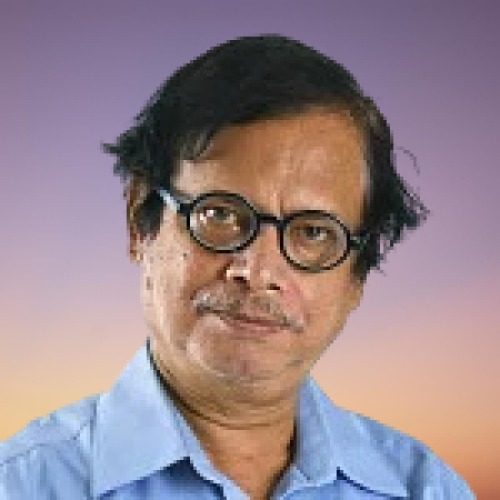
The writer is Principal Research Fellow of the Cosmos Foundation. He may be reached at epaaropaar@gmail.com
A Independent Newsweekly
© Copyright 2026 | Designed by ARK Reepon & Developed by Cosmos Group Software Team







Leave a Comment
Recent Posts
Is the international community ...
A spate of downgraded economic projections, from Bretton Woods to Mani ...
A Childhood Lesson in Arithmet ...
As children, we learned a simple mathematical rule: if we know the pri ...
Indian authorities launched a major security crackdo ..
Police dispersed garment workers from the Azampur ro ..
Why Saudi Arabia has struggled to defend itself agai ..
Iran-backed Houthis strike Saudi oil company Aramco’ ..