


Reportage
Saved by the (US Supreme) Court


An Independent Newsweekly


Reportage
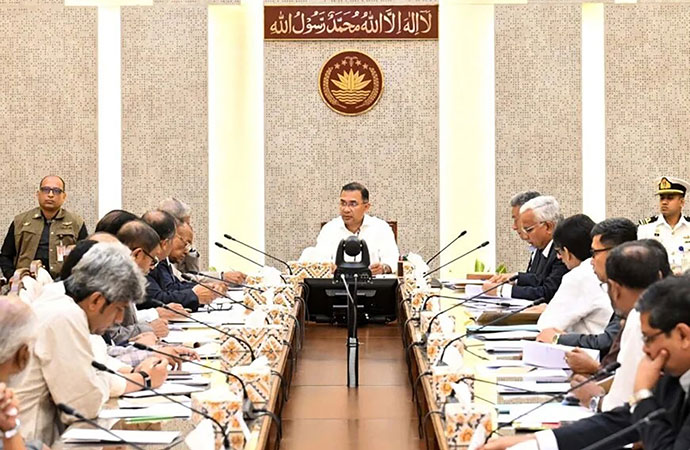
Tarique Rahman Prime Minister of Bangladesh chairs a meeting of his cabinet at the Secretariat. (BNP Media Cell)
The United States Supreme Court's landmark decision to strike down President Donald Trump's authority to unilaterally set tariffs under a 1977 law has narrowed rather than eliminated the ability of US presidents to impose duties on imported goods. Other tariff setting powers enjoyed by US presidents are grounded in specific congressional delegations and administrative processes that the Supreme Court did not address, and Trump can be expected to resort to any of these as he sees fit, in order to get his way.
Nevertheless, the decision by the top court is a huge setback for the Republican president, who had latched onto tariffs as a mix between something resembling a signature economic policy and a cudgel, to upend nearly 200 years of economic convention, weaponising the ad valorem tax in a way the world had never witnessed before.
A bitterly disappointed Trump opted to replace the tariffs he had imposed under the International Emergency Economic Powers Act of 1977 with Section 122 of the Trade Act of 1974, to impose a 10% across-the-board tariff that will apply for at least the next 150 days. It was later raised to 15%, which would mean the overall tariff rate remained broadly similar to the rate that prevailed prior to the ruling.
Trump had invoked a set of 'international emergencies' concerning illicit drugs to impose one set of tariffs on Canada, Mexico and China. The tariffs on most other countries were based on a declared emergency concerning the US trade deficit. Trump framed the move as a tool to counter trade imbalances and shield domestic producers. Yet economic indicators weaken that argument. US trade deficit figures climbed 2.1% from 2024 levels, reaching nearly $1.2tn, while emergency trade powers have already generated at least $130bn in tariff revenue.
The administration had justified its imposition of these tariffs by virtue of the powers granted to the president by the IEEPA. The Supreme Court however, in a 6-3 ruling, said the statute does not authorise the use of tariffs. Moreover, as the ruling emphasized, the president does not have authority to tax. The power to tax, including the imposition of tariffs, lies instead with the US Congress, in the "unambiguous words of the US Constitution", according to the Peterson Institute for International Economics.
Winners and Losers
According to analysis by Oxford Economics, assuming the global tariff rate rises to 15%, the replacement of the IEEPA tariffs with Section 122 leaves the overall US effective tariff rate slightly lower. However, country tariff rates will shift, with several winners and losers. The 8 percentage point drop in China's tariff rate is only beaten by a slightly larger decline in Brazil's rate.
Bangladesh is included among a clutch of Asian economies including Pakistan, Indonesia, Vietnam, and Cambodia, as among the "other big winners" facing a lower 15% headline rate compared to the prior 19%-20% reciprocal rates.
Those slapped with additional IEEPA tariffs for reasons beyond trade imbalances, are also beneficiaries under Section 122. A notable example is Brazil, which faced a 40% IEEPA tariff on top of the baseline 10% reciprocal rate due to the prosecution of former president Jair Bolsonaro. The effective tariff rate is unchanged for the EU, Switzerland, Taiwan, Japan, and South Korea, which had all negotiated their reciprocal tariff rates down to 15%.
Previously agreed-upon carveouts for key sectors in these countries will continue to cap their effective tariff rates. Still, given other economies have benefitted from a reduction in their tariff rates, these economies can consider themselves relative losers.
The biggest absolute losers are the UK and Australia, which previously benefited from a lower 10% reciprocal tariff rate. However, the decision to only impose a 10% rather than 15% global tariff has been partly attributed to a backlash from economies such as the UK and EU, suggesting that any final deal may provide sweeteners for some economies whose tariff rates have risen.
In principle, the Section 122 tariffs could be extended beyond 150 days. But this would require the agreement of Congress, which is unlikely. Still, we doubt that the effective tariff rate will drop back when the Section 122 tariffs expire. The Trump administration has already launched investigations to open the door to using other sections of the trade code to implement tariffs after the current Section 122 tariffs expire in late July.
The analysis by Oxford Economics concludes that once Section 122 expires, other sections of the trade code will be used to achieve tariff revenue of $30 billion per month. This would keep them on track to generate $3.5 trillion in tariff revenues over a 10-year period. For the moment though, the Trump administration's tariff strategy has been thrown into flux, as countries around the world are expected to follow the court's ruling rather than rush into trade agreements under legislation deemed unconstitutional.
Deal or No Deal
Bangladesh was one of the countries that managed to secure a so-called 'reciprocal trade agreement' with the Trump administration after months and months of negotiations. The interim government led by Dr Muhammad Yunus was in any case always seen as pro-American in its geopolitical alignment, and badly wanted to leave its mark in the area of trade negotiations. Not too long before the US deal, it also signed an economic partnership agreement (EPA) with Japan.
The retention of Dr Khalilur Rahman in government, this time as the foreign minister in Tarique Rahman's brand new cabinet, it is thought, was at least partly to facilitate the quick conclusion of negotiations to that end.
The US deal was signed just three days before a much-anticipated election, that saw the BNP register a landslide victory, giving it a mandate that can probably be leveraged to review much of the work done by the interim government. A letter from Trump to the newly-installed Prime Minister Tarique Rahman urged Dhaka to sustain momentum on implementation of the trade deal, and advance pending defence accords, signalling a clear merger of trade access and security alignment.
Previously shielded by non-disclosure provisions, the published text outlines extensive US leverage over trade regulation, digital policy, agriculture, procurement, and export controls. Bangladesh receives tariff relief contingent on unilateral US compliance assessments, backed by reimposition threats.
Critics argue that the interim administration rushed the agreement through without public scrutiny, binding future governments to long-term obligations. Others said they shouldn't have entered into it at all, given the late stage at which it came under heavy US pressure. The text obliges Dhaka to mirror US export controls and adopt restrictive measures supporting American security actions, effectively importing US geopolitical conflicts into Bangladeshi trade policy.
In a multipolar global economy, such commitments risk constraining relations with China, India, the Gulf states, ASEAN, Japan, South Korea, and Europe. Clauses also limit Dhaka's freedom to pursue alternative trade deals, technical standards, or digital and energy partnerships that Washington may not view favourably.
One benefit that has been heavily touted is that garments produced with US cotton and man-made fibre would qualify for zero tariffs in the American market, potentially strengthening export competitiveness. Whether that advantage outweighs constraints on economic sovereignty is of course another matter.
Economists have urged caution after Trump later raised the tariff threat to 15%. Zahid Hussain, former World Bank lead economist in Dhaka, advised strategic use of the 150-day window to assess vulnerabilities and reinforce labour and environmental compliance.
Mustafizur Rahman of the Centre for Policy Dialogue warned against abrupt withdrawal, while economist Selim Raihan, of the South Asian Network on Economic Modelling, or SANEM, stressed that persistent policy volatility in Washington could deter long-term orders, muting gains for Bangladesh's garment sector.
In this evolving situation, analysts say, Bangladesh must closely monitor developments in Washington and carefully evaluate its obligations under the agreement. With the legal and policy context shifting rapidly, a measured and legally sound reassessment may be essential to safeguard the country's trade interests.
Analysts note that commitments reportedly linked to the tariff framework -- including large-scale import arrangements ranging from US wheat to Boeing aircraft -- may now need to be reviewed if they were tied to the invalidated measures. The good news is that the Bangladesh-US trade agreement has not yet come into effect. Several steps remain before it takes effect. The deal requires exchange of formal notifications before it commences, and its current status is still unclear by some accounts, but as far as we can see, it is not in place, and there is nothing binding Dhaka to its terms, yet.
That gives the government a range of options, including playing for time, that it would be wise to exercise at this early stage.
Take it easy
It's an option the newly elected government seems likely to fall back on, although we'll need to know more on how foreign policy is handled in this administration. How might any tussles unfold, between the BNP establishment and their foreign minister?
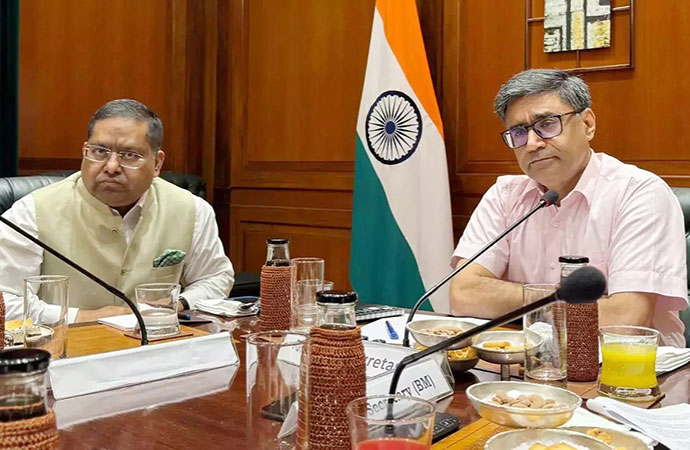
In the latest statement on the issue, Commerce Minister Khandaker Abdul Muktadir has said the issues of reciprocal tariffs imposed by the United States and the related trade agreement are still evolving, noting that the government will review them further before making any decision.
He made the remarks on Wednesday (Feb. 25) in the context of the recent ruling by the US Supreme Court, which declared the reciprocal tariffs imposed by President Donald Trump illegal. In response, the US administration later issued directives to impose new global tariffs.
Against this backdrop, Bangladesh's Ministry of Commerce held a meeting with business leaders to determine the next course of action regarding the tariffs and the trade agreement signed between Bangladesh and the United States. Speaking to reporters after the meeting at the ministry, the commerce minister said the situation remained fluid.
State Minister for Commerce Md Shariful Alam, Commerce Secretary Mahbubur Rahman, senior government officials, and representatives of the business community were present at the meeting.
"The situation in the United States is still evolving -- what we call an evolving scenario in English," the minister said.
He explained that the US Supreme Court had ruled that the previously imposed tariffs were not maintainable. Subsequently, the US announced a 10 percent tariff for all countries, which was later revised to 15 percent.
"However, so far, we have only heard these announcements through various channels. We have not received any official written communication at the government level," he said, adding that under US law, certain legal provisions required approval by the US Congress within 150 days.
"Beyond that, whatever we are seeing is coming through television reports. No official documents have reached us yet. That is why I would again say the scenario is evolving," he added.
Referring to the trade agreement signed with the United States by the previous government, the minister said it was still too early to make definitive comments.
"We are examining the agreement to understand both its pros and cons. Any agreement naturally has two sides. After reviewing these aspects, we will decide on the next steps," he said.
Responding to journalists' questions on whether the interim government rushed into the agreement or kept its details secret, the minister said some non-disclosure agreements were involved during the negotiation phase.
"This was a sensitive issue, and the country we signed the agreement with is also very important for us. In such an evolving situation, making any unwarranted comments would not be appropriate," he said.
On business leaders' views regarding tariffs and the agreement, the minister said representatives from various sectors were invited to the meeting and their concerns were discussed in detail, including sector-specific problems.
An analysis of trade data between the two countries shows that in the reciprocal tariff agreement, the balance of benefits is heavily weighted in favour of the United States.
According to the agreement, Bangladesh would have to provide tariff concessions on 6,710 US products. In return, the US was to grant tariff-free benefits on 1,638 Bangladeshi products. But the reciprocal tariff, which was the basis for determining these benefits, has now been annulled by the US court.
As a result, Bangladesh's practical advantages in the US market will be greatly limited.
An analysis of the 2025 import-export data from the National Board of Revenue (NBR) shows that of the 6,710 US products for which tariff concessions were mentioned, Bangladesh imported at least 2,016 products last year.
The total import value of these products was about $65 million. If the agreement had taken effect, and tariffs on these products were gradually reduced or eliminated, Bangladesh's revenue could have decreased by about $32 million.
On the other hand, the actual picture of the benefits promised by the US for Bangladeshi products is very limited. According to the agreement, the US was to provide benefits on 1,638 Bangladeshi products, but last year, only 14 of these products were actually exported to the US. The total export value of these products was about $670,000. If Bangladesh had received reciprocal tariff benefits on these products, the US government would have had to forgo about $125,000 in revenue.
Despite the direct, and huge impact on the economy, perhaps the most important message in the court's decision was one of democracy: in its assertion of the rule of law and the constitutional separation of powers. Features of the American system that are fundamental to its past and future success. The court's ruling sends a clear message to Trump, Congress, the nation, and indeed the world: The power to tax lies with the legislative branch. The president's powers are, in the end, limited.
A Independent Newsweekly
© Copyright 2026 | Designed by ARK Reepon & Developed by Cosmos Group Software Team






Leave a Comment
Recent Posts
Mosque in my memory
Recently, I saw a pamphlet published by the Islamic Foundation which s ...
Why the fastest-growing Ebola ...
The Ebola outbreak in eastern Congo is now the fastest-growing one in ...
US reimposes its blockade on Iran after Tehran’s att ..
Oil Shocks Are No Longer So Shocking
Bangladesh urged to build AI capacity, strengthen di ..
Metamorphosis: Bishwajit Goswami on Art, Nature and ..