


Column
Ekushey Always

An Independent Newsweekly
Column
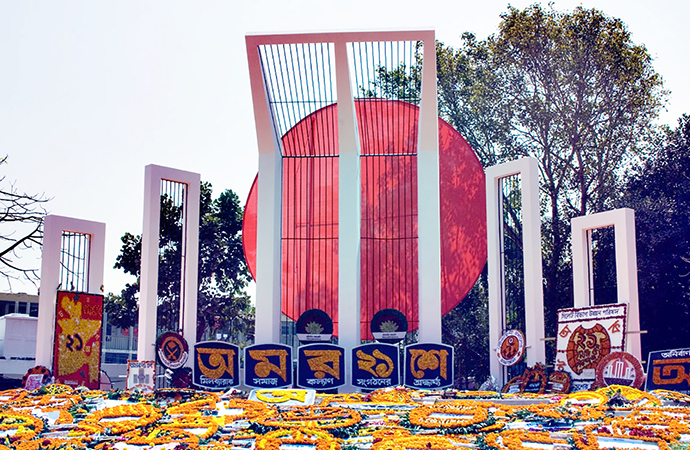
Photo: en.wikipedia.org
Ekushey put a yet-unrealised Bangladesh on course for eventual statehood and the Bangla language on track for global recognition. February 21, 1952 soaked the soil and soul of the land of Bangla in the blood of young martyrs who had resisted Pakistan's attempt to equate Urdu with indigenous nationalism and Bengali with foreign culturalism. In turning Urdu into the guardian language of a militarised Pakistan, the government turned Bengali into an alien intrusion although the movement for Pakistan had owed its provenance to East Bengal and not to West Punjab. That was the real linguistic irony of Pakistan that contributed to its political break-up ultimately. In 1956, Bangla was recognised as a state language of Pakistan, but the seeds of linguistic dissension had been sown by then. In independent Bangladesh, Bangla was declared the official language of government and public life in 1987. Between 1951 and 1987, Pakistan had fallen apart but Bangla the language remained the pride of the Bangla people.
True, Bangladesh would not have become independent in 1971 without Pakistan having first become independent in 1947. The year 1971 in that sense marked the continuation of the partition of 1947 but with a further partition-within-the-partition since Bangladesh did not return to India even though it had seceded from Pakistan. In terms of linguistic nationalism, it is a platitude but not trite therefore that the Bangla language defines the identity of Bangladesh today, not Pakistan's Urdu or India's Hindi. Urdu and Hindi (and English) are foreign languages in Bangladesh: The indigenous tongue of Bangladesh is Bangla. Bangla is the mother tongue of the Bangladeshi nation.
Of course, Bangla therefore is not the mother tongue of every Bangladeshi. This needs to be recognised. Just as the attempt to co-opt the Bangla-speaking population into Urdu-speaking nationalism failed to unite Pakistan (and destroyed it instead), Bangladesh, having learned from the antecedent mistake of treating language as the expression of state power, needs to celebrate Bangla not as the language of controlling power but as affirming the liberating power of language. The mother tongue is derived from birth, not from nationality. Thus, there are many mother tongues, and no privileged tongue can induct another tongue through force of economics or legislation into a seamless national identity defined through an imperial language.
It is testimony to the cultural confidence of the Bangladeshi intelligentsia that the scholarly Mahfuz Anam, Editor of the Daily Star, recognises the agency of non-Bangla languages within Bangladesh. He writes: "The Language Movement of 1952 was not merely a struggle over words; it was the first collective assertion that dignity, democracy, and self-determination in this land would be rooted in language. From that demand for Bangla emerged a political consciousness that eventually gave birth to Bangladesh itself."
However, he goes on to add, in equally spirited measure: "Bangladesh's linguistic landscape is far richer than its dominant narratives often suggest. Alongside Bangla flourish dozens of indigenous and regional languages, each carrying its own history, worldview, and rhythm of life. These languages are not cultural ornaments; they are systems of knowledge shaped by rivers, forests, labour, migration, and belief. To celebrate Ekushey today is to recognise that protecting linguistic diversity is inseparable from protecting cultural memory, social justice, and the right to be heard." These beautiful words in English bear witness to the natural capacity of a universalised Bangali to empathise with every other mother-tongue speaker who demands to speak to the world in her or his own language.
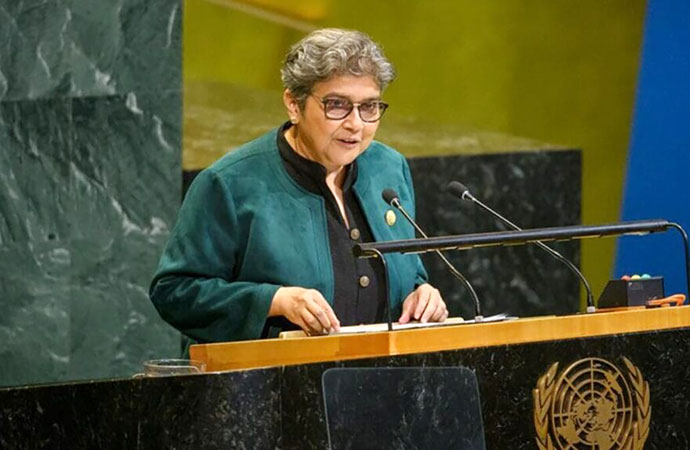
In that ecumenical spirit, the adoption of Ekushey as the International Mother Language Day in 1999 represented the beginning of the United Nations' eclectic efforts to promote linguistic and cultural diversity and multilingualism around the world. The internationalised Bangali day highlights the importance of mother-tongue-based education, particularly in early childhood, for sustainable development. It aims to preserve endangered languages and foster respect for linguistic traditions, which is a pressing need given how the world's linguistic tapestry is being unthreaded by the threatened disappearance of many minority languages. For a language to disappear is akin to the eradication of a species in the natural world. It is an irreplaceable loss. What flora and fauna are to the natural habitat, language is to the human ecosystem. The world of existence is incomplete without the flowering of plants, the breeding of animals, and the communicative solidarity created among humans by language.
Long live Ekushey, the coming of age of the Bangali people.
The writer is Principal Research Fellow of the Cosmos Foundation. He may be reached at epaaropaar@gmail.com
A Independent Newsweekly
© Copyright 2026 | Designed by ARK Reepon & Developed by Cosmos Group Software Team





Leave a Comment
Recent Posts
Mosque in my memory
Recently, I saw a pamphlet published by the Islamic Foundation which s ...
Why the fastest-growing Ebola ...
The Ebola outbreak in eastern Congo is now the fastest-growing one in ...
US reimposes its blockade on Iran after Tehran’s att ..
Oil Shocks Are No Longer So Shocking
Bangladesh urged to build AI capacity, strengthen di ..
Metamorphosis: Bishwajit Goswami on Art, Nature and ..