


Column
“Fortress America”: Implications For The Rest

An Independent Newsweekly
Column

Introduction
There is a palpable, and some analysts would go as far to call it, seismic shift in the foreign policy of the United States in recent times. It flows from a world view that is perhaps articulated ibn two official US documents: the 2025 National Security Strategy and the 2026 National Defence Strategy. The question of whether the US is retreating into "Fortress America" is not hypothetical; it is the central organising principle of the current administration. This strategic retrenchment, characterised by a withdrawal from global leadership and dismantling of the multilateral institutions is creating a power vacuum.
The Fortress America Doctrine
The two documents cited above demonstrate this radical retrenchment which mark a "watershed moment" and "the most significant shifting global posture since the end of the "second world war. These show how America is tending to formally abandon the role like of the Greek mythical Titan condemned by Zeus to forever keep holding up the sky, as the "Atlas that holds the up global security". This has led to prioritising homeland defence and hemispheric security over global engagement. The core of this new concept is Hemispheric Security anchored by the development of the Golden Dome missile system.
This is merely a passive withdrawal but a doctrine of aggressive preemption. The US seeks to be "invulnerable behind a technological canopy", believing it can detach itself from the "expensive entanglements from the old world". The "strike and shield model allows Washington to intervene decisively, as seen in the massive joint US-Israel strikes on Iran. The approach creates a hazard, a moral one, where the US may initiate conflicts, that the allies, lacking such a shield, are forced to navigate alone.
The strategy is underpinned by a transactional and unilateralist ideology. The Trump administration views international relations, not as a chessboard of values, but as a huge bazaar where everyone has to pay for their place in the sun". It demands that allies pay a "defencive tribute" of up to 5% of their GDP, or risk losing the US security umbrella. This is possibly driving the US towards a position of isolation. The US has withdrawn from or reduced support for 66 international organisations, including 31b UN entities. This does signal a desire for a sharp "exit from the international system.
Policing Global Goods In America's Absence
For over seven decades, the US has acted as the primary guarantor of global public goods. It has sought to ensure the security of sea lanes, the stability of the international financial system, and the enforcement of a rules-based order. As the US retreats, a critical question emerges: Who will police these global goods?
The "Fortress America" doctrine inherently creates a "massive power vacuum in Eurasia". As the US pivots toward its own borders, rival powers like China and Russia are seen to be moving to fill the void. The paradox of this strategy is that it threatens the very global commons the US once protected. For instance, while focusing on its "Hemispheric "security, the US risked destabilising regions like the Middle East, leaving it "up for grabs", so to say. The unsurprising result is the beginning of a new security architecture such as the Mecca Declaration signed by Pakistan, Turkiye and Saudi Arabia.
It seems that the current US administration's approach is not to appoint a successor but to abdicate the role entirely. The US is encouraging allies and regional partners to "shoulder the burden". They may also be deciding to do so themselves, building their own balances and alliances. Also, the US wants the allies to pay for their own defence. The US is not aiming to transfer authority to a new policeman, but to a fragmentation of responsibility. The result is a world where no single actor is willing, or abl, to maintain the global commons, leading to a more chaotic and competitive environment.
Weakness Of International Institutions And The Anarchichal Society
The weakening of international institutions is a direct consequence of US withdrawal, and a core validation of Professor Hedley Bull's concept of the "anarchical society". Bull in his seminal 1977 work, argued that the international system is anarchical because there is no world government. Yet it is a "society" because states are bound by common rules, norms and institutions that enable coexistence and cooperation. He identified institutions like the balance of power, international law, diplomacy, and the great-power management system as the mechanisms through which order is maintained.
Today these very institutions are in a state of profound crisis. The UN and the WTO are facing "existential threats" and are being rendered "increasingly dysfunctional". The US, the primary architect and the underwriter of the post-1945 system, is now dismantling the very structures that have facilitated order for decades. Bull's framework helps explain this moment: The consensus on the basic rules and the effectiveness of the institutions are eroding. The rules-based order is failing with major powers routinely "exempting themselves from global rules". This drift away from a rule-based system toward a deal-based 'system signifies a regression toward a more primitive form of international society where power, not law, is the primary currency. The current situation echoes Bull's warning about the fragility of international order, which depends on the willingness of great powers to uphold it. As the primary great power retreats, the society of states is devolving into more chaotic, and less orderly system.
Rise Of Regional Pre-Eminent Powers
In the vacuum left by the US, regional powers are indeed becoming more significant. The unipolar world is giving way to a more fluid and multipolar world shaped increasingly by the behaviour- pattern of the regional actors.
The rise of the regional powers is a direct response to US retrenchment. The US is actively "empowering "its regional allies to take on more responsibility. For instance, in the Middle East, the US is encouraging regional allies to confront Iran, while it plays the role of an instigator from a distance. The problem is some allie, including the Gulf Sheikhdoms, may see the US support as "the Kiss of death", drawing ire of a significant regional actor Iran. Also it may encourage some of them to attempt a tightening of alignments, with or without big power blessing, such as in the formation of the Mecca Pact. It is possible that middle powers will no longer be content to be passive followers: they may want to actively shape global outcomes.India in South Asia for example .Indonesia, or South Korea further east. The coming together of Japan with others to balance China being a further possibility.
This does not mean a peaceful stable transition. The rise of regional powers is occurring in a context of intensified great power rivalry, where major States are weaponizing economic instruments like tariff and export controls (of sensitive items). Middling powers are challenging larger regional adversaries, like Ukraine taking on Russia. The result is a world that is more multipolar, more dynamic, but also potentially more volatile. This is not a return to a stable coldwar-style bipolarity but a fragmented and contested order where multiple centewrs of power compete cor influence.
Conclusion
The US' current world view, encapsulated in the "Fortress America " doctrine, represents a fundamental break from the post-World War liberal order. By prioritising its own security and abandoning its role as the global policeman, the US is creating a power vacuum that no single actor is prepared to fill. This strategic withdrawal coupled with the deliberate weakening of international institutions, that once provided a semblance of order is a stark realisation of Hedley Bull's "anarchical society ".In this environment regional preeminent powers are emerging as significant actors , not to uphold a new global order , but to secure their own interests in an increasingly fragmented and contested world. The result is not a simple transfer of power but a profound transformation of international relations into a more complex, uncertain, and potentially dangerous landscape.
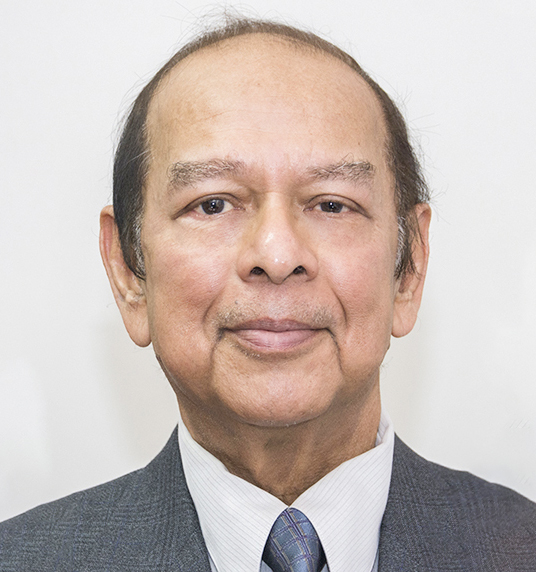
Ambassador Iftekhar Ahmed Chowdhury (Retd.), PhD, President, Cosmos Foundation, Dhaka. Former Foreign Advisor, Bangladesh Caretaker Government.
A Independent Newsweekly
© Copyright 2026 | Designed by ARK Reepon & Developed by Cosmos Group Software Team





Leave a Comment
Recent Posts
Is the international community ...
A spate of downgraded economic projections, from Bretton Woods to Mani ...
A Childhood Lesson in Arithmet ...
As children, we learned a simple mathematical rule: if we know the pri ...
Indian authorities launched a major security crackdo ..
Police dispersed garment workers from the Azampur ro ..
Why Saudi Arabia has struggled to defend itself agai ..
Iran-backed Houthis strike Saudi oil company Aramco’ ..