


Essays
A journey into the heart of global commerce


An Independent Newsweekly


Essays
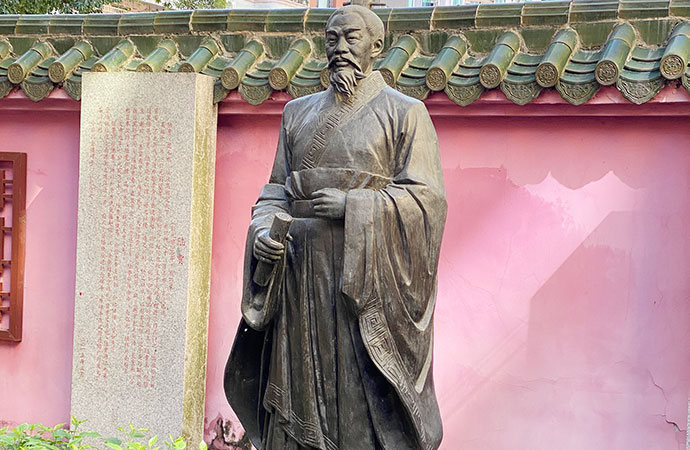
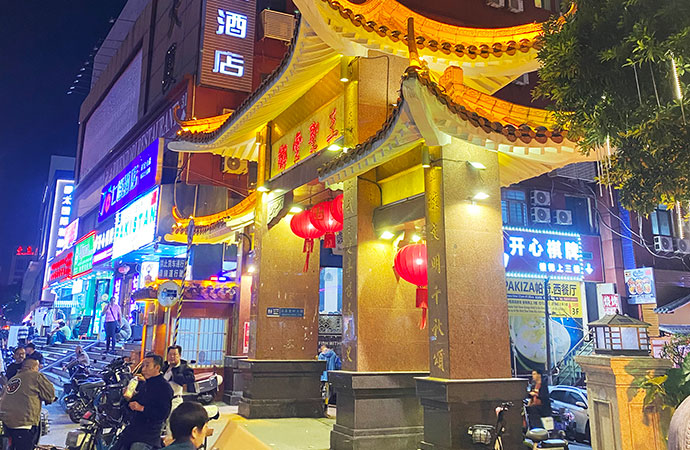
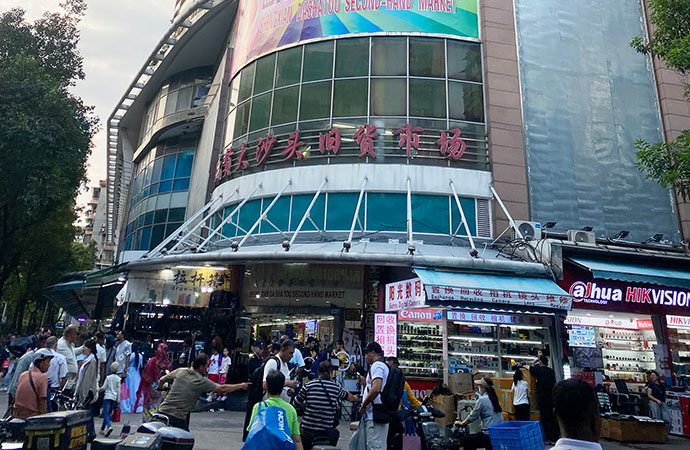
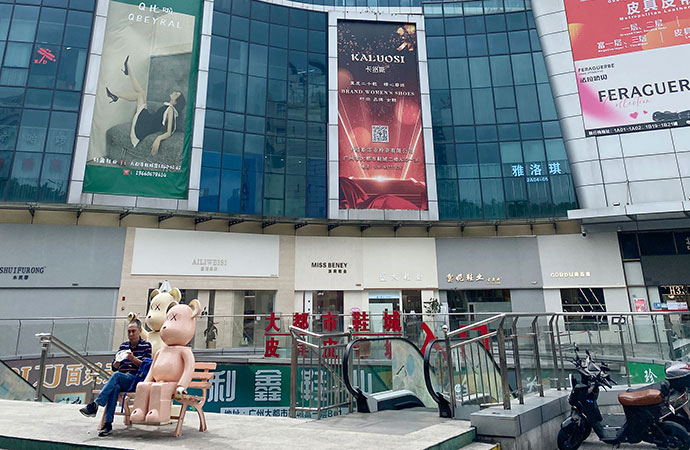
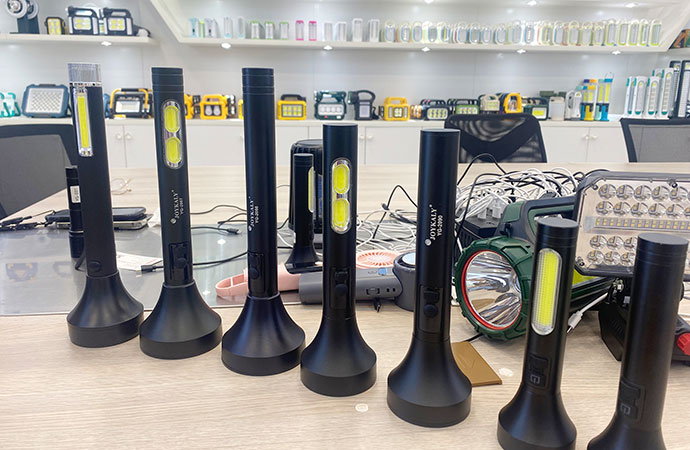
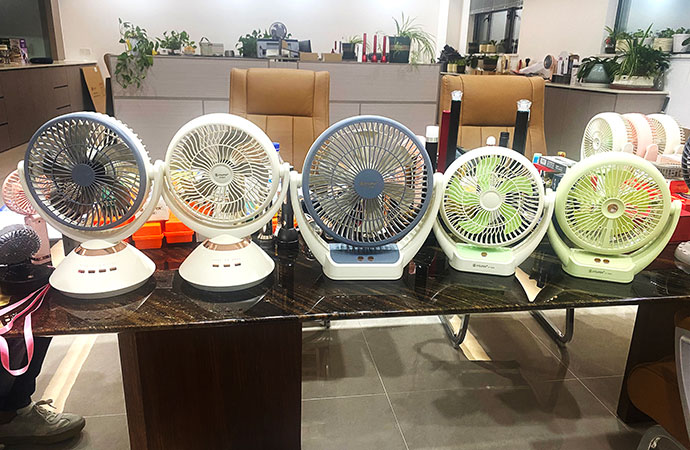
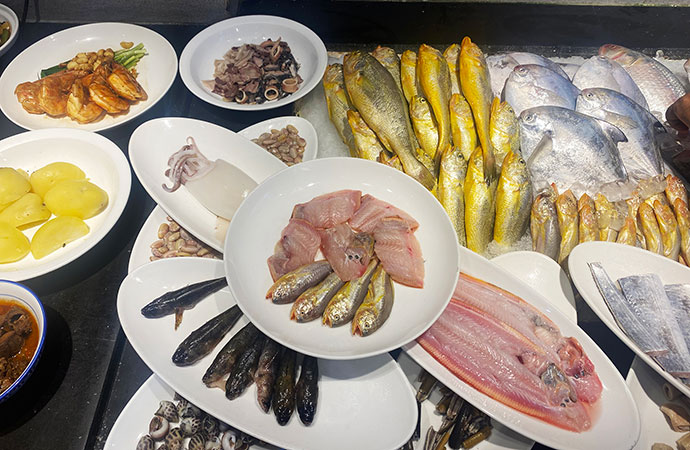
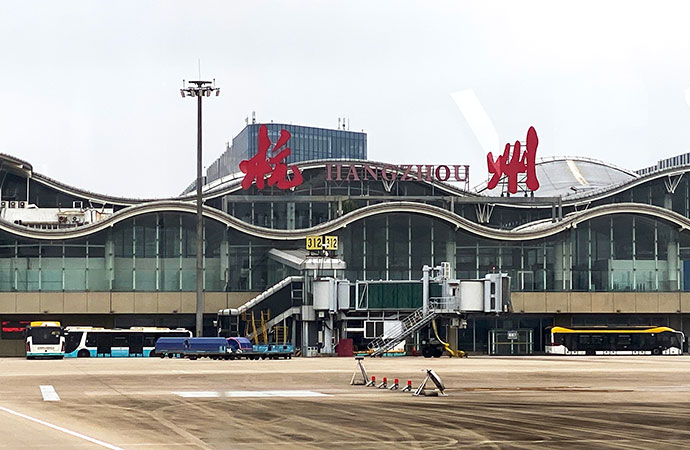
Photo: Author
Imagine a place where nearly every plastic toy, sparkly hairpin, festive Christmas ornament, and cheap screwdriver on Earth begins its journey to the global consumer. This isn't a hypothetical capitalist wonderland-it is the very real Yiwu International Trade City, locally and famously known as the Futian Market in Zhejiang, China.
Spanning a staggering 6.4 million square meters with over 75,000 individual stalls, it has earned the undisputed title of the world's largest wholesale market. To put that in perspective: if you spent just three minutes at each booth for eight hours a day, it would take you over a year to see everything. It is a dizzying, neon-lit, infinite maze of manufactured goods.
Growing up, I remember reading about Xuanzang (whom we knew as Huen Tsang), the famous Chinese explorer, in our Class 7 or 8 Bangla textbook. I can still clearly picture the pencil sketch of his face-adorned with a long mustache and traditional Chinese robes. Fast forward a few decades, and the sheer volume of "Made in China" goods around us had always tempted me to visit.
Since I am not a leisure traveller, I needed a business excuse to make the trip. Soon enough, that opportunity arrived when a businessman in my neighbourhood planned a trip to China, and I immediately asked to tag along. The visa process was surprisingly simple; we handed our passports and documents to an agent, and had our visas in hand within a week.
Landing in Guangzhou
Although we missed the Canton Fair due to my busy schedule back home, we booked our tickets on US-Bangla Airlines. After a smooth departure from Dhaka and a four-hour flight, we landed in Guangzhou early one morning in November. Despite the rumours we had heard about strict Chinese immigration, the process was incredibly easy and hassle-free.
Since China is known to be very safe, we skipped resting at the airport and caught a taxi straight to our hotel: The Yuan Sheng Hotel. The name instantly echoed my childhood memories of the Chinese explorer, though I had no idea if there was any actual connection. After checking in, we took a much-needed nap.
Before leaving Dhaka, a neighbour had told us that his nephew, Shaon, lived nearby in Foshan. We had reached out to him, but he hadn't replied to our messages, which was a bit frustrating. However, on our very first morning, Shaon called, got our hotel address, and arrived by 10:00 AM ready to help.
Just as we were preparing to head out with Shaon, two polite police officers and a lady in civilian clothes knocked on our door. They explained it was a routine safety check for foreign tourists, inspected our passports, and asked for a group photo. When I asked the lady if she was also a police officer, she smiled shyly, nodded, and said, "Yes, I am extremely sorry I didn't have time to change into my uniform!"
Markets, Motors, and Deshi Breakfasts
Shaon arrived in a cozy, highly efficient Chinese BYD electric car. He told us how cost-effective it is, saying it barely costs anything compared to regular fuel. Our first stop was a nearby Bangladeshi restaurant for a comforting deshi breakfast. Shaon knew Guangzhou inside out. He spent the entire day guiding us through sprawling wholesale cosmetics markets. We also met our local supplier, who gave us a very warm welcome.
While my fellow traveller and businessman placed orders, Shaon and I helped coordinate by setting up communication groups with the suppliers and arranging advance payments. Over the next few days, we navigated Guangzhou effortlessly, using our credit cards via WeChat Pay for taxis and the metro.
A "Blind Landing" in Yiwu
On our third day, our supplier booked domestic flight tickets to Yiwu for us on China Southern Airlines, and we paid him back in cash. Guangzhou's domestic airport was massive and crowded. After undergoing strict security scans, we boarded.
During the flight, a security officer-likely an air marshal-kept walking up and down the aisle. Right before landing, something unusual happened: he insisted that everyone close their window shades. This goes against standard flight safety protocols, and many passengers argued. A flight attendant eventually stepped in to explain that Yiwu Airport is also a military base, and military assets cannot be viewed from the air. We were also strictly warned not to take photos. It was a true "blind landing," but we arrived safely. A representative from our supplier met us at the airport and took us to the Borrman Hotel, located near the famous Futian Market.
Lost in the "Bhul Bhulaiya" of Futian
The Futian Market is absolutely staggering. It feels like hundreds of sports stadiums joined together by endless corridors and stairs. It is divided into massive districts and is essentially a marketplace for the entire world. If you want to buy a nail cutter, you will find millions of varieties across thousands of stalls. To me, Futian Market was a giant Bhul Bhulaiya (a maze). Although we had limited time, we managed to place some orders. Every shopkeeper we met welcomed us warmly, offering tea, hot water, nuts, and dried fruits.
The next day, we took a train to Ningbo to visit factories that manufacture rechargeable fans and lights. Despite it being a Sunday, the female factory owner personally picked us up from the station, showed us around her offices, and treated us to a wonderful lunch. She even hired a taxi to send us to our next factory visit. Afterwards, another factory owner treated us to a lavish fresh seafood dinner at a posh restaurant before driving us to our hotel. The next afternoon, we flew back to Guangzhou.
Back to Guangzhou: Eggs, Hospitality, and a Wild Goose Chase
We returned to the Borrman Hotel in Guangzhou, which was highly convenient. The surrounding area was filled with fellow Bangladeshi traders and excellent Bangladeshi restaurants. I am not a big fan of eggs, but the hotel's breakfast was so good that I ended up eating six eggs a day for two days straight!
One evening, a Bangladeshi businessman who had been living in China for years invited us to dinner. He served us a delicious meal of freshly cooked chicken, beef, fish, and curry, and explained how he sources certified halal meat from a local slaughterhouse. It made us realise that a quick business trip spent entirely in markets and factories barely scratches the surface of this massive, beautiful country.
On our final day, we set out to buy an iPhone. My partner wanted a cheap deal, but after a fruitless search in the secondhand markets, we decided to buy a brand-new one from a proper mall. He also needed to buy a specific Xiaomi (MI) phone for his business partner. However, when it came to paying, his credit card was declined. The salesman used a translation app on his phone to ask us to exchange our US dollars at a nearby bank. He offered to guide us.
What followed was a never-ending walk! We walked for nearly an hour, crossing street after street. When we finally reached the bank, the atmosphere was confusing. Only a few officers were working, and after making us wait for over an hour, they refused to exchange our cash. Frustrated and exhausted, we returned to the shop. We asked the salesman if he would accept US dollars directly. He agreed! We paid him in cash, and the kind young shopkeeper, feeling apologetic for the banking hassle, even gave my partner a small parting gift.
The Replica Rolex and the Dhaka Flight
Before heading home, we did what all Bangladeshis do: we shopped until we dropped. However, the markets are massive and highly centralised; one market sold only leather shoes, another sold raw leather, and some sold nothing but footwear accessories. These are not places for ordinary shoppers, but for traders. We looked for a proper shopping area and finally reached one after a long walk, buying shoes, t-shirts, and toys. I wanted to buy everything, but it was impossible!
After stocking up on the basics, my companion decided he couldn't leave China without the ultimate souvenir: a replica Rolex. We soon ended up in a watch market featuring thousands of stalls. When we asked for an "A-grade" replica, a seller gestured for us to follow him. Feeling a bit nervous, we followed him through dark alleys, entered a building complex, took a lift, and emerged onto a floor where all the shop shutters were down.
He knocked on a door. It opened, we slipped inside, and the door was locked behind us. Inside, a few African traders were busy buying watches. We didn't find what we wanted there, so we went to a larger, more open market. After some intense bargaining, my companion happily bought a replica Rolex for just 330 RMB (around 5,000 BDT)!
With a shiny "Rolex" on his wrist, my companion was in high spirits as we headed to the airport. While we were waiting in the long queue, a few fellow Bangladeshi travellers approached us, asking if we could carry some laptops and smartphones to hand over to someone at Dhaka airport. I gave them a firm "No."
My companion, however, just laughed it off, playfully calling it the ultimate "informal business class" upgrade for the legendary network of travellers keeping Dhaka connected. Earlier on our trip, we actually met a passenger who makes the round-trip between Dhaka and Guangzhou twice a week, essentially reaching Olympic-level status in playing real-life Tetris with laptops and smartphones in the overhead bins.
Speaking of the Olympics, with the football World Cup on right now, it's hard not to look at sports the same way. We all know China completely dominates the Olympic Games, and even their women's football team plays a pretty solid game. But honestly? I just can't find China's men's football team impressive at all. They've only made it to the World Cup once, and that appearance was a total disaster. They haven't even tried their hand at cricket yet! I really wish they'd show up to these games and shake things up, bringing that same powerhouse energy they show off in the Olympics.
But hey, even if they aren't winning any major trophies in men's football, they are absolutely crushing it in the business world! Beyond everything, I was completely blown away by Chinese hospitality-everywhere I went, people were incredibly supportive and friendly. Honestly, that warmth, combined with their insane work ethic, is exactly why they are leading the global market. Every single person I met was laser-focused on growing their business, making tight connections, and delivering on their promises. If anyone wants a real-world masterclass in business, they need to book a flight to China ASAP. Whether you are running a small street stall or a giant tech empire, there is a lesson waiting for you here. China is simply too massive to absorb in one go. A single trip barely scratches the surface, but it is absolutely guaranteed to leave you planning your next visit!
The author is engaged in freelance research and coordination for international universities; writing real-life stories is his growing interest.
A Independent Newsweekly
© Copyright 2026 | Designed by ARK Reepon & Developed by Cosmos Group Software Team




Leave a Comment
Recent Posts
Mosque in my memory
Recently, I saw a pamphlet published by the Islamic Foundation which s ...
Why the fastest-growing Ebola ...
The Ebola outbreak in eastern Congo is now the fastest-growing one in ...
US reimposes its blockade on Iran after Tehran’s att ..
Oil Shocks Are No Longer So Shocking
Bangladesh urged to build AI capacity, strengthen di ..
Metamorphosis: Bishwajit Goswami on Art, Nature and ..